

Issues
A national aviation company operating domestic and international routes engaged our team to support the development of a tourism-focused connectivity strategy. As Saudi Arabia expanded its tourism offerings, the aviation company recognized the strategic importance of aligning route development, scheduling, and partnerships with key tourism corridors and emerging destinations. The client aimed to increase passenger volumes, improve load factors, and support national efforts to attract more leisure travelers while maintaining operational efficiency and profitability.
Solution
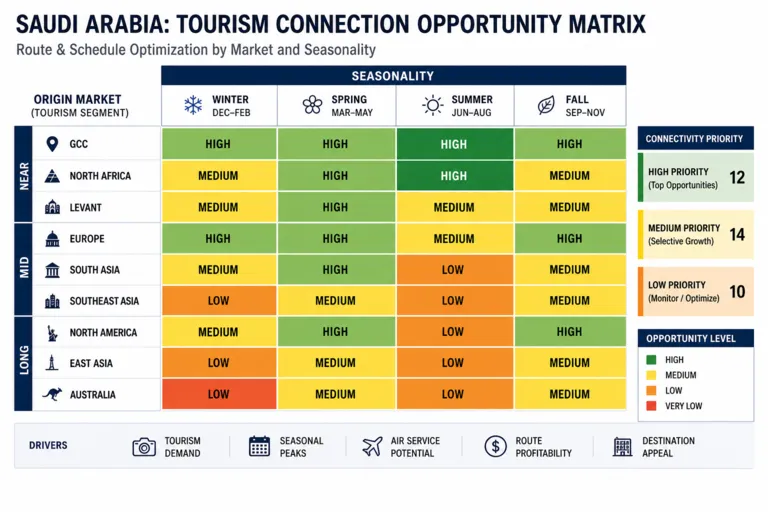
We developed a tourism connectivity strategy that integrated route planning, schedule optimization, partnerships, and product design. Passenger data analysis and tourism demand forecasting were used to identify priority routes that could unlock tourism growth, including connections to coastal, heritage, and entertainment destinations. Flight schedules were adjusted to improve connections for key source markets, considering weekend patterns and holiday peaks. Partnerships with tourism authorities, destination managers, and hospitality groups were structured to develop joint campaigns, bundled offers, and co-branded promotions. The company’s product design was refined to better cater to leisure travelers, including family-friendly services and improved transfer experiences.
Approach
- Analyzed historical passenger data, booking patterns, and tourism statistics to differentiate business and leisure demand.
- Assessed the current route network against tourism development priorities and future destination plans.
- Modeled route potential for new or adjusted services, incorporating load factor scenarios, yield estimates, and seasonality.
- Collaborated with tourism stakeholders to identify priority source markets and co-marketing opportunities.
- Recommended schedule adjustments and frequency changes to better align with tourism travel windows.
- Developed concepts for tourism-focused fare products, packages, and ancillary services.
Recommendations
- Prioritize incremental capacity and new routes to destinations aligned with flagship tourism projects and coastal or heritage hubs.
- Adjust flight schedules on key routes to support weekend getaways, event attendance, and holiday travel peaks.
- Develop integrated tourism packages in collaboration with destination stakeholders, including accommodation and ground transport.
- Introduce bundled offerings and family-centric products to enhance attractiveness for leisure travelers.
- Strengthen data collection on passenger purpose-of-travel to refine tourism segmentation and route design.
- Engage in joint marketing campaigns with tourism authorities to promote Saudi destinations in targeted international markets.
Engagement ROI
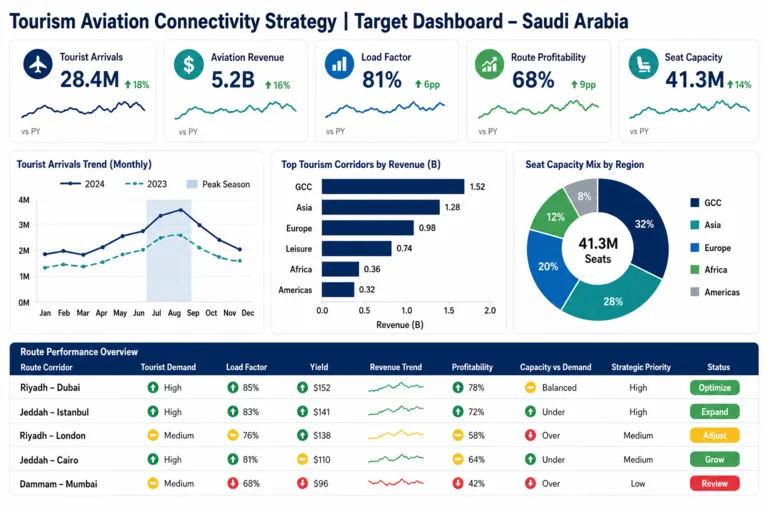
The tourism connectivity strategy generated notable benefits for both the aviation company and the broader tourism ecosystem. Route and schedule adjustments contributed to an improvement in load factors on priority routes by approximately 6–9% within the first full season of implementation. Targeted tourism routes saw passenger growth of around 15–20%, supported by co-marketing and bundled offerings. Ancillary revenues increased as tourism-focused products gained traction, while better alignment with destination campaigns enhanced brand visibility in key source markets. The company strengthened its role as a key enabler of national tourism growth, while also improving route profitability and strategic positioning within the regional aviation landscape.
Talk to us for your needs in:
-
Tourism Infrastructure Planning and Optimization
-
Destination Marketing and Brand Strategy
-
Tourism Workforce Development and Training
-
Sustainable Tourism Solutions
-
Visitor Experience Enhancement and Engagement
-
Tourism Project Feasibility and Strategic Planning
-
Saudi Tourism Benchmarking