

Issues
A national tourism ministry responsible for shaping the workforce agenda for the hospitality, travel, cultural, and experiential sectors sought consulting support to design a large-scale workforce development program. With tourism emerging as a major pillar of the national economy, the ministry aimed to elevate service professionalism, build technical skills, and increase employment readiness among youth and local communities. The challenge was creating a cohesive training ecosystem capable of supporting multiple sub-sectors with diverse competency requirements.
Solution
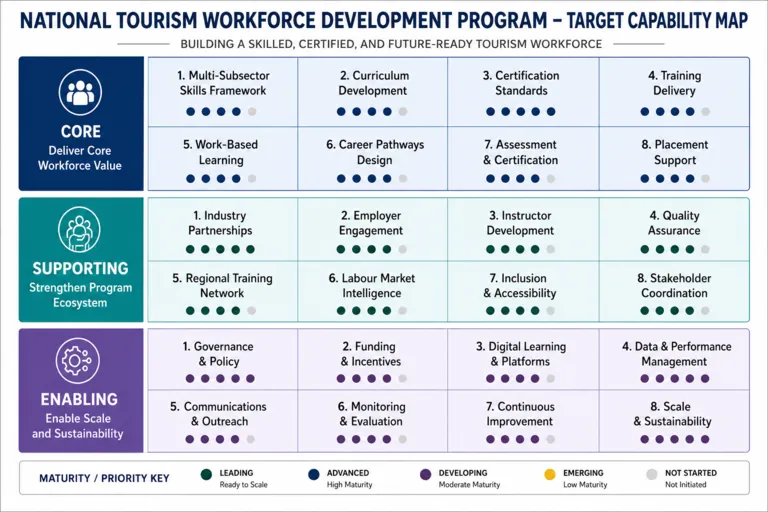
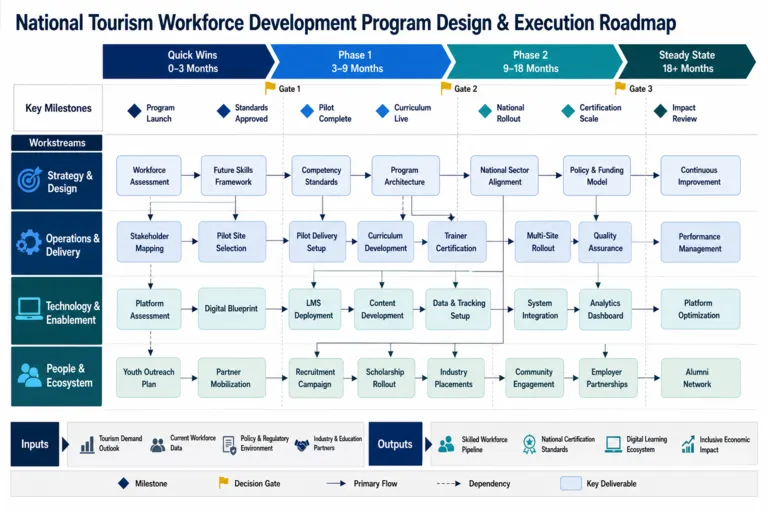
We designed a comprehensive tourism workforce development strategy integrating competency frameworks, training curriculum modernization, certification systems, and employer engagement models. A national competency map was created to define skill requirements across hospitality, tour operations, aviation, cultural tourism, and event management. Modular training programs were developed for frontline staff, supervisors, and service leaders. Certification standards aligned with global tourism benchmarks were introduced. Partnerships with educational institutions and tourism employers ensured industry-relevant learning pathways. Career awareness campaigns were developed to encourage youth participation in tourism.
Approach
- Conducted workforce diagnostics assessing skill gaps, employer needs, and training ecosystem readiness.
- Created a national competency framework covering technical, behavioral, and customer service skills.
- Designed modular training programs with blended delivery methods, practical components, and assessments.
- Established a tourism certification system aligned with international standards.
- Built employer collaboration models including apprenticeships, internship programs, and talent pipelines.
- Designed youth awareness campaigns promoting tourism careers through storytelling and industry showcases.
Recommendations
- Roll out standardized training across hospitality, tour guiding, aviation customer service, and cultural tourism.
- Create industry-linked learning pathways that offer apprenticeships and real-world training opportunities.
- Strengthen tourism academies and vocational centers with upgraded facilities and digital learning tools.
- Introduce performance-based incentives for employers that invest in workforce development.
- Implement national certification requirements to ensure service consistency and quality.
- Expand career awareness programs targeting schools, universities, and regional communities.
Engagement ROI
The workforce development program delivered strong national-level impact. Training participation increased by nearly 35% in the first year as standardized curricula made programs more accessible and relevant. Certification adoption among employers rose significantly, improving service reliability and talent mobility. Workforce readiness indicators improved by 28%, with employers reporting better alignment between training outcomes and operational needs. Career awareness initiatives increased youth interest in tourism jobs by 22%. Overall, the initiative strengthened the talent foundation needed to support Saudi Arabia’s tourism expansion and enhanced the industry’s capability to deliver world-class visitor experiences.
Talk to us for your needs in:
-
Tourism Infrastructure Planning and Optimization
-
Destination Marketing and Brand Strategy
-
Tourism Workforce Development and Training
-
Sustainable Tourism Solutions
-
Visitor Experience Enhancement and Engagement
-
Tourism Project Feasibility and Strategic Planning
-
Saudi Tourism Benchmarking