

Issues
A destination management entity overseeing natural reserves, cultural districts, and emerging tourist zones sought consulting expertise to implement sustainable tourism solutions across its operations. With rising global expectations for sustainability and environmental responsibility, the client aimed to embed sustainability practices into visitor experience design, operations, and long-term destination management. However, sustainability initiatives were fragmented, lacked measurable frameworks, and did not fully align with international responsible tourism standards.
Solution
We developed a holistic sustainable tourism framework integrating environmental standards, community participation models, sustainable experience design, and monitoring tools. The solution included designing sustainability guidelines for resource usage, visitor management, habitat preservation, and low-impact infrastructure. New experience modules promoting conservation awareness, eco-education, and community-led experiences were created. Monitoring tools were introduced to track energy use, waste output, water consumption, biodiversity health, and visitor behavior. Partnerships with local communities were strengthened through co-managed activities, training, and micro-enterprise development.
Approach
- Conducted environmental diagnostics assessing ecosystem sensitivity, resource usage patterns, and environmental risks.
- Designed sustainability guidelines covering waste reduction, renewable energy integration, and low-impact facility design.
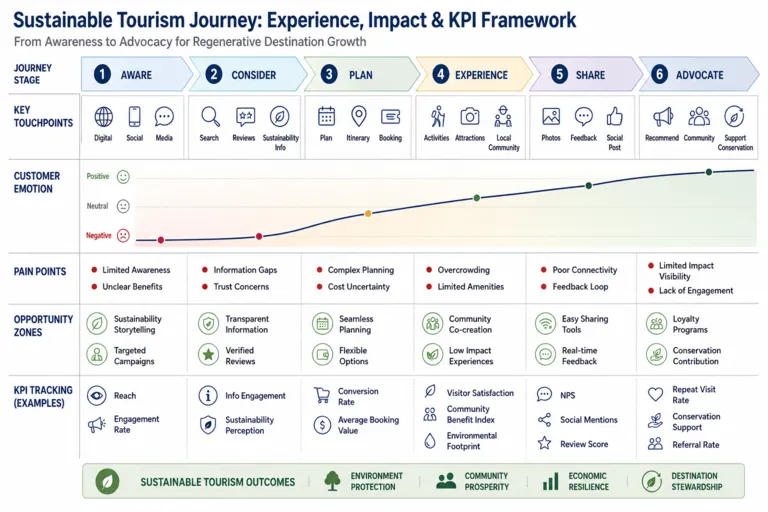
- Developed visitor experience programs incorporating eco-learning, conservation activities, and local community engagement.
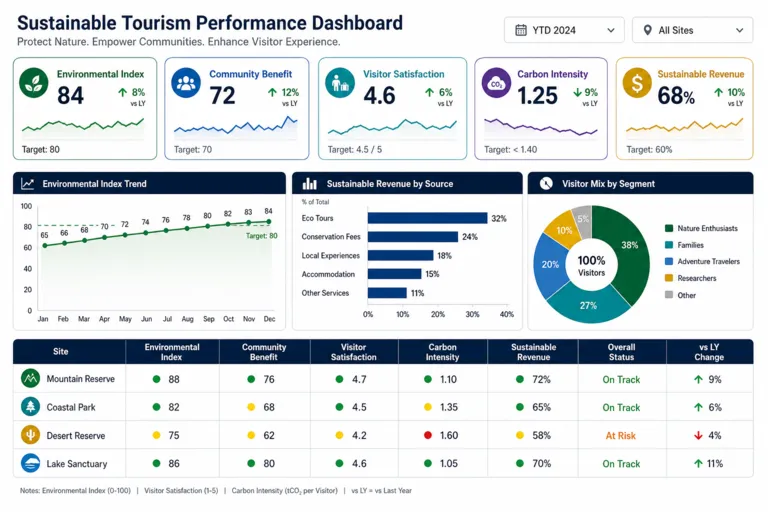
- Built digital dashboards to track sustainability KPIs and environmental performance metrics.
- Conducted sustainability training for staff, guides, and local stakeholders.
- Introduced community enterprise models supporting local artisans, farmers, and conservation groups.
Recommendations
- Implement low-impact infrastructure and renewable energy systems across all visitor sites.
- Strengthen conservation zones using visitor quotas, controlled access, and environmental monitoring.
- Expand eco-education programs including guided conservation walks, workshops, and visitor sustainability pledges.
- Encourage community participation through local partnerships, training, and revenue-sharing models.
- Integrate sustainability KPIs into operational, marketing, and experience design practices.
- Launch sustainability awareness campaigns targeting domestic and international visitors.
Engagement ROI
The implementation of sustainable tourism solutions generated measurable environmental and operational benefits. Water and energy consumption decreased by approximately 20% following adoption of resource-efficiency practices. Waste generation across visitor sites was reduced by 25% due to improved waste management systems and visitor participation. Enhanced conservation practices resulted in a 15% improvement in biodiversity indicators across sensitive areas. Eco-experience modules contributed to a 30% increase in participation in sustainability-themed activities, boosting both revenue and visitor awareness. Community involvement initiatives strengthened local economic impact and enhanced the authenticity of visitor experiences. Overall, the engagement established a strong foundation for long-term sustainable tourism management with measurable improvements in environmental stewardship.
Talk to us for your needs in:
-
Tourism Infrastructure Planning and Optimization
-
Destination Marketing and Brand Strategy
-
Tourism Workforce Development and Training
-
Sustainable Tourism Solutions
-
Visitor Experience Enhancement and Engagement
-
Tourism Project Feasibility and Strategic Planning
-
Saudi Tourism Benchmarking