

Issues
A cultural and heritage tourism entity responsible for managing historical attractions, artisanal districts, and traditional cultural programs sought support to reinvigorate its portfolio and attract a new generation of visitors. Despite strong cultural assets, visitor engagement remained limited due to outdated programming, insufficient interpretation tools, and a lack of modern experience design. The client aimed to position itself as a flagship destination that preserves national heritage while appealing to both domestic and international travelers. They required a strategic transformation plan to enhance storytelling, expand community participation, and align heritage preservation with experiential tourism trends.
Solution
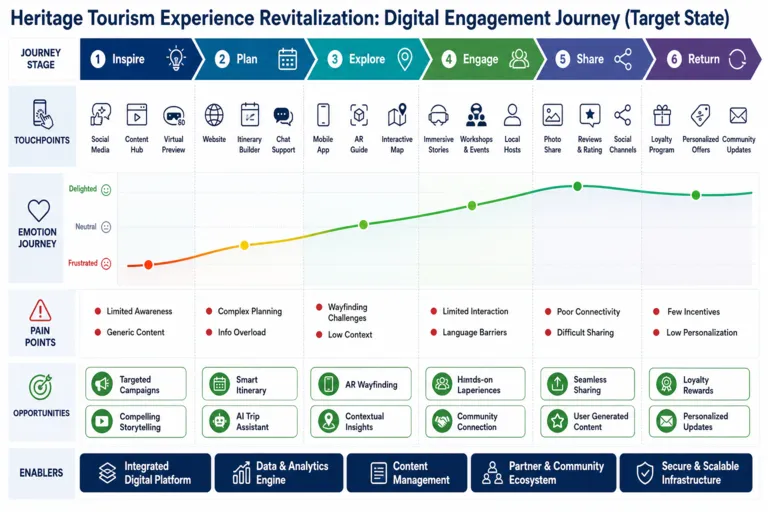
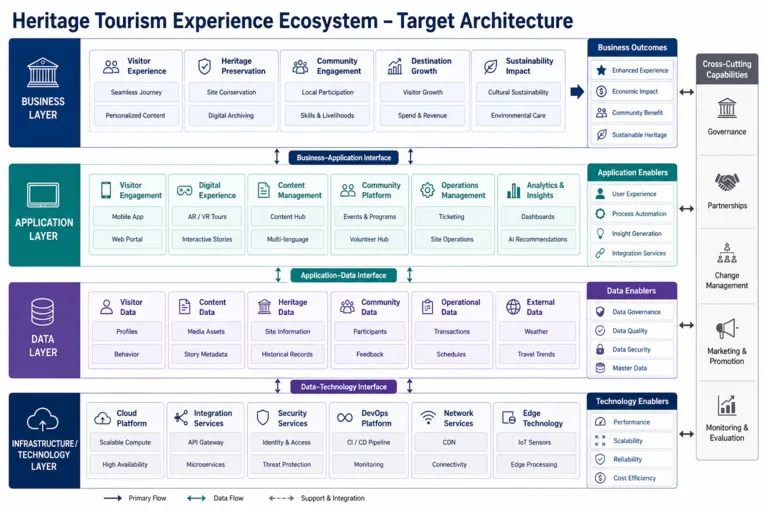
We designed a revitalization strategy centered on immersive experience design, digital enhancement, and community-based programming. The solution included modernizing heritage interpretation through AR/VR tools, interactive exhibits, and multi-language content. Experience pathways were redesigned to improve flow, enhance storytelling coherence, and integrate hands-on cultural elements such as craft workshops, guided heritage walks, and culinary immersion. A digital visitor engagement platform was introduced to support ticketing, navigation, personalized itineraries, and in-app cultural content. Community empowerment programs were developed to involve artisans, cultural practitioners, and local storytellers, ensuring authenticity while expanding socio-economic benefits.
Approach
- Conducted site assessments across heritage museums, cultural centers, and historic districts to evaluate current experience quality.
- Analyzed visitor profiles and expectations to identify gaps in storytelling, content formats, and experience depth.
- Designed immersive interpretation tools including AR layers, interactive installations, and dynamic cultural demonstrations.
- Developed a unified digital platform integrating ticketing, audio guides, maps, and personalized cultural itineraries.
- Structured community involvement through training programs for artisans, storytellers, and cultural practitioners.
- Established operational guidelines to ensure consistent heritage preservation standards and visitor experience quality.
Recommendations
- Introduce thematic storytelling journeys that connect historical narratives across multiple sites.
- Scale cultural workshops and hands-on experiences to attract families, students, and international cultural travelers.
- Expand digital content to include multi-language audio guides, virtual tours, and educational narratives.
- Strengthen collaboration with local communities to co-create experiences and preserve cultural integrity.
- Implement robust heritage management practices ensuring sustainable conservation across all sites.
- Launch targeted marketing campaigns aimed at cultural tourists, heritage enthusiasts, and educational institutions.
Engagement ROI
The revitalization program generated substantial improvements in engagement and destination performance. Visitor numbers increased by approximately 28% within the first operational year due to enhanced programming and refreshed storytelling formats. The digital engagement platform contributed to a 35% rise in online ticketing and improved visitor flow across multiple heritage sites. Introduced workshops and cultural experiences created new revenue streams, accounting for nearly 18% of total income by the end of the first cycle. Community involvement initiatives improved local participation and strengthened the destination’s authenticity, resulting in higher satisfaction ratings and repeat visitation. Overall, the initiative significantly elevated the cultural tourism offering and aligned the client with global standards for heritage experience design.
Talk to us for your needs in:
-
Tourism Infrastructure Planning and Optimization
-
Destination Marketing and Brand Strategy
-
Tourism Workforce Development and Training
-
Sustainable Tourism Solutions
-
Visitor Experience Enhancement and Engagement
-
Tourism Project Feasibility and Strategic Planning
-
Saudi Tourism Benchmarking