

Issues
A regional tourism developer specializing in nature-based and adventure travel sought strategic guidance to expand its eco-tourism portfolio across Saudi Arabia’s diverse natural landscapes. The client oversaw protected areas, desert trails, mountain adventure hubs, and coastal eco-sites but lacked a structured framework to manage growth sustainably. Visitor demand for adventure experiences was rising rapidly, yet product offerings, safety standards, and infrastructure remained inconsistent. The client required a comprehensive roadmap that balanced environmental preservation with market expansion, operational capability development, and responsible tourism practices aligned with global eco-tourism principles.
Solution
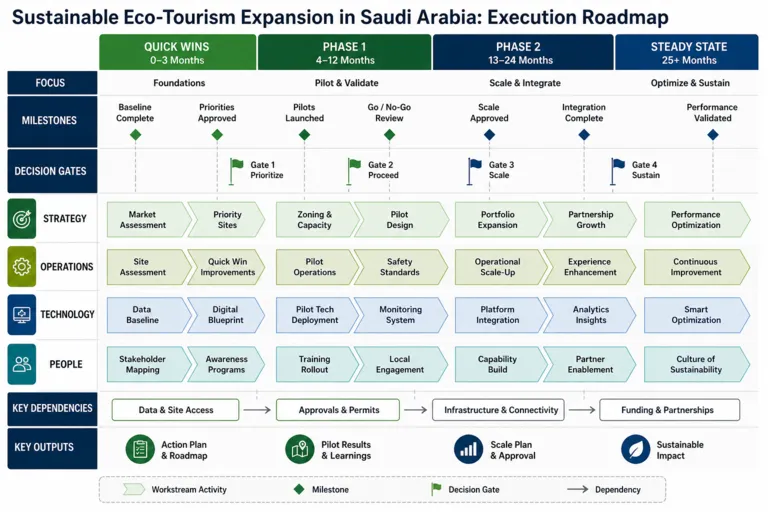
We developed an integrated eco-tourism expansion strategy focused on sustainable site development, environmental safeguards, standardized experience design, and workforce upskilling. The solution included creating eco-experience blueprints for hiking, canyoning, wildlife viewing, and low-impact accommodation models such as eco-lodges and mobile camping units. Environmental carrying capacity models were introduced to regulate visitor flows based on ecosystem resilience. Safety protocols and operational SOPs for adventure activities were standardized. A national eco-guide training and certification program was designed to enhance workforce professionalism. Marketing strategies were refined to target niche adventure segments through digital platforms, storytelling, and global partnerships.
Approach
- Conducted environmental impact assessments to establish carrying capacity and zoning plans for eco-tourism sites.
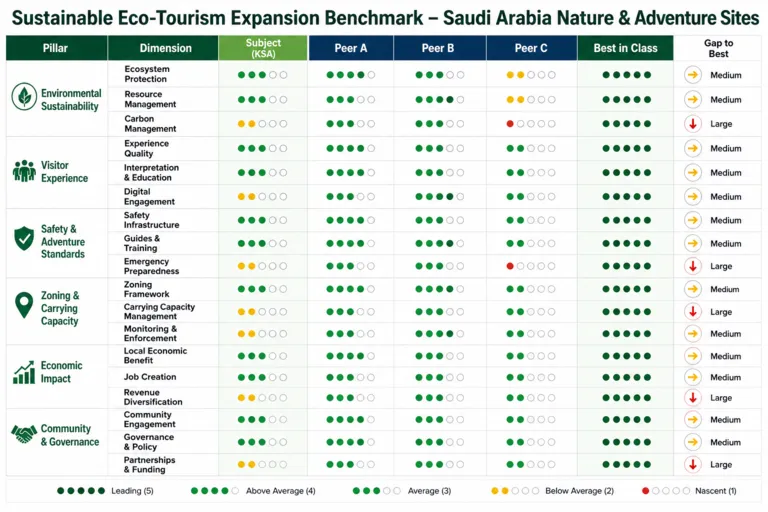
- Benchmarked global eco-tourism destinations to identify best practices in sustainability, safety, and experience design.
- Created standardized experience modules covering trails, adventure activities, interpretation, and visitor facilities.
- Developed safety frameworks including risk assessments, emergency procedures, and operator accreditation standards.
- Designed eco-guide training programs with modules on conservation, safety, and cultural interpretation.
- Built a digital marketing and distribution strategy tailored to adventure travelers and global eco-tourism audiences.
Recommendations
- Implement zoning practices for core conservation areas, visitor access zones, and activity-specific hubs.
- Scale eco-friendly accommodation such as low-impact lodges, modular camps, and community-operated stays.
- Strengthen environmental monitoring systems using sensors, ranger patrols, and digital reporting tools.
- Formalize operator accreditation standards to ensure consistent quality and safety across activities.
- Expand partnerships with conservation groups, adventure organizations, and global distribution networks.
- Launch targeted promotional campaigns highlighting Saudi Arabia’s unique natural assets and adventure potential.
Engagement ROI
The program generated strong environmental, economic, and operational returns. Visitor satisfaction scores increased by approximately 26% due to improved safety and standardized experience quality. The introduction of carrying capacity models reduced environmental stress indicators by nearly 18% across sensitive areas. Adventure activity revenues grew by 30% in the first year, supported by the launch of new eco-experiences and enhanced marketing reach. Workforce certification strengthened service professionalism, reducing incident rates by 40% and improving operator reliability. The initiative positioned the eco-tourism portfolio as a benchmark for sustainable adventure development while reinforcing Saudi Arabia’s reputation as an emerging global nature destination.
Talk to us for your needs in:
-
Tourism Infrastructure Planning and Optimization
-
Destination Marketing and Brand Strategy
-
Tourism Workforce Development and Training
-
Sustainable Tourism Solutions
-
Visitor Experience Enhancement and Engagement
-
Tourism Project Feasibility and Strategic Planning
-
Saudi Tourism Benchmarking