

Issues
A national tourism development authority overseeing destination masterplans, public infrastructure, and visitor facility expansion sought consulting support to optimize tourism infrastructure planning across multiple developing destinations. The authority played a central role in ensuring that transportation networks, visitor centers, signage, public amenities, and environmental infrastructure were aligned with Saudi Arabia’s growing tourism ambitions. However, rising visitor numbers and rapid development cycles exposed gaps in infrastructure quality, capacity planning, and long-term operational sustainability.
Solution
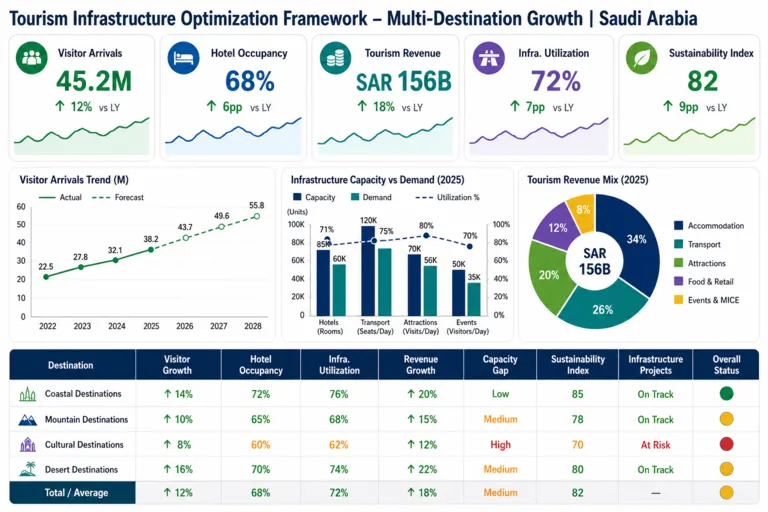
We developed a tourism infrastructure optimization framework integrating capacity planning, infrastructure design, sustainability guidelines, digital forecasting tools, and governance enhancements. The solution included demand modeling tools to forecast visitor flows and infrastructure utilization scenarios. A unified infrastructure development model standardized planning assumptions, design principles, and environmental safeguards. Public facility enhancements, transportation integration, and visitor center redesign were prioritized based on projected growth. A lifecycle management strategy was created to ensure long-term asset sustainability, including maintenance protocols, monitoring systems, and cost optimization.
Approach
- Conducted comprehensive site assessments evaluating facility capacity, infrastructure gaps, and visitor flow patterns.
- Built demand forecasting models using visitor data, seasonal trends, and tourism growth scenarios.
- Designed infrastructure planning guidelines covering accessibility, sustainability, environmental protection, and user experience.
- Integrated transportation planning with pedestrian pathways, micro-mobility options, and destination transit connectivity.
- Developed environmental infrastructure strategies for water management, waste systems, and renewable energy integration.
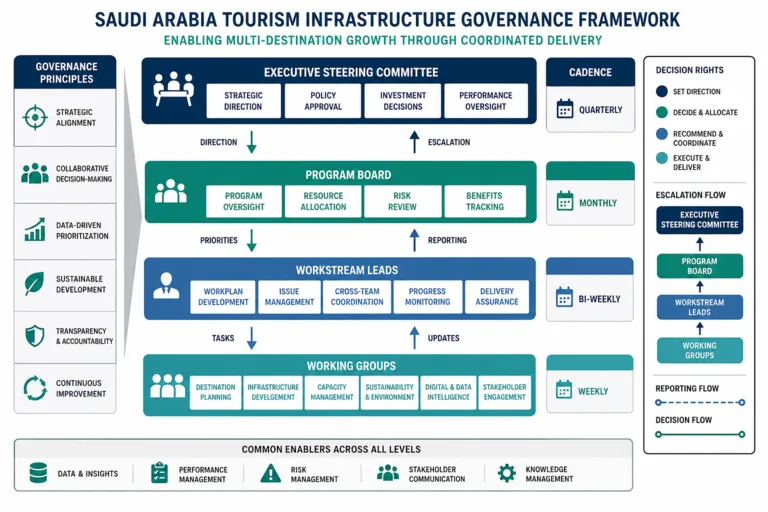
- Introduced governance frameworks to align stakeholders and ensure coordinated planning cycles.
Recommendations
- Implement standardized infrastructure planning templates for all new tourism zones and public facilities.
- Align transportation infrastructure with projected visitor densities to minimize congestion and enhance accessibility.
- Establish sustainability infrastructure such as solar-powered amenities, reusable water systems, and low-impact waste management.
- Strengthen stakeholder coordination through joint planning committees and transparent project timelines.
- Develop long-term asset maintenance programs using predictive analytics and condition monitoring technologies.
- Invest in visitor information centers with digital kiosks, multi-language support, and real-time service updates.
Engagement ROI
The optimized planning model resulted in significant efficiency gains and improved visitor infrastructure performance. Forecasting tools enabled more accurate capacity planning, reducing congestion risks by nearly 30% during peak months. Infrastructure investments were optimized, lowering development waste and accelerating project timelines by 15–20%. Improved environmental infrastructure reduced water consumption and waste output by approximately 18% across pilot destinations. Lifecycle planning increased asset longevity, decreasing long-term maintenance costs by an estimated 12%. Overall, the authority gained a more resilient, efficient, and visitor-friendly infrastructure framework supporting sustainable tourism growth.
Talk to us for your needs in:
-
Tourism Infrastructure Planning and Optimization
-
Destination Marketing and Brand Strategy
-
Tourism Workforce Development and Training
-
Sustainable Tourism Solutions
-
Visitor Experience Enhancement and Engagement
-
Tourism Project Feasibility and Strategic Planning
-
Saudi Tourism Benchmarking