Saudi Arabia is confronting a business hotel gap as corporate travel expands faster than practical, affordable hotel supply. Recent market reviews point to sustained growth in business travel in Riyadh, Jeddah, and the Dammam metropolitan area, supported by large infrastructure and industrial projects tied to Vision 2030. Yet analysts tracking pipelines note that most upcoming supply in Riyadh still skews upscale and luxury, leaving only a small share of future keys in midscale or economy categories.
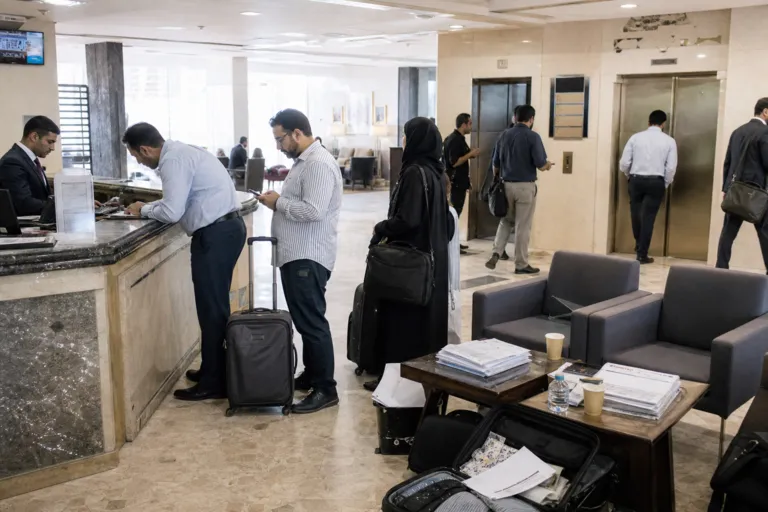
The result is visible in day-to-day corporate travel behavior. Global distribution channels and travel management companies report that many corporate travelers are increasingly price-sensitive, especially those linked to construction, engineering, and professional services work on government-backed schemes. In practice, travelers can be pushed into high-rate luxury hotels in peak periods, or forced to book far from core business districts.
Riyadh shows the imbalance clearly. Corporate demand in the city now outpaces available mid-range supply, creating pricing pressure and booking challenges. Booking.com market data cited in reporting shows business travelers account for over 40% of corporate bookings in Riyadh’s financial districts. Feasibility studies also indicate that mid-market hotels with standardized room designs, strong WiFi connectivity, and dedicated workspaces can sustain high occupancy year-round.
Why Mid-market Business Hotels Are the Missing Middle
Investors and developers are responding with a targeted shift. Multiple reports describe roughly $1 billion being redirected toward mid-market, select-service, and extended-stay hotels designed for corporate travelers, project teams, and MICE demand. The formats emphasize compact footprints, standardized rooms, and limited but efficient food and beverage. In one set of feasibility findings, standardized designs reduce construction costs by 30–40% versus full-service hotels, while still supporting business essentials like workspaces and strong connectivity.
A major example is the AYARA platform. Patel Family Office and Abdel Hadi A. Al-Qahtani & Sons signed a $1 billion agreement to build 50 business hotels across Saudi Arabia by 2029, targeting Riyadh, Jeddah, and Dammam, and also development zones such as NEOM and the Red Sea coast. The partners said the plan is expected to deliver between 5,000 and 7,000 rooms. The venture is positioned as a response to a hotel landscape “heavily skewed toward luxury segments,” even as corporate and MICE needs expand.
This supply debate is happening alongside broader room growth and pricing pressure. In early 2026, industry data cited in reporting put hotel occupancy rates at 55% to 75%, while nightly rates were described as falling dramatically as inventory growth outpaced international visitor arrivals. That tension helps explain why business travel Saudi Arabia demand is increasingly steering capital toward faster-to-deliver, cost-efficient, mid-market lodging rather than adding only premium rooms that do not fit most project budgets.
What is driving business travel Saudi arabia demand in major cities?
Why do corporate travelers struggle to find the right hotels in Riyadh?
What kind of hotels are being funded to close the gap?
What is the AYARA platform planning to add to the market?
How do costs and design differ for mid-market select-service hotels?
Talk to us for your needs in:
-
Tourism Infrastructure Planning and Optimization
-
Destination Marketing and Brand Strategy
-
Tourism Workforce Development and Training
-
Sustainable Tourism Solutions
-
Visitor Experience Enhancement and Engagement
-
Tourism Project Feasibility and Strategic Planning
-
Saudi Tourism Benchmarking