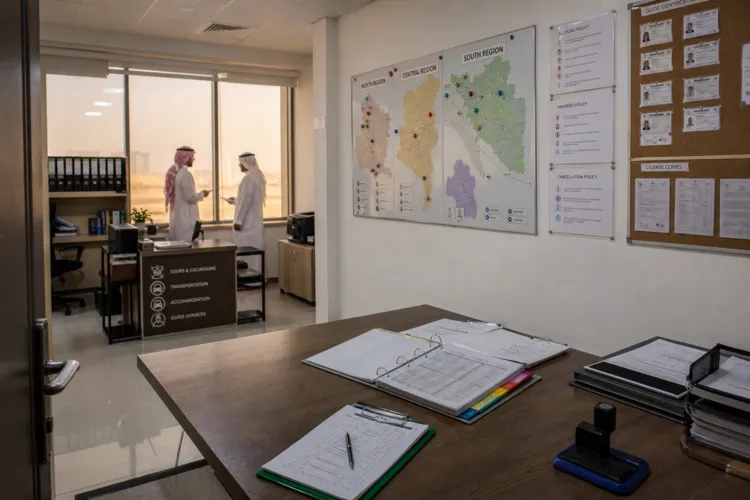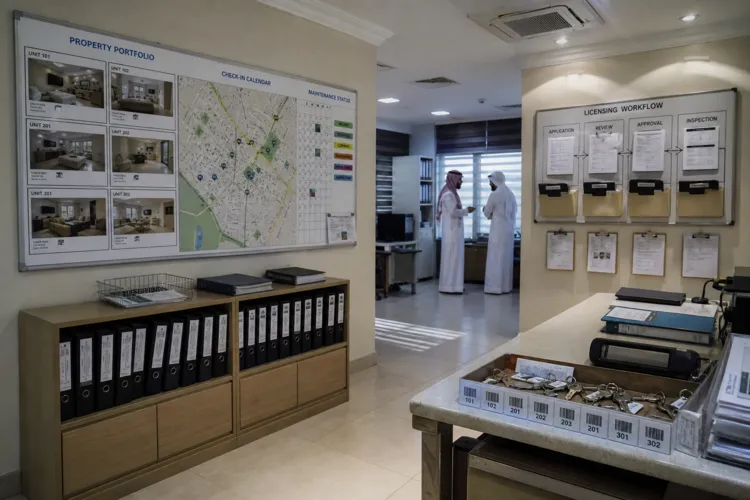
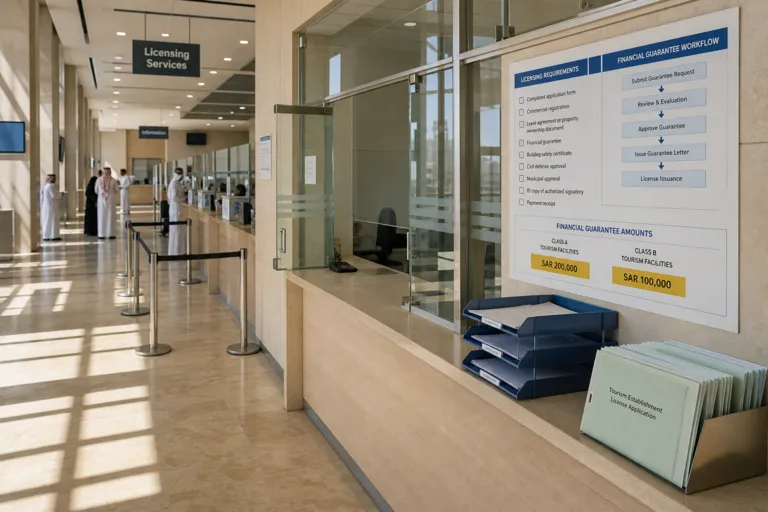
Saudi Arabia is rewriting parts of its tourism rulebook as the sector scales. Four updated regulations were published in Umm Al-Qura on 11 September 2026, covering Travel and Tourism Services, Tourist Guiding, Tourist Hospitality Facilities, and Private Hospitality Units. The Ministry of Tourism said the updates simplify some licensing categories, widen tour-guide operating scope, revise hospitality classification, and move private tourist accommodation from permits to licences. For travel businesses, the most immediate operational question is what the new financial guarantee means for licensing, budgeting, and ongoing compliance in the market.
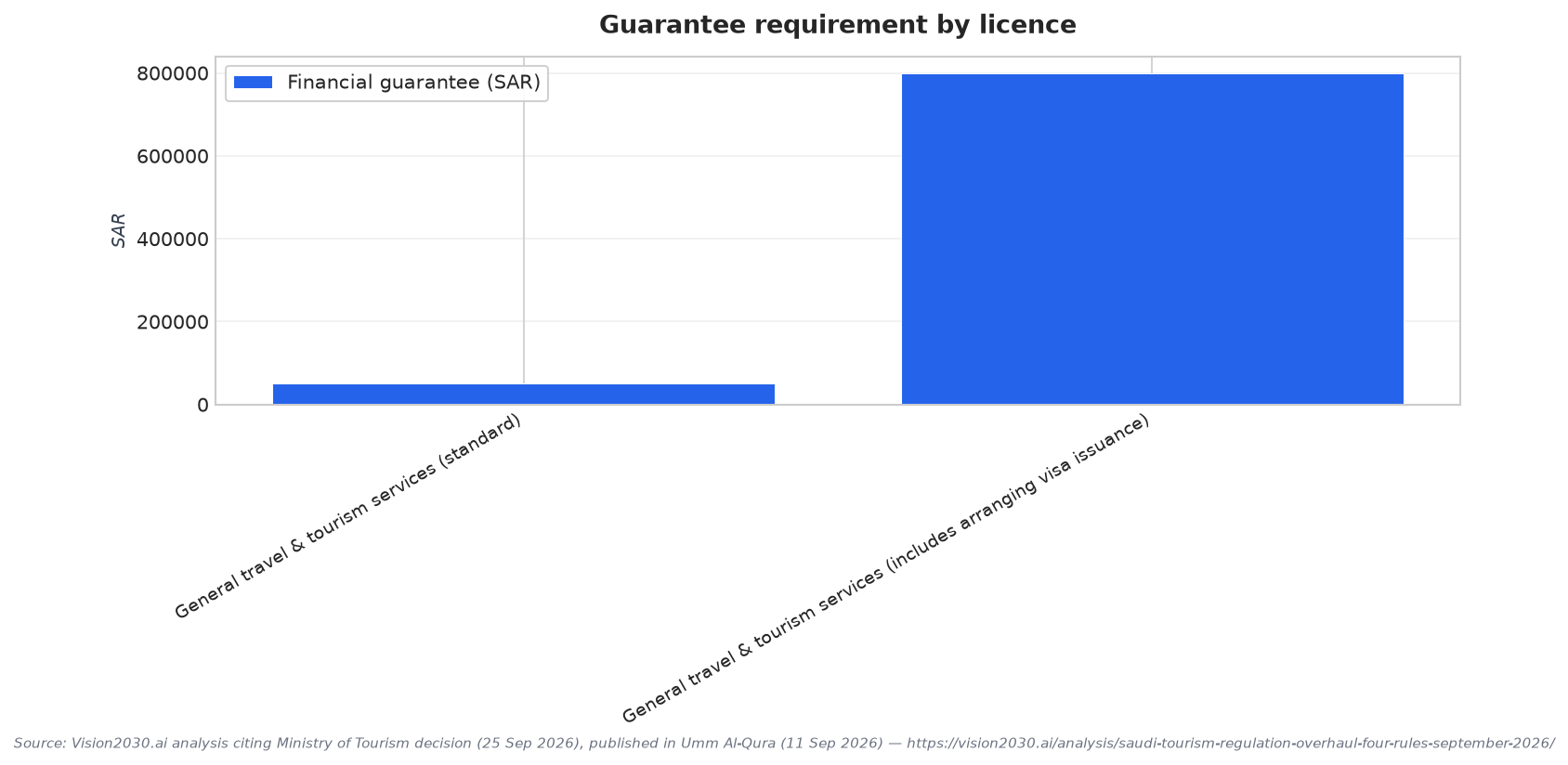
The headline change for many operators is the financial guarantee linked to the “general travel and tourism services” licence. On 25 September 2026, the minister set the guarantee at SAR 50,000 in the standard case. The same decision sets a much higher requirement—SAR 800,000—when the licensed service includes arranging visa issuance for people seeking to enter Saudi Arabia. The decision replaces an earlier ministerial decision. For companies comparing service lines, the trigger is not generic travel sales; it is specifically whether the licensed scope includes arranging visa issuance for inbound entry.
What Else Changed Around Licensing and Timelines
The guarantee sits inside broader licensing and transition mechanics that affect how quickly firms must act. The official gazette sets transition periods for existing operators: travel-service providers and guides generally have up to 180 days to adjust. Private hospitality-unit permit holders have 90 days. The amended hospitality-facility regulation is scheduled to take effect on 1 July 2027, with a 90-day compliance period after its effective date. In practice, this means travel-service businesses need to map the new guarantee requirement alongside the adjustment window that applies to them.
The updated travel-services regulation applies to firms arranging trips and tourism services, including tours, ticket sales, visa-related services, activities, and accommodation bookings. The framework is described as simplifying licence categories, expanding permitted services, offering more flexibility in licence duration, and clarifying the rights and obligations of providers and customers. This is where the travel agency financial guarantee in Saudi Arabia becomes a practical planning item. If a company’s offerings include visa-related services, it should distinguish between “visa-related services” in general and the specific case where the licence includes arranging visa issuance for entry, because the minister’s guarantee thresholds differ.
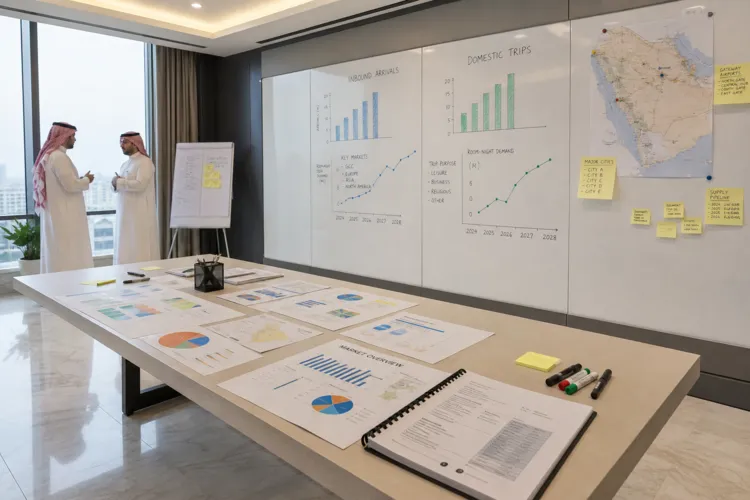
These rules land at a moment when tourism volumes and spending are already being reported at large scale in Saudi Arabia. One industry source cites total tourism spending of SAR 304 billion in 2025, and domestic tourism reaching 93.3 million trips in 2025, generating SAR 127.1 billion. The same source cites 28.9 million domestic tourists in Q1 2026 and notes that over 52% of inbound visitors travelled for non-religious purposes. Against that backdrop, the new guarantee levels can be read as part of an effort to scale licensing, quality control, and consumer protection while the market expands.
What is the new travel agency financial guarantee in Saudi Arabia for a standard licence?
When does the SAR 800,000 financial guarantee apply?
When were the updated tourism regulations published?
How long do travel-service providers generally have to adjust under the transition periods?
What tourism scale indicators are cited alongside these rule changes?
Talk to us for your needs in:
-
Tourism Infrastructure Planning and Optimization
-
Destination Marketing and Brand Strategy
-
Tourism Workforce Development and Training
-
Sustainable Tourism Solutions
-
Visitor Experience Enhancement and Engagement
-
Tourism Project Feasibility and Strategic Planning
-
Saudi Tourism Benchmarking