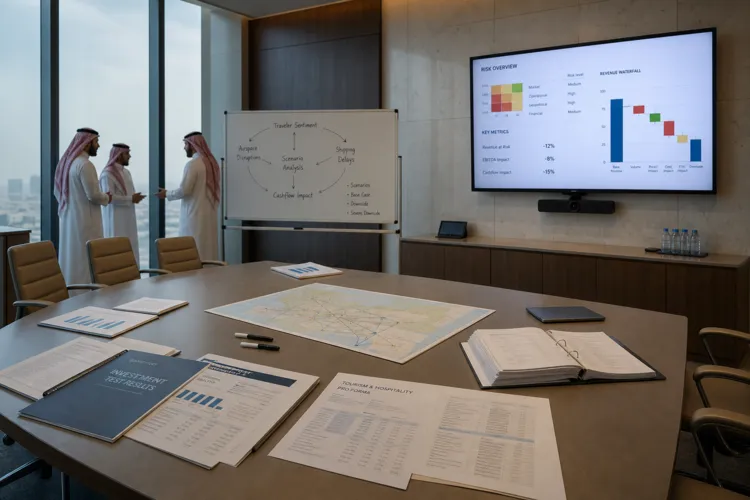

Developing a hotel in Saudi Arabia is a capital-heavy decision where early feasibility work can make or break the outcome. A Riyadh-focused 2025 price guide warns that underestimating construction cost often forces value engineering that compromises the concept, or creates cost overruns that damage ROI. That same guide is clear on scope: its construction benchmarks include structure, MEP, interior fit-out, and fixed equipment, while excluding land, FF&E (loose furniture and equipment), OS&E (operating supplies and equipment), and pre-opening costs. So when investors ask about hotel construction cost in Saudi Arabia, the first practical step is defining which buckets are inside the number and which ones are not.
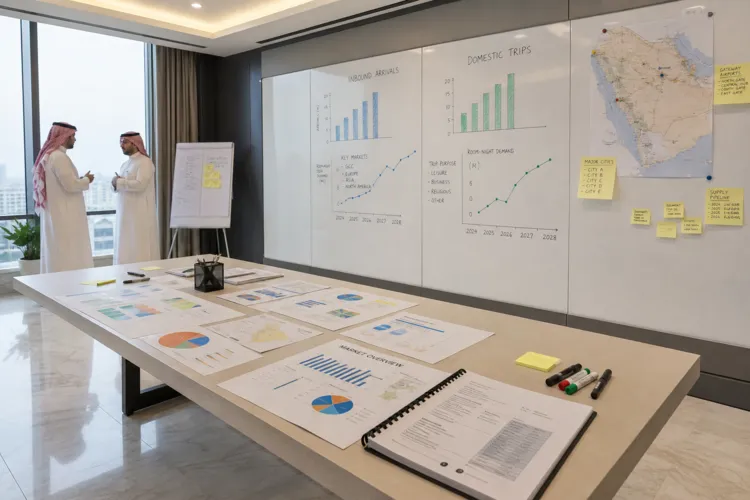
Demand and performance context helps explain why timelines and procurement pressure matter. Saudi Arabia recorded 115.9 million total tourist trips in 2024, exceeding an initial target of 100 million, and travel and tourism are on track to contribute over 10% of GDP by 2025. On hotel operating metrics, a 2025 hospitality analysis reports nationwide occupancy hovering around 60–62% over the past 12 months, with ADR about $185–$190 (approximately SAR 700). It also states that in the first half of 2025 nationwide ADR reached SAR 822 (~$219), up 1.9% year on year, while occupancy averaged 62.3%. Those figures signal why developers push to open on schedule: missing a demand window can mean missing periods of pricing power.
What Actually Drives Cost and Schedule on a Saudi Hotel Build
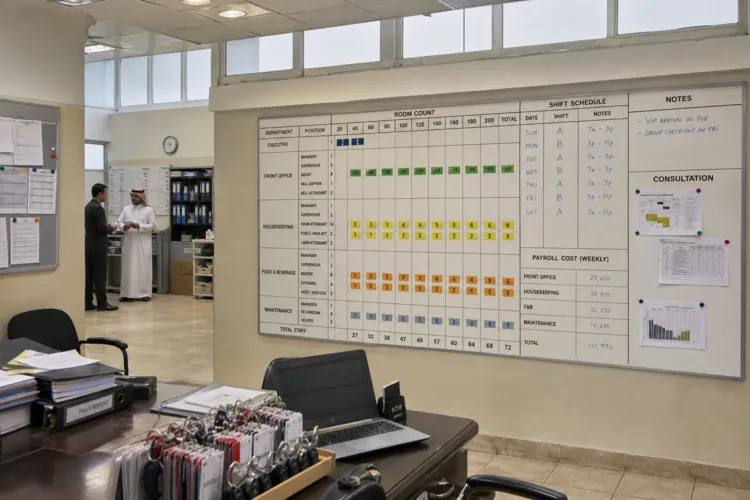
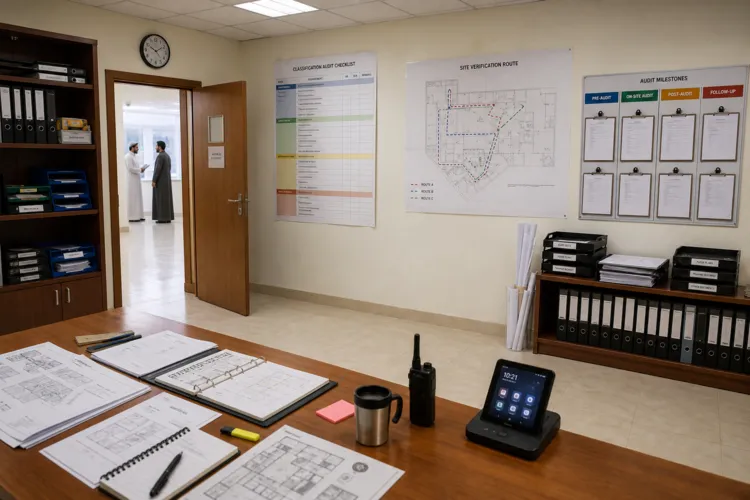
Riyadh 2025 benchmarks highlight five variables that most directly change the construction budget: hotel classification and brand standards, room size and mix, F&B and amenities scope, structure and height, and land cost (not included in the construction ranges). The guide notes that a 5-star international brand property works to design guidelines that can specify everything from minimum room sizes to finish quality to MEP redundancy requirements. It also states that a 3-star limited-service hotel can be built for less than half the cost per square metre of a 5-star flagship. On programming, it points out that a hotel with 45 sqm average room size will cost significantly more per room than one with 32 sqm average rooms, even at the same SAR-per-sqm rate. These design choices also affect timelines by changing complexity, long-lead equipment needs, and coordination effort across trades.
Trade-level composition matters because it concentrates risk into a few big packages. In the Riyadh cost breakdown, substructure and structure represent 18–24% of total construction cost, and the guide explains that height, ground conditions, and span requirements for public areas drive this. It also notes Riyadh’s geology varies, with some areas having competent rock at shallow depth and others requiring deep piling in weak soils, making geotechnical investigation essential before structural design begins. For projects outside central Riyadh, the same source cautions that developments in NEOM, the Red Sea, or Diriyah may carry a premium due to site accessibility and logistics. In parallel, a Vision 2030 investment guide flags construction execution risk: the scale of simultaneous hotel development projects can create competition for contractors, materials, and skilled labour, which can tighten schedules and procurement windows.
Finally, timelines and budgets sit inside wider capital and pipeline conditions. A Vision 2030 hospitality investment guide estimates approximately 150,000 to 200,000 keys are in active development stages, and describes a gap of 300,000 to 350,000 keys between current supply plus committed pipeline and the 2030 target. In the broader construction market, GlobalData reports GaStat data showing net FDI inflow of SAR 72.3 billion ($19.3 billion) in the first nine months of 2025, up 32.7% year on year. These forces can speed up investment decisions, but they also amplify delivery risk. A realistic plan separates construction cost from excluded items like land and pre-opening, ties scope to brand standards and amenity intensity, and anticipates procurement constraints created by an active national development pipeline.
What is included in the Riyadh 2025 hotel construction benchmarks?
Which design choices most affect hotel build cost and complexity?
How much of total construction cost can structure represent?
What current market signals support new hotel development in Saudi Arabia?
How should investors think about hotel construction cost in Saudi Arabia during feasibility?
Talk to us for your needs in:
-
Tourism Infrastructure Planning and Optimization
-
Destination Marketing and Brand Strategy
-
Tourism Workforce Development and Training
-
Sustainable Tourism Solutions
-
Visitor Experience Enhancement and Engagement
-
Tourism Project Feasibility and Strategic Planning
-
Saudi Tourism Benchmarking