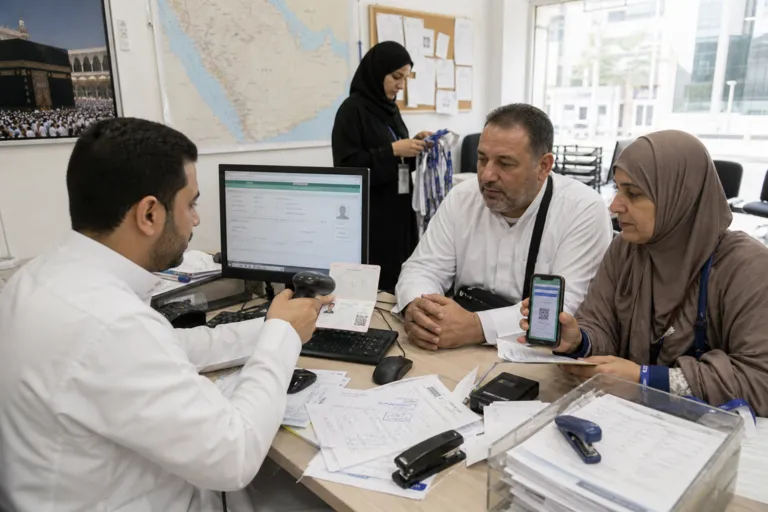
Saudi Arabia is entering Hajj 2026 with stricter controls that reshape how pilgrims move, book, and access Makkah. Multiple reports describe a permit-only approach for Makkah and the holy sites during the Hajj period. Visit visa holders are explicitly barred from performing Hajj, and entry into Makkah is being restricted to people with valid Hajj permits or officially approved work and residency documents linked to the holy city. For operators, this is no longer a “best effort” environment. It is a verification environment with checkpoints, reinforced entry routes, and tighter administrative gating through official channels.
The compliance downside is clear because the penalty structure is sharper in 2026. Individuals attempting Hajj without a permit face fines of up to SAR 20,000 (about USD 5,300). More severe penalties of up to SAR 100,000 (about USD 26,663) apply to those who assist unauthorized pilgrims, including by issuing visit visas, providing transportation, or offering accommodation. Enforcement can also include deportation and a re-entry ban of up to 10 years for foreign nationals found violating Hajj regulations. Some reporting also notes possible vehicle confiscation when a vehicle is used to transport unauthorized pilgrims.
Where Compliance Becomes a Competitive Advantage
The opportunity is to build a business model that aligns with the Kingdom’s tightening controls and the shift toward verified, centralized workflows. In the Umrah ecosystem, Saudi Arabia temporarily suspended contracts for 1,800 foreign travel agencies out of an estimated 5,800, and gave suspended agencies 10 days to correct issues before restoring contracts. That action signals continuous monitoring and evaluation, not one-time enforcement. Regulations also emphasize booking through the official Nusuk platform. The same source describes booking-linked visa processing as mandatory, requiring verified accommodation, ground transport, and round-trip flight tickets, backed by a Booking Reference Number (BRN).
Operationally, tour operators can reduce risk by designing “permit-first” journeys and removing ambiguity from customer communications. Reports indicate Umrah permit issuance is paused during a defined window (Nusuk stopped issuing Umrah permits between 18 April and 31 May), and Umrah travel is described as suspended until after the pilgrimage expected to conclude in June, with gradual resumption afterward. Another compliance point is documentation discipline. From 2026, agencies face tighter responsibility for pilgrim documentation, including ensuring passports have at least six months’ validity, visas are valid, and health insurance requirements are fulfilled. For Umrah, visa validity is described as 30 days from issuance for entry, with the ability to stay up to 90 days after entry.
Finally, operators should anticipate traveler questions about access controls and broader travel conditions. A U.S. security alert notes that beginning April 18, individuals attempting to enter Mecca will be required to show a Hajj permit, a residency ID issued from Mecca, or a valid permit credential. Separate reporting states that from April 13, entry into Makkah is restricted to those holding valid Hajj permits or approved work and residency documents. For Saudi tour operators, the most durable play is to treat 2026 enforcement as a service design problem: ensure bookings are verified, permits are aligned to traveler intent, and staff and partners avoid any activity that could be interpreted as facilitating unauthorized access under the 2026 penalty framework.
What are the main rules shaping Hajj visa enforcement in 2026?
What penalties apply for attempting Hajj without a permit in 2026?
How are facilitators and tour sellers exposed under the 2026 enforcement regime?
What compliance signals should operators take from the Umrah agency suspensions?
What practical steps can Saudi tour operators take to stay compliant in 2026?
Talk to us for your needs in:
-
Tourism Infrastructure Planning and Optimization
-
Destination Marketing and Brand Strategy
-
Tourism Workforce Development and Training
-
Sustainable Tourism Solutions
-
Visitor Experience Enhancement and Engagement
-
Tourism Project Feasibility and Strategic Planning
-
Saudi Tourism Benchmarking