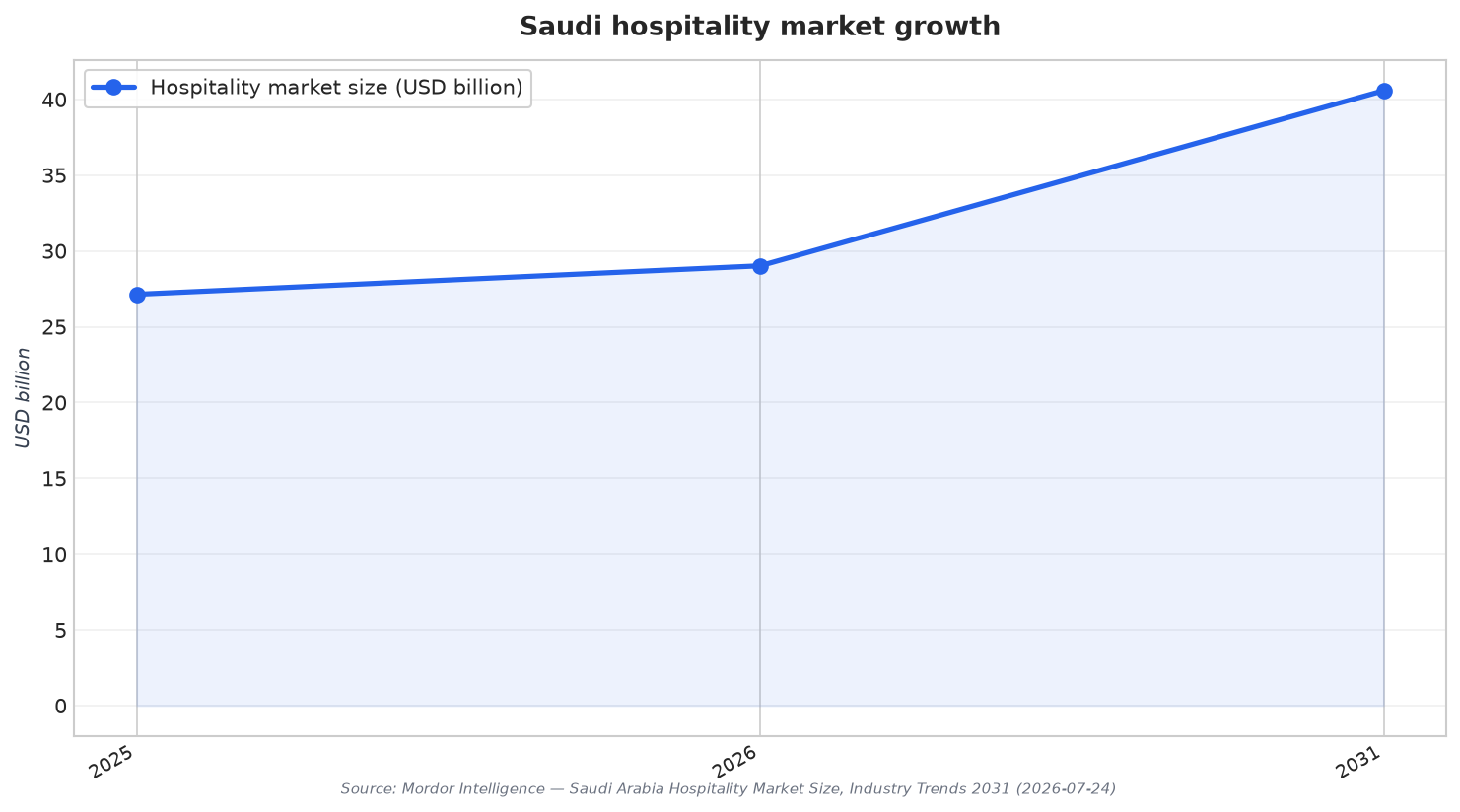
Hospitality procurement in Saudi Arabia is becoming a strategic function, not a back-office task. Market growth is a clear driver. Mordor Intelligence estimates the Saudi Arabia hospitality market at USD 27.14 billion in 2025 and USD 29.02 billion in 2026, with projections reaching USD 40.58 billion by 2031 at a 6.93% CAGR over 2026–2031. That momentum sits alongside an active development climate. A 2025 market analysis reports national occupancy hovering around 60–62% over the past 12 months, with ADR around $185–$190 (about SAR 700). In the first half of 2025, ADR reached SAR 822 (about $219), up 1.9% year-on-year, while occupancy averaged 62.3%. These operating metrics matter to procurement teams because they raise the cost of delay: missed opening dates and phased fit-outs can hit revenue performance in a market showing strong pricing power.
Demand composition also shapes what gets bought, when it gets bought, and how tightly specifications are controlled. Mordor Intelligence reports that chain hotels commanded 57.74% of market share in 2025, and independent hotels are forecast to trail as chain operators outpace them with an 11.62% CAGR through 2031. Luxury led by accommodation class, holding 36.92% of market size in 2025, while serviced apartments are advancing at a 12.57% CAGR through 2031. For B2B suppliers, this mix pushes procurement toward brand-aligned guestroom packages, public-area furniture, and repeatable standards across multi-property rollouts, while also opening room for apartment-style solutions that emphasize durability, storage, and flexible living layouts. Even booking behavior signals operational priorities: OTAs captured 41.65% of transactions in 2025, but direct digital channels are growing at a 14.78% CAGR, encouraging investments that support consistent guest experience across touchpoints.
FF&E Supply Chains: Where Speed, Compliance, and Local Delivery Win
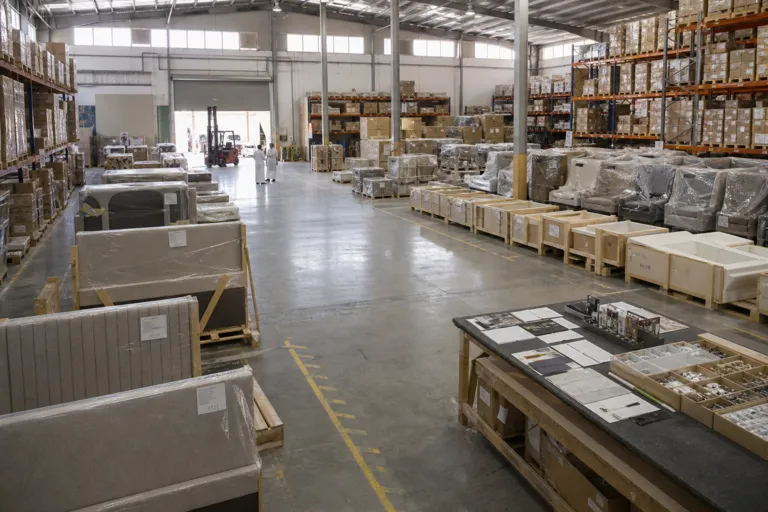
The commercial opportunity sits inside execution. A Saudi-focused supplier overview notes that reliable hotel FF&E suppliers can deliver guestroom furniture, lobby furniture, lighting, decorative items, casegoods, OS&E, and installation support while helping projects stay on schedule and within budget. It also warns that wrong-fit suppliers can trigger delayed deliveries, inconsistent quality, import or logistics issues, poor installation coordination, and higher project costs. Those risks rise as regional pipelines broaden. Mordor Intelligence reports the Makkah–Jeddah corridor held 26.62% of market size in 2025, while the Red Sea and wider western coast are set to expand at an 18.20% CAGR to 2031. Meanwhile, a Vision 2030 investment guide highlights immediate opportunities in midscale and select-service hotel development in Riyadh, Jeddah, and the Makkah–Madinah corridor, where demand is established and supply gaps are described as acute. For procurement and FF&E partners, this means repeat volume across multiple submarkets—but only if lead times, installation sequencing, and site coordination are managed tightly.
Religious travel is another demand engine with direct implications for purchasing cycles, refurbishments, and readiness. Mordor Intelligence cites Hajj attendance at approximately 2.1 million in 2025 and 1.71 million in 2026, with projections of around 2.3 million. It also reports Umrah pilgrims totaled 18 million in 2025 and are expected to exceed 20 million in 2026, with average spending of USD 5,400 per pilgrim. The same source estimates religious tourism generated about USD 30 billion in 2025 and is projected to reach about USD 34 billion in 2026. In parallel, the 2025 market analysis reports total tourist trips (domestic and international) reached 115.9 million in 2024, exceeding an initial target of 100 million. For hospitality procurement teams, these volumes translate into higher wear-and-tear, tighter turnaround windows, and a clear need for suppliers that can support both new openings and operational replacements without disrupting occupancy.
How is hospitality procurement in Saudi Arabia changing as the market grows?
What hotel segments are shaping FF&E requirements the most?
Which regions point to the biggest near-term supply chain opportunity?
What risks do hotels face if they choose the wrong FF&E supplier?
Why does religious travel matter to procurement planning?
Talk to us for your needs in:
-
Tourism Infrastructure Planning and Optimization
-
Destination Marketing and Brand Strategy
-
Tourism Workforce Development and Training
-
Sustainable Tourism Solutions
-
Visitor Experience Enhancement and Engagement
-
Tourism Project Feasibility and Strategic Planning
-
Saudi Tourism Benchmarking