Hotel revenue management in Saudi Arabia is getting harder and more valuable at the same time. Demand is broadening as visa processes are simplified and investment tied to Vision 2030 supports both business and leisure arrivals, while a large development pipeline adds competitive pressure. National occupancy is about 61.5%, with ADR at $188 and RevPAR at $116, flat year-on-year, but performance differs by city: Riyadh RevPAR fell 5.5% and Jeddah fell 9.6%, while Makkah rose 3.2%. This uneven picture is why revenue teams need tighter forecasting by market, tighter segmentation, and sharper timing around religious seasons and major events.
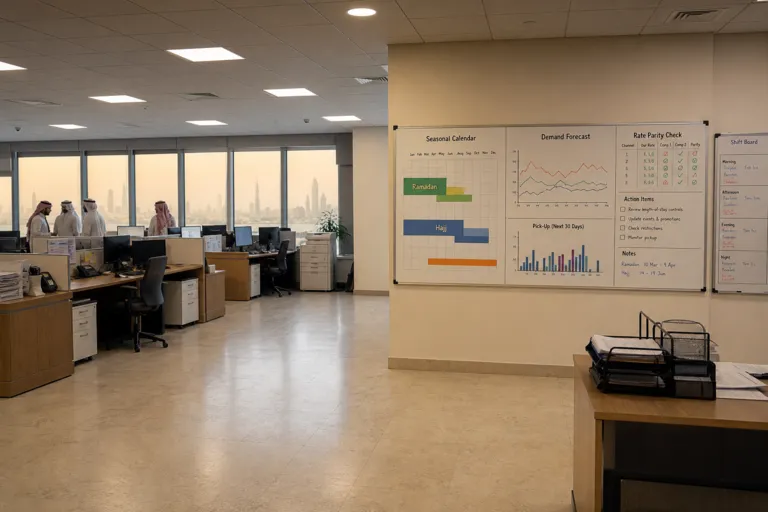
In Makkah, the calendar is the strategy. Haram-proximate hotels can generate 65% to 70% of annual revenue from Ramadan, the Hajj period, and the preparation weeks surrounding them. During those peaks, five-star properties within one kilometre of the Grand Mosque achieve occupancy above 95%, with ADR between SAR 1,200 and SAR 2,500. Pilgrimage volumes also shift: Hajj attendance reached approximately 2.1 million in 2025 and stood at 1.71 million in 2026, while Umrah pilgrims totalled 18 million in 2025 and were expected to exceed 20 million in 2026. For pricing, that means building distinct rate fences for peak nights versus shoulder nights, and protecting inventory for high-value demand when the booking curve accelerates.
Pricing Playbook: Peaks, Events, and the New Distribution Mix
Beyond pilgrimage, event-led demand is changing how hotels set rates in Riyadh and other host cities. Riyadh Season alone drew 15 million visitors, and entertainment megaevents such as Formula 1, Formula E, WWE wrestling, and international music festivals create spikes that can push occupancy above 85% in host cities. That volatility makes dynamic pricing and rapid re-forecasting essential, especially when commercial markets face softer corporate demand. JLL reported weaker occupancy across key commercial markets during the second quarter as additional rooms combined with softer corporate demand in Riyadh and Jeddah, raising the stakes for disciplined pricing rather than reactive discounting.
Distribution strategy is now a core lever of revenue optimization, not just a marketing decision. Online travel agencies accounted for 41.65% of transactions in 2025, while direct digital channels are growing at a 14.78% CAGR as hoteliers invest in proprietary platforms. AI-driven forecasting and dynamic pricing are being used to adjust rates around Hajj, Umrah, and event peaks, while CRM systems support personalized offers and loyalty engagement to help fill last-minute inventory. With chain hotels holding 57.74% share in 2025 (and also cited at 52.4% share of revenues in 2025 by another source), brand scale and loyalty ecosystems can support higher direct contribution and better control of rate integrity during compression periods.
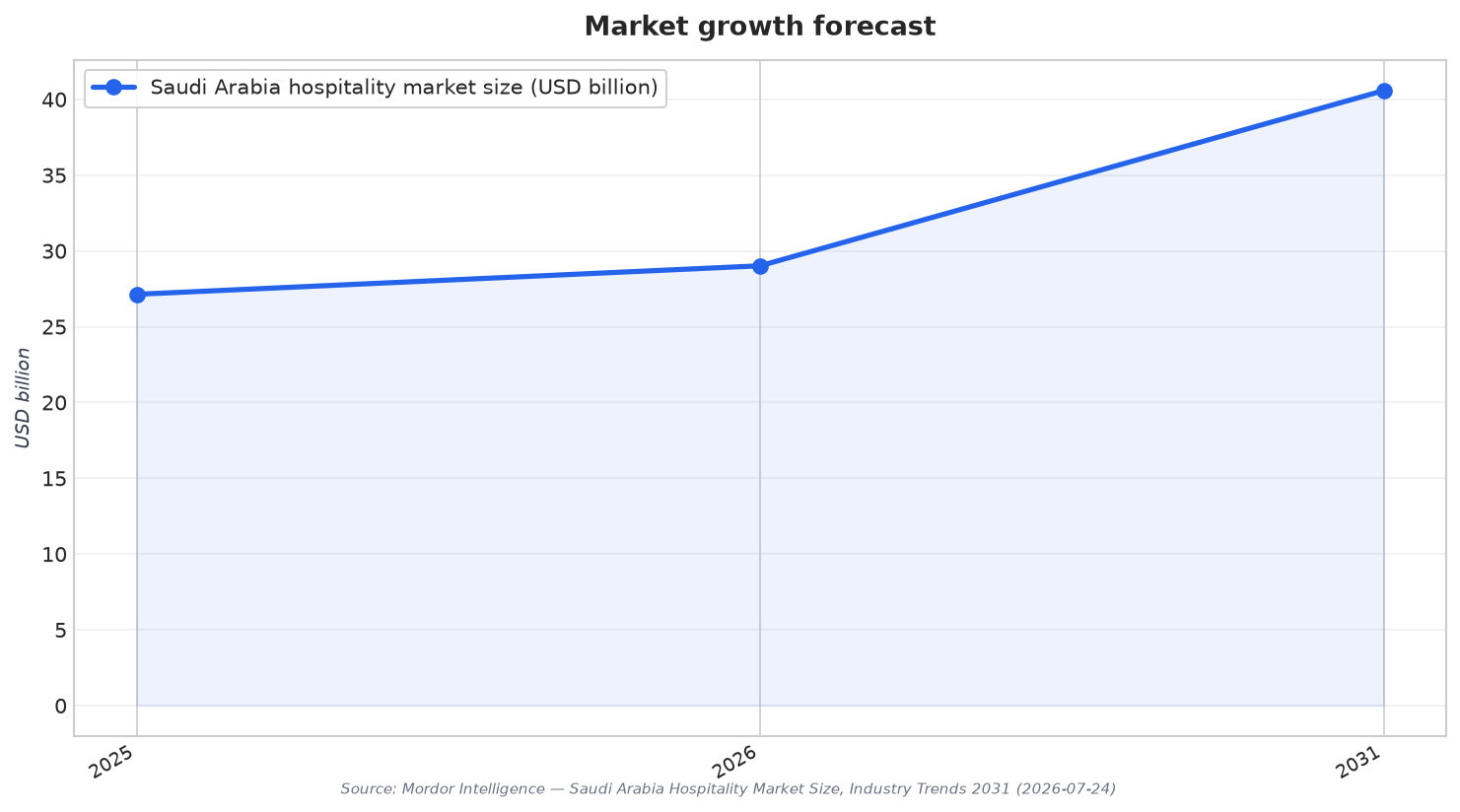
Capacity growth and staffing realities make profit management as important as price. Saudi Arabia has about 45,000 rooms under construction, equal to about 26% of existing stock, with over 92,000 rooms in the total pipeline, and new openings forecast at 103 hotels (23,600 rooms) by end of 2025. In Makkah, hotels retain approximately 40% excess staff during off-seasons purely to ensure readiness for Hajj, which compresses margins when revenue is lowest. The best hotel revenue management Saudi Arabia teams therefore pair event- and pilgrimage-based pricing with cost-aware controls, using forecasting to reduce avoidable discounting in soft weeks while protecting premium inventory in the few windows that determine annual results.
Why do Ramadan and Hajj matter so much to pricing in Makkah hotels?
What pilgrimage volumes should revenue teams plan around?
How do major events affect hotel demand in Saudi cities?
How is distribution changing for hotel revenue management in Saudi Arabia?
What is the biggest operational challenge tied to hotel revenue management in Saudi Arabia?
Talk to us for your needs in:
-
Tourism Infrastructure Planning and Optimization
-
Destination Marketing and Brand Strategy
-
Tourism Workforce Development and Training
-
Sustainable Tourism Solutions
-
Visitor Experience Enhancement and Engagement
-
Tourism Project Feasibility and Strategic Planning
-
Saudi Tourism Benchmarking