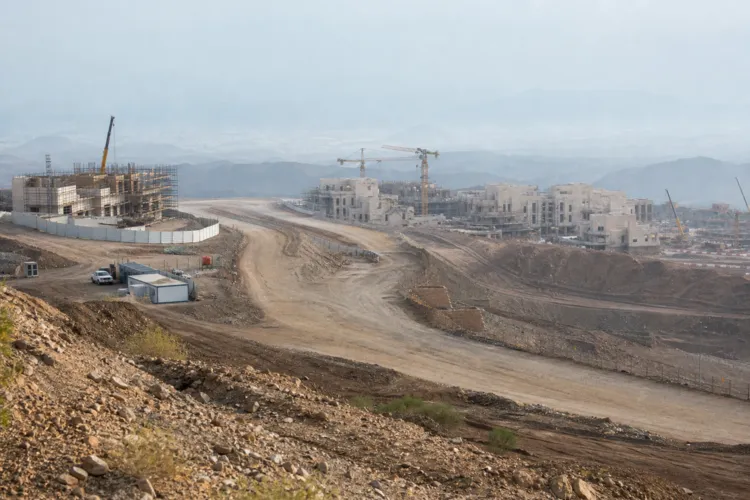
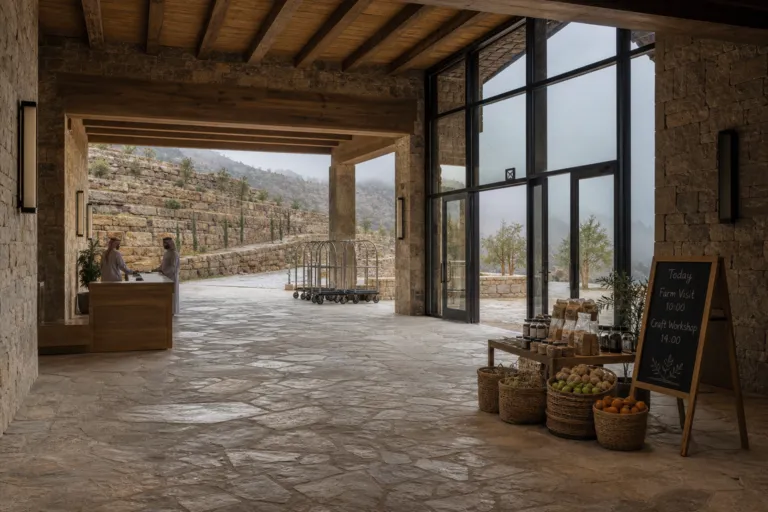
Al Baha is being shaped into a diverse destination built around natural scenery, heritage, and farming resources, and the opening of Gamra Mountain Resort by Mantis adds a new on-the-ground proof point for that direction. The resort has opened in the highlands of Al Baha in southwestern Saudi Arabia, perched roughly 2,260 meters above sea level on Khairah Mountain. It also marks the first entry of Mantis Collection—Accor’s community and conservation-focused brand—into the Kingdom. In practical terms for Al Baha tourism, Gamra is positioned as a gateway that encourages guests to explore nearby communities, customs, and landscapes rather than treating the stay as a sealed, standalone escape.
The destination logic relies on what Al Baha already has. It is often called the Garden of the Hijaz, and sources describe a cooler or mild mountain climate, more than 100 forests, juniper and acacia growth, and stepped farmlands with orchards producing apricots and pomegranates. Gamra’s design narrative leans into that setting, while also emphasizing activities that send demand outward into the region. Guests are guided toward trekking through mountains, bird observation, and visits to old stone villages, lookout towers, farming terraces, and historic irrigation methods. That matters because it frames Al Baha as more than accommodation; it frames a portfolio of nature, culture, and agricultural identity that can support repeatable visitor itineraries.
Why Gamra Changes the Conversation on Destination Investment
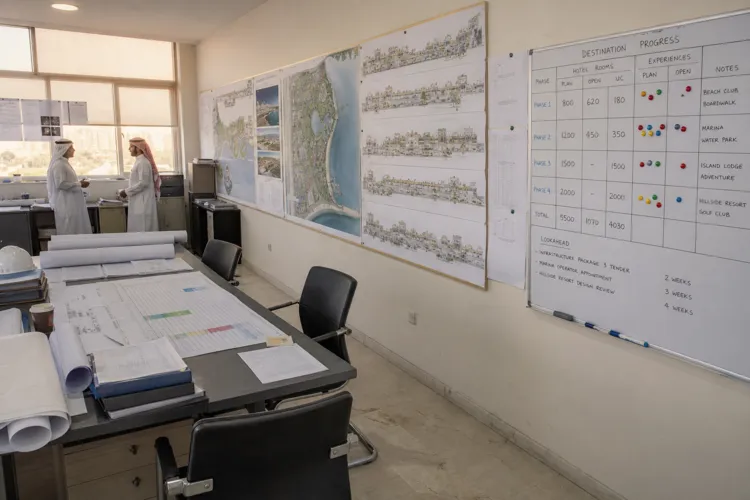
From an investment case perspective, Gamra is not described as a single asset in isolation, but as part of a wider program to lengthen stays and increase visitor spending in the region. The development was carried out by Saudi Tourism Investment Company (ASFAR), a fully owned subsidiary of the Public Investment Fund (PIF), with operations managed by Mantis. The resort spans more than 21,000 square meters (also reported as about 22,000 square meters) and includes 30 rooms and suites, described as tented Mountain Suites in one source and as 30 mountain-inspired rooms and suites in others. An Adventure Park with 14 indoor and outdoor activities is slated to open shortly, adding structured attractions that can broaden the visitor mix beyond pure sightseeing.
Equally important is how the project is framed: ASFAR and PIF communications present the opening as reinforcing momentum toward the Saudi Vision 2030 objective of building a sustainable tourism sector that supports economic diversification. They also describe an approach that builds on each destination’s competitive advantages, naming Al Baha’s established tourism base, mountainous landscape, distinctive climate, environmental diversity, cultural heritage, and local products. The resort is positioned to stimulate tourism-related value chains and strengthen private sector participation. IHCC is identified as ASFAR’s private sector partner in the project, while Mantis brings international hospitality expertise as the operator.
Gamra’s guest experience also makes agritourism and local products tangible, not abstract. Food plays a major role, with outlets such as Jamra and Hala and menus that include open-fire cooking beneath the stars alongside Mediterranean and Arabic dishes. Local staples highlighted in the sources include pomegranates, Shadawi coffee, and Al Baha’s well-known mountain honey. Beyond dining, the activity program explicitly includes preparing traditional dishes, listening to local tales, trying regional crafts, and family-oriented programs. Another source notes that Gamra’s operating model includes recycling and water and energy conservation measures, aligning the brand’s community-and-conservation positioning with day-to-day operations and local participation.
What does Gamra Mountain Resort add to Al Baha’s visitor offer?
Where is Gamra Mountain Resort located and how high is it?
How does Gamra connect to agritourism and local products in Al Baha?
Who developed and who operates Gamra Mountain Resort by Mantis?
How is Al Baha tourism being positioned after Gamra’s opening?
Talk to us for your needs in:
-
Tourism Infrastructure Planning and Optimization
-
Destination Marketing and Brand Strategy
-
Tourism Workforce Development and Training
-
Sustainable Tourism Solutions
-
Visitor Experience Enhancement and Engagement
-
Tourism Project Feasibility and Strategic Planning
-
Saudi Tourism Benchmarking