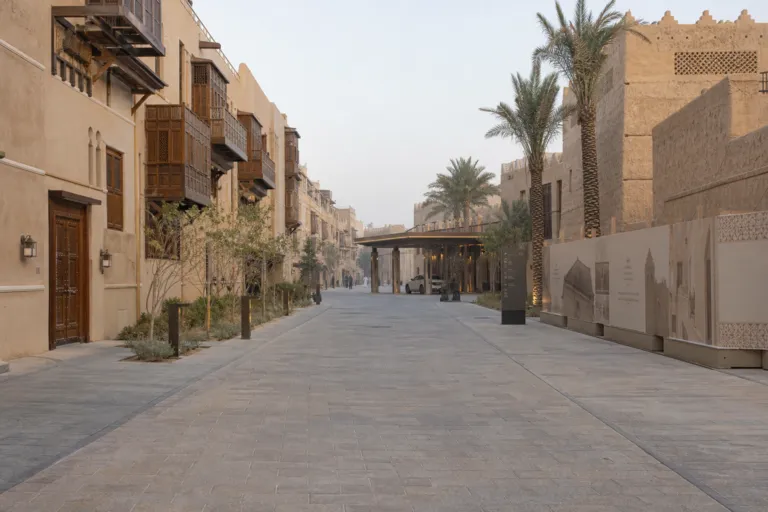
ASFAR is the Saudi tourism investment company owned entirely by the Public Investment Fund (PIF). Its mandate is clear: invest in developing tourism destinations in Saudi Arabia’s “promising cities,” where it sees latent opportunities and strong local potential. ASFAR describes its investment philosophy as building an integrated value chain that connects tourism assets, services, and activities into a cohesive destination experience. In practice, that creates a framework that makes secondary-city tourism projects more investable, because the destination is designed as an ecosystem rather than a single asset.
The company also positions private-sector partnership as the core of its model. ASFAR states that it co-invests with private partners across promising cities, enabling access to destination-development opportunities and building joint investment entities. On its own disclosures, the current investment picture includes a total investment value of SAR 1.1 billion, with 8 tourism projects in the design and execution phases. Across that pipeline, ASFAR reports 339,000 m² under development and 570 rooms under development. This combination of capital, project count, area, and keys helps define the scale of the investment market being opened through ASFAR’s approach in Saudi Arabia.
How Secondary-City Tourism Becomes an Investable Market
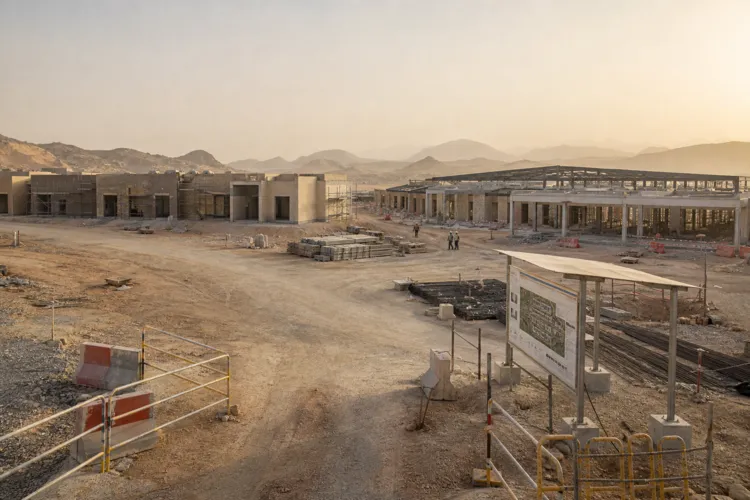
Recent announcements show how ASFAR converts place-based advantages into bankable projects. In September 2026, PIF reported that ASFAR inaugurated Gamra Mountain Resort in the Al Baha Region in southwestern Saudi Arabia. The resort spans more than 21,000 square meters and includes 30 mountain-inspired rooms and suites designed to complement Al Baha’s natural character. PIF connected the opening to the Saudi Vision 2030 objective of building a sustainable tourism sector that supports economic diversification. ASFAR also framed Al Baha as an example of investing around a destination’s established tourism base, mountainous landscape, distinctive climate, environmental diversity, cultural heritage, and local products.
ASFAR’s “new phase” of investments has also been described through two major projects scheduled to open in 2026, spanning Al Baha and Yanbu. Breaking Travel News reported Gamra Adventure Park in Al-Baha, developed by Jabal Khaira, a subsidiary of ASFAR, and Kaynouna Beach Club in Yanbu, developed by Baheej, a subsidiary of ASFAR and the Tamimi-AWN Alliance. This same update included the establishment of JABA, a destination management company (DMC) under Baheej. JABA is positioned as an operational arm that manages tourism destinations and provides specialized services, which can be critical for de-risking operations and creating repeatable investment models across additional secondary locations.
At the group level, PIF frames tourism development as part of a broader push to develop world-class destinations and related infrastructure, while partnering with the private sector in real estate projects to maximize long-term value and advance urban innovation. In that context, ASFAR Saudi Arabia activity can be read as a practical mechanism for expanding investable tourism supply in promising cities, supported by co-investment structures, destination-led planning, and new operating capabilities. For investors and partners, the message is consistent: ASFAR aims to create high-value opportunities and sustainable financial returns by investing efficiently and stimulating private-sector participation in the Kingdom’s tourism transformation.
What is ASFAR’s role inside PIF’s tourism push in Saudi Arabia?
How large is ASFAR’s current investment pipeline?
What opened at Gamra Mountain Resort in Al Baha?
Which 2026 projects did ASFAR highlight in Al Baha and Yanbu?
How does ASFAR Saudi Arabia work with the private sector?
Talk to us for your needs in:
-
Tourism Infrastructure Planning and Optimization
-
Destination Marketing and Brand Strategy
-
Tourism Workforce Development and Training
-
Sustainable Tourism Solutions
-
Visitor Experience Enhancement and Engagement
-
Tourism Project Feasibility and Strategic Planning
-
Saudi Tourism Benchmarking