Saudi Arabia’s hotel build-out is advancing quickly, and brand decisions are becoming a delivery-critical factor. Vision 2030 targets 150 million annual visitors, up from 115.9 million in 2024, and the Kingdom surpassed its original 100 million target seven years early. Against that backdrop, one branding-focused analysis argues that 362,000 new hotel rooms must launch with brands that can justify premium positioning and secure tier-one operator partnerships. The same source flags a risk: 78% of the pipeline sits in the luxury, upscale, and upper-upscale segments, with 77,000 high-end rooms entering markets where occupancy is cited at 61% and ADR growth is described as modest.
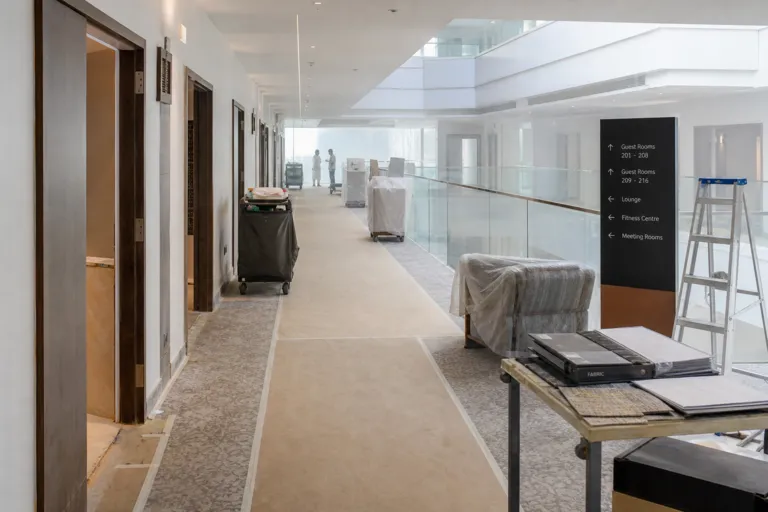
That context helps explain why the conversation is shifting toward faster plays such as hotel conversion in Saudi Arabia, paired with rebranding. A Saudi-focused M&A report frames deals as a route to speed, scale, and execution certainty, not just a change of ownership. It also cites broader market momentum: Saudi Arabia recorded 24 M&A deals worth USD 689 million in Q1 2026, a 4% annual increase in deal volume, based on Ansarada figures reported by Arab News. In hotels, the report describes a move away from one-off assets toward platform logic, where a curated set of properties can build presence faster than developing each asset individually.
Why Conversions and Rebranding Fit the Supply Mix
Segment mix is one reason conversions are being screened as “asset transformation” opportunities. The M&A report indicates around 61% of existing hotel inventory is concentrated in luxury and upper-upscale segments, while nearly 78% of new rooms through 2030 are planned at the higher end; it also notes another viewpoint that 75% of upcoming rooms are luxury. At the market level, Mordor Intelligence estimates the Saudi Arabia hospitality market at USD 29.02 billion in 2026, up from USD 27.14 billion in 2025, with a projection of USD 40.58 billion by 2031 at a 6.93% CAGR (2026–2031). In that environment, repositioning under-managed assets into scalable brands can help owners pursue repeat demand without relying only on luxury-rate assumptions.
Brands are also scaling via pipelines, and conversions can plug into that rollout. Hilton reported surpassing 100 hotels trading and in the pipeline in Saudi Arabia, with 21 operating and 83 in the pipeline, representing a combined USD 8 billion investment from owners and investors. Mordor reports chain hotels held 57.74% market share in 2025, while independent hotels are forecast to trail as chains outpace them with an 11.62% CAGR through 2031. Geography matters, too: Mordor says the Makkah–Jeddah corridor held 26.62% of the market size in 2025, while the Red Sea and wider western coast are set to expand at an 18.20% CAGR to 2031, shaping where conversion-led clustering strategies may pencil out.
Pipeline scale makes “speed to branded supply” a tangible differentiator. HVS estimates Saudi Arabia has 110,000 hotel rooms in the pipeline. Another industry source cites 105,200 rooms under development and references CoStar’s “Saudi Arabia development pipeline: 105,000 rooms” (June 2026). Within that same discussion, heritage conversion is already visible: the Boutique Group’s restoration of The Red Palace into a 70-room ultra-luxury hotel is positioned as a project that preserves architectural heritage while delivering contemporary luxury experiences. Meanwhile, brand strategists point to conversions in Jeddah’s Al Balad heritage district as examples of how cultural sensitivity can shape hotel identity in historic contexts, making rebranding as much about credibility as it is about signage.
Why are hotel conversions and rebranding gaining attention in Saudi Arabia?
How big is Saudi Arabia’s current hotel-room pipeline according to published estimates?
What does the market data say about chains versus independents in Saudi Arabia?
What is a recent example of a heritage-led conversion project mentioned for Saudi Arabia?
What factors shape where conversion-led growth may cluster inside Saudi Arabia?
Talk to us for your needs in:
-
Tourism Infrastructure Planning and Optimization
-
Destination Marketing and Brand Strategy
-
Tourism Workforce Development and Training
-
Sustainable Tourism Solutions
-
Visitor Experience Enhancement and Engagement
-
Tourism Project Feasibility and Strategic Planning
-
Saudi Tourism Benchmarking