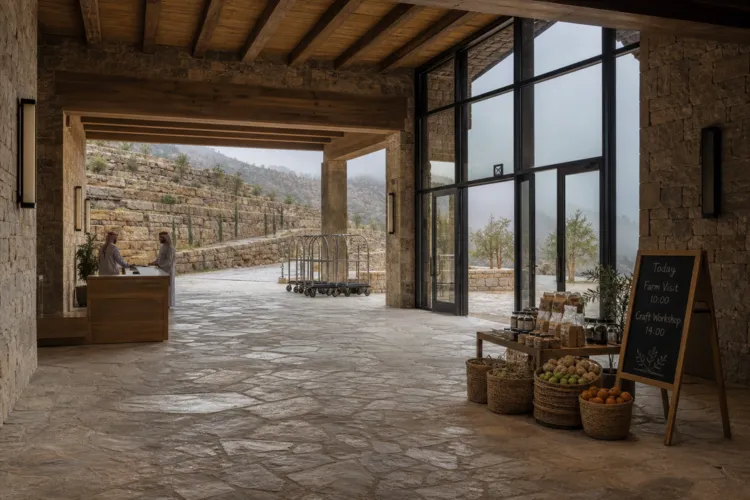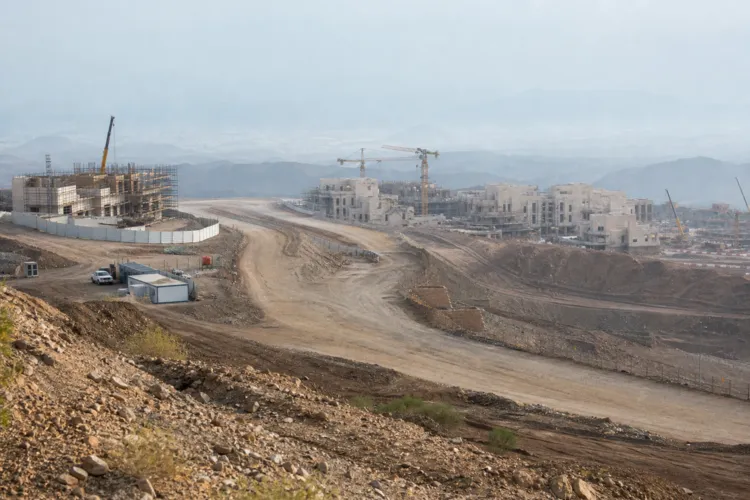
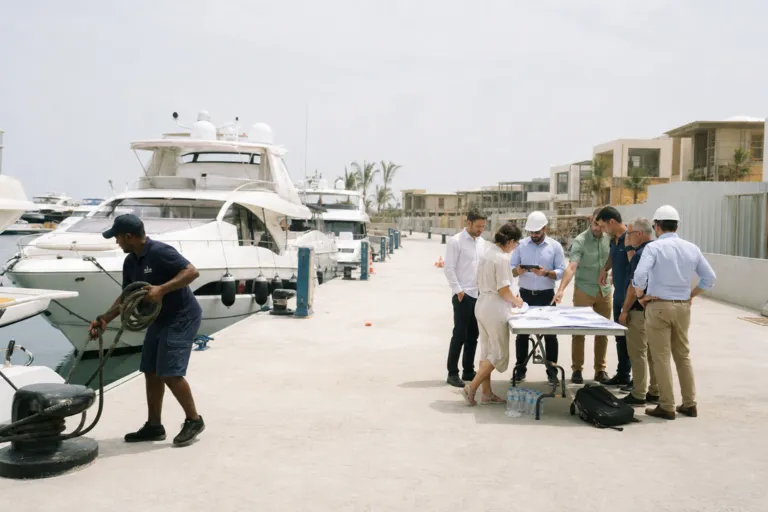
Sindalah Island is positioned as the super-luxury yachting island inside NEOM, a development announced in 2017 with a stated price tag of $500bn. NEOM was framed as being built from scratch in the desert and powered entirely by renewables. It was also presented alongside other big-ticket concepts, including Trojena and The Line. In that context, sindalah island functions less like a standalone resort and more like an early, visible proof point for a destination narrative built on premium travel, high-spend guests, and global attention.
The business case matters more because the funding environment is changing. In a press conference tied to the PIF 2026-2030 strategy update, Yasir Al-Rumayyan said priorities were reshuffled with greater focus on AI infrastructure and investments in AI companies. Skift reported that Saudi Arabia is cutting back on large-scale tourism projects including Neom and the Red Sea Destination, with tourism initiatives expected to seek more private sector involvement. For sindalah island, that shift elevates the need for clear revenue logic and credible demand, rather than relying on large-scale public financing alone.
Why a Yacht Destination Can Be a Practical First Bet
Luxury yachting destinations are typically built around marinas, clubs, and a curated mix of experiences that can open in phases. The Red Sea region offers a nearby reference point for what that could look like when a marina becomes the center of an experience cluster. On Shura Island, Red Sea Global described a 118-berth Shura Marina that serves as a yachting hub, connecting guests to sailing excursions, diving adventures, and sunset cruises. The same announcement also described The Village as a retail and leisure promenade with dining outlets and boutique stores. This model helps explain why sindalah island, as a yachting island, can be framed as an operationally legible product.
Another adjacent benchmark is AMAALA Triple Bay. Red Sea Global announced that AMAALA is set to open in the coming months, with an initial debut of six luxury resorts plus a yacht club, a marine life institute, a state-of-the-art marina, and a Marina Village. Hotel News Resource also described a 5-kilometer linear park called the Wellness Route that connects resorts and amenities. For sindalah island, these details matter as competitive context, because they show the type of bundled offer being built on the same north-western coast and marketed through yachting, wellness, and high-end hospitality anchors.
Connectivity and pipeline supply also shape the business case around NEOM-linked destinations. Hotel News Resource said access to AMAALA is facilitated through Red Sea International Airport, with direct flights available from Doha, Dubai, Jeddah, and Riyadh, and that AlWajh Airport is scheduled to reopen in 2026 following renovations aimed at enhancing connectivity. Separately, a mid-market supply platform called AYARA is expected to deliver between 5,000 and 7,000 rooms by 2029 across key economic corridors and development zones such as NEOM and the Red Sea region. Together, those points suggest an ecosystem approach: premium nodes like sindalah island, supported by broader accommodation and transport capacity.
The risk lens is also explicit in public reporting. Newsweek noted that in 2024 the PIF announced it had written down about $8 billion in value from its portfolio of giga-projects amid cost pressures and reassessment of priorities, with industry reports describing reprioritizing and scaling back elements of major projects. Against that backdrop, sindalah island’s commercial rationale needs to withstand scrutiny: it must attract private partners, prove a compelling luxury narrative, and fit within a more demand-driven tourism posture. As NEOM timelines shift, a high-end yachting island can still be pitched as a focused, monetizable component inside a larger masterplan.
What is sindalah island within NEOM?
How does the PIF strategy shift affect the sindalah island business case?
What nearby examples show how a marina-led luxury destination can be packaged?
What connectivity details are relevant when evaluating luxury destinations in the region?
What risk signals have been reported around Saudi giga-project finances?
Talk to us for your needs in:
-
Tourism Infrastructure Planning and Optimization
-
Destination Marketing and Brand Strategy
-
Tourism Workforce Development and Training
-
Sustainable Tourism Solutions
-
Visitor Experience Enhancement and Engagement
-
Tourism Project Feasibility and Strategic Planning
-
Saudi Tourism Benchmarking