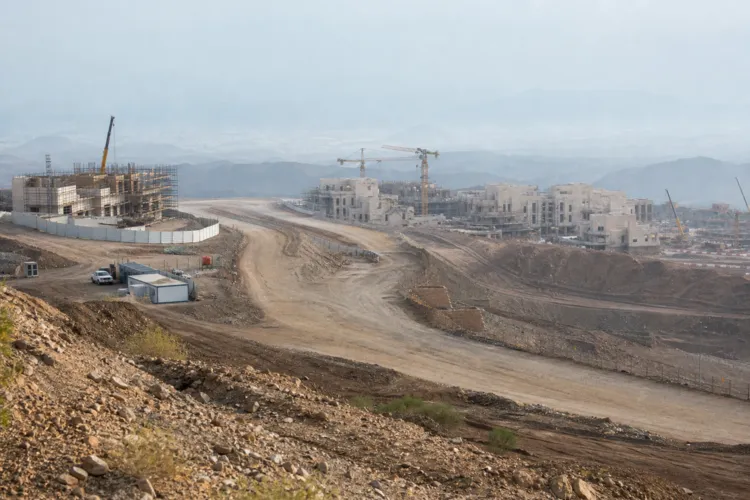
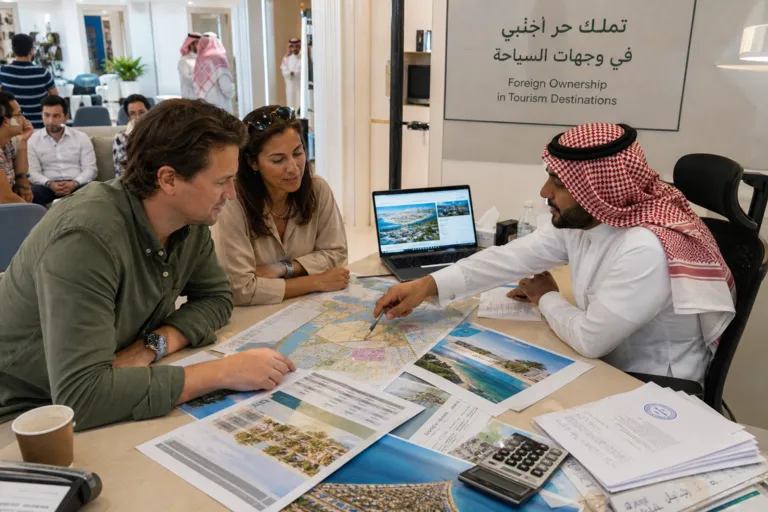
Saudi Arabia has launched a new real estate framework that changes how non-Saudis can participate in property ownership. The Law on Real Estate Ownership by Non-Saudis entered into force on 21 January 2026, replacing the older 2000 regime and moving from a restrictive, purpose-based model toward a zoning-driven framework. In June 2026, the Cabinet approved the Executive Regulation and endorsed the geographic areas designated for non-Saudi ownership, which Bird & Bird describes as a key operational step in implementing the regime. For tourism and hospitality investors, the practical takeaway is that the market is not “fully open,” but it is more rules-based, structured, and investable than before.
Under this new approach, eligible non-Saudis may own real estate or acquire in-rem rights within designated Geographical Zones set by the Council of Ministers. The sources describe in-rem rights as real rights in property, including usufruct and easements, which matters because the framework is not limited to leasehold or purely contractual use. Bird & Bird notes that the regime gives investors, developers, operators, asset managers, and lenders a more predictable basis for evaluating projects across offices, hotels, serviced apartments, shopping centres, mixed-use developments, housing projects, and master-planned communities. Transactions still require asset-level and vehicle-level analysis, including confirming the asset sits inside an approved geographic scope, the buyer is eligible, the right is registrable, and zone conditions or ownership limits are met.
What Tourism Real Estate Investors Should Watch in 2026
Tourism-led investment is a recurring theme across the sources, but the new system remains tightly controlled. Stake states that foreign individuals and companies can own residential and commercial property within designated zones, while ownership in Mecca and Medina remains restricted. Stake and Rakez also describe a resident exception: a non-Saudi legal resident may own exactly one residential property for personal use outside designated zones. Meanwhile, Stake adds that digital and fractional ownership is now formally recognised. For investors targeting hospitality and tourism-linked locations, the “where” and “how” of ownership is now central to diligence, not a secondary legal detail.
Costs and deal pricing are also changing. King & Spalding highlights a new real estate transaction fee of up to 5% on transfers involving non-Saudis, in addition to the existing 5% Real Estate Transfer Tax (RETT). Rakez similarly states that REGA may levy a disposal fee capped at 5% of the property’s value for non-Saudis. These charges can affect underwriting for tourism assets where yields and operating plans are sensitive to entry costs. The new foreign property ownership law Saudi Arabia has introduced is therefore not only about access; it also adds documentation and allocation questions that must be reflected in transaction documents.
The regime arrives amid bullish market narratives and major development ambitions referenced in the sources. King & Spalding cites estimates of Saudi real estate revenues at around USD 132.3 billion in 2024, projected to reach USD 201.4 billion by 2030, with a forecast CAGR of around 7.5%, and it reports residential sales of approximately SAR 118 billion (around USD 32 billion) in 2024. Sands Of Wealth points to a January 2026 ownership-law shift alongside a pipeline that includes NEOM (described as a $500 billion mega-city), EXPO 2030 in Riyadh (with SAR 75 billion in committed infrastructure spending), and multiple urban and tourism projects. For tourism real estate investors, the message is clear: opportunity is expanding, but it now sits inside a compliance-led, zone-specific rulebook.
When did Saudi Arabia’s new foreign property ownership framework take effect?
Can foreign investors own tourism and hospitality real estate in Saudi Arabia?
Is the market fully open under the foreign ownership rules?
What fees apply to non-Saudis transferring property under the new rules?
How does the foreign property ownership law in Saudi Arabia treat non-Saudi residents outside designated zones?
Talk to us for your needs in:
-
Tourism Infrastructure Planning and Optimization
-
Destination Marketing and Brand Strategy
-
Tourism Workforce Development and Training
-
Sustainable Tourism Solutions
-
Visitor Experience Enhancement and Engagement
-
Tourism Project Feasibility and Strategic Planning
-
Saudi Tourism Benchmarking