The case for hospitality reit saudi arabia is rooted in how quickly the Kingdom’s tourism and hotel ecosystem is scaling. In 2025, Saudi Arabia welcomed 122 to 123 million domestic and international tourists and generated SAR 300 billion in tourism spending. At the same time, the number of licensed hospitality facilities rose 34.2% year-over-year in 2025. These are powerful inputs for real estate investors who want a vehicle that can hold stabilized hospitality assets, recycle capital, and support long-term value creation.
Growth is not only about arrivals. Domestic tourism is a stabilizer. Saudi citizens and residents are increasingly exploring the country for leisure, events, family holidays, and short breaks. This domestic base, combined with regional GCC demand and international arrivals, can support more consistent hotel cashflows across a cycle. Investors are also being pushed to think beyond “scale.” The market is expected to become more competitive, more segmented, and more performance driven, which increases the value of disciplined asset selection and operational excellence inside any hospitality REIT strategy.
Why Hospitality REITs Fit Saudi Arabia’s Next Cycle
Saudi Arabia is preparing to deliver a very large hotel pipeline. One industry outlook highlights 358,000 new hotel rooms. Another notes that by 2030, 362,000 new hotel rooms will join the inventory, with roughly 23,600 rooms opening in 2025. Such expansion can create opportunities, but it also raises timing risk. Industry voices warn that large pipelines require careful phasing, because clustered openings can pressure performance in the short to medium term. A hospitality REIT can help by spreading exposure across cities, demand types, and opening schedules.
Product mix also matters for investors. In Saudi Arabia, around 61% of existing hotel inventory is concentrated in luxury and upper-upscale segments, with nearly 78% of new rooms through 2030 planned at the higher end, even as demand for mid-market accommodation rises. Executives note that midscale and upper midscale represent deep demand pools globally, and there is also growing opportunity in lifestyle hotels, serviced residences, family resorts, wellness-led concepts, branded residences, and mid-market properties. These segments can influence what assets a hospitality REIT acquires or develops.
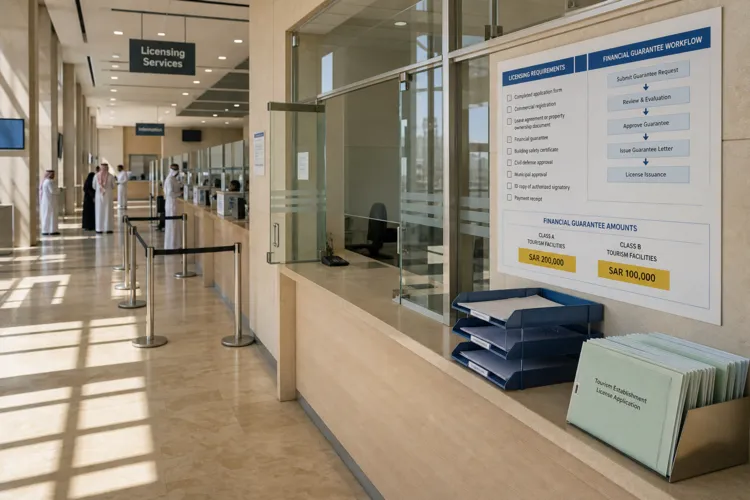
Policy and execution capacity shape investability. Saudi Arabia has undertaken a comprehensive modernization of its regulatory and legislative environment, resulting in clearer governance structures, faster licensing processes, and improved coordination among authorities. The government is also encouraging the private sector to adopt global ESG standards, with reporting and transparency on material sustainability factors. Meanwhile, partnerships with leading global hospitality operators are described as a value multiplier, supporting operational efficiency, guest experience, knowledge transfer, and national capacity building. For a hospitality REIT, these factors can reduce friction and support repeatable growth.
Investors still need to underwrite real-world operating signals. Despite increasing occupancy and visitor numbers, average hotel room rates fell 11.7% between Q4 2024 and Q4 2025. This reinforces why feasibility, positioning, and operational excellence are central. Saudi Arabia’s calendar is also described as densely punctuated by events, and demand can be event-driven. Add the sector’s focus on human capital, where training and leadership development are seen as essential, and it becomes clear: a hospitality REIT approach in Saudi Arabia should prioritize durable demand sources, resilient segments, and operators that can execute consistently.
What is the main driver behind hospitality reit saudi arabia interest?
How large is Saudi Arabia’s hotel room pipeline mentioned in industry outlooks?
What supply mix issue is highlighted for Saudi hotel development?
What near-term performance risk is flagged for hospitality investors?
What happened to average hotel room rates in Saudi Arabia recently?
Talk to us for your needs in:
-
Tourism Infrastructure Planning and Optimization
-
Destination Marketing and Brand Strategy
-
Tourism Workforce Development and Training
-
Sustainable Tourism Solutions
-
Visitor Experience Enhancement and Engagement
-
Tourism Project Feasibility and Strategic Planning
-
Saudi Tourism Benchmarking