For hotel owners and developers, choosing a sustainability label is no longer only a branding decision. In Saudi Arabia, it can also shape design choices, documentation workloads, and how a property is positioned against national priorities like energy and water management. Mostadam is Saudi Arabia’s official green building rating system. It evaluates buildings and zones against sustainability goals that include energy, water, materials, and site impact. It was launched by the Saudi Green Building Authority and designed for the Saudi market, using local climate data, water scarcity data, and Saudi building rules.
Mostadam is structured as a points-based system. Projects earn points across topics such as energy use, water saving, materials, and site planning, and total points determine the rating level. It can be used for both new and existing buildings, and it can also cover whole areas and mixed-use zones, which can matter when a hotel is part of a larger destination district. Sources describe two main paths: Design and Build (D+C) for projects in design or construction, and Operations and Energy (O+E) for buildings already in use, focusing on how they run and how they use energy and water.
How to Decide Between Local Fit and Global Recognition
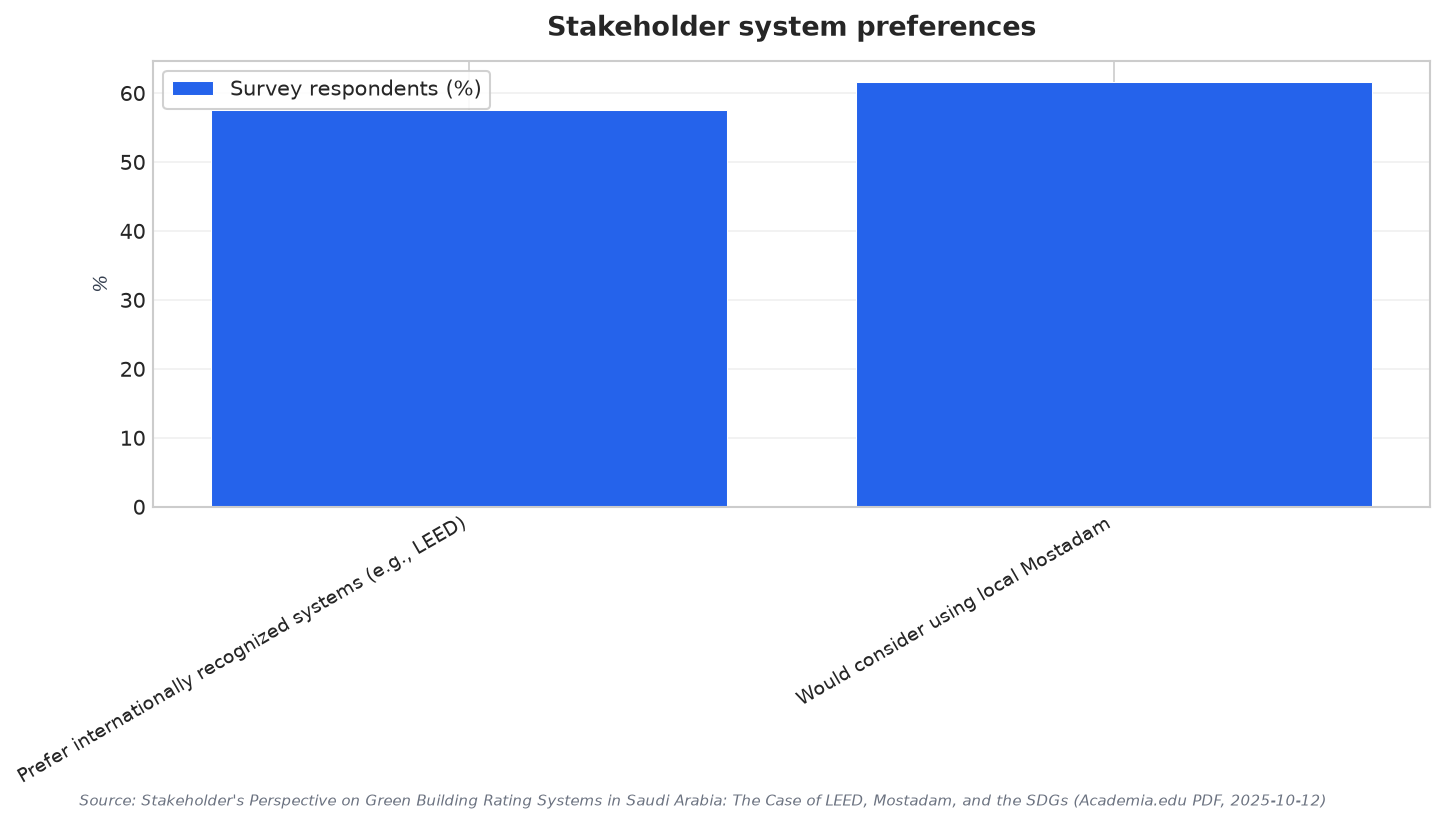
In Saudi stakeholder research, preferences show a split between international and local systems. One survey reports that 57.5% prefer internationally recognized systems such as LEED, while 61.6% would consider using the local Mostadam system. The same research indicates a 56% awareness of LEED and Mostadam among stakeholders. That combination suggests hotel teams may weigh different goals at once: international familiarity and signaling on one side, and local relevance and alignment on the other. Sources also note that some comparisons found Mostadam to be superior to LEED in addressing Saudi Arabia’s unique environment.
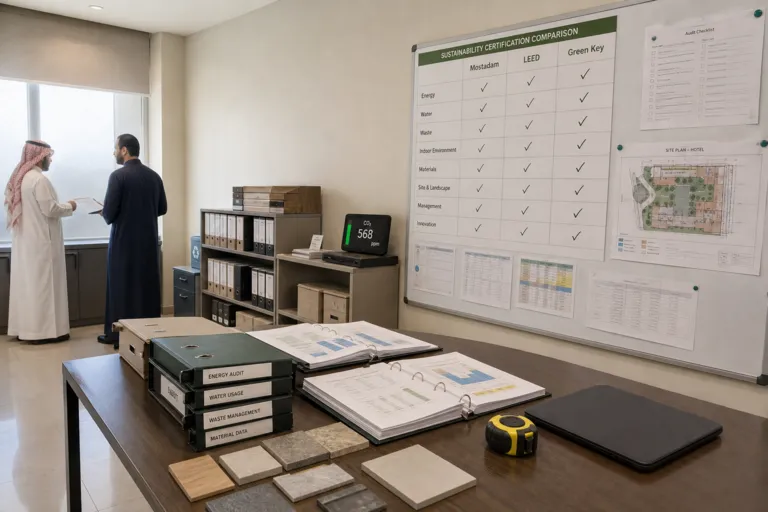
Mostadam is often framed as a practical fit for Saudi Arabia because it is designed to comply with existing legislation and aligns with the Saudi Green Building Code (SgBC) and Saudi Vision 2030. It also includes “keystone credits” intended to ensure national priority areas are addressed, and achieving these credits supports a Mostadam Green rating level. For capability building, sources describe Mostadam AP training courses and an exam administered by Sustainable Building or the Saudi Real Estate Institute (SREI), where 24 out of 40 questions must be answered correctly to pass. This matters for hotel teams that want in-house expertise.
LEED, by contrast, is described in the sources as coming from the U.S. Green Building Council, and it remains a reference point for global prestige. Several sources also describe a “both-and” strategy in the Saudi market: developers may pursue dual certifications to balance local context with international visibility. Material documentation can play into that decision. One source states that an Environmental Product Declaration (EPD) that follows ISO 14025 and EN 15804 works for both systems, and that EPD International and IBU are accepted by both. It also notes that one product-specific EPD can cover Mostadam and LEED v4.1, helping reduce repeated work when projects target both.
What is Mostadam, and why does it matter for Saudi hotels?
How do stakeholder preferences compare between LEED and Mostadam in Saudi Arabia?
What Mostadam certification paths are relevant for hotel projects?
How should a team approach green hotel certification in Saudi Arabia when deciding between local and international systems?
Can the same EPD documentation support both Mostadam and LEED goals?
Talk to us for your needs in:
-
Tourism Infrastructure Planning and Optimization
-
Destination Marketing and Brand Strategy
-
Tourism Workforce Development and Training
-
Sustainable Tourism Solutions
-
Visitor Experience Enhancement and Engagement
-
Tourism Project Feasibility and Strategic Planning
-
Saudi Tourism Benchmarking