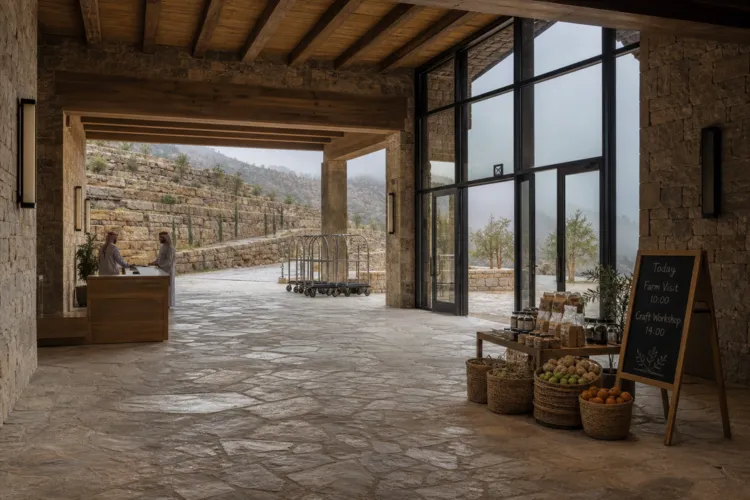
Saudi coffee tourism is becoming easier to build because coffee already sits at the center of daily life, public culture, and commercial growth. Qahwa is described as a symbol of hospitality and social unity, and it is served in more than 80% of Saudi households in a traditional manner, with over 90% saying offering coffee to guests is a moral obligation. UNESCO inscribed Arabic coffee on the Representative List of the Intangible Cultural Heritage of Humanity in 2015, reinforcing its status as a heritage experience, not just a drink. Saudi Arabia also designated 2022 as the “Year of Saudi Coffee,” adding a national narrative that experience designers can translate into routes, tastings, workshops, and storytelling-led travel.
The market backdrop supports experience-led investment. One industry report values the Saudi Arabia specialty coffee market at USD 0.95 billion in 2025 and projects it will reach USD 2.11 billion by 2033, expanding at a CAGR of 10.5%. The same report says the country consumes approximately 36 million cups of coffee daily, translating to over 13 billion cups annually, and notes a growing base of over 5,000 cafés. It also describes “third-wave” adoption in major cities such as Riyadh and Jeddah, and says urban consumers typically drink specialty coffee 3–5 times per week. For tourism, that café density and habit strength can anchor curated neighborhood crawls, barista classes, and roastery visits that complement heritage programming.
Why Khawlani Heritage Works as a Tourism Niche
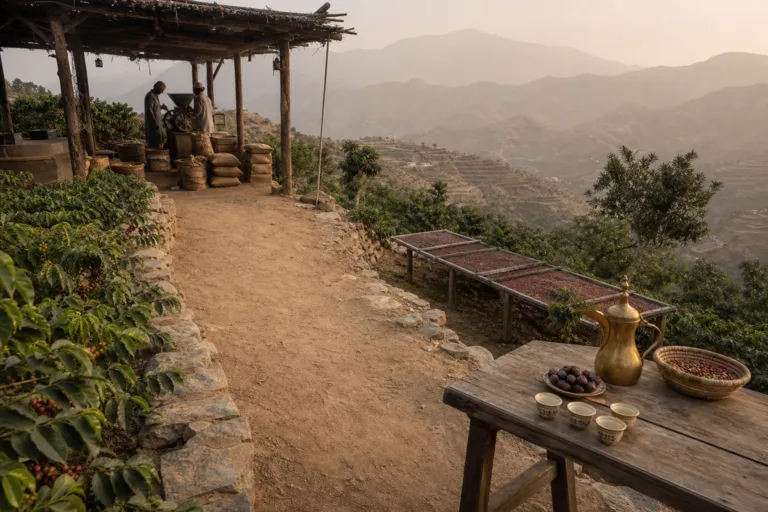
Khawlani coffee gives the niche a clear “origin story” inside the Kingdom. New Lines Magazine notes that the highlands of Jazan have long produced rare, high-quality Khawlani beans, and that agricultural knowledge and practices in the region have been recognized by UNESCO as intangible cultural heritage. As part of Saudi Vision 2030, Saudi Arabia launched the Saudi Coffee Company in 2022 to focus on the sustainable production, distribution, and marketing of Khawlani coffee. Another source adds that the Saudi Coffee Company aims to increase domestic production tenfold by 2030, targeting 2,500 tons annually and generating 8,000 jobs across the value chain. This combination—UNESCO-linked practice, a named origin, and an institutional “platform”—is what makes Khawlani a coherent, investable theme for guided farm stays and origin-first itineraries.
Public and private plans are also putting supply-side “proof points” behind the story. Perfect Daily Grind reports ambitious plans to plant 1.2 million additional coffee trees by 2026, alongside longer-term goals to increase national production capacity from 300 tonnes to 2,500 tonnes per year through strategic investments totaling nearly SAR 1.2 billion over the next decade. For tourism planners, the value is not just volume. It is the ability to schedule seasonal experiences around cultivation and processing, then connect them to urban “on-trade” demand. At the same time, a separate market outlook expects the Saudi Arabian coffee market to reach more than USD 3 billion by 2029, suggesting continued momentum that can support professional tour operators, retail tie-ins, and hospitality collaborations.
Finally, coffee-focused events can turn one-off interest into repeat travel. One source says the Kingdom celebrates International Coffee Day on October 1 with festivals, exhibitions, and cultural events that promote Saudi coffee and educate communities about its heritage. Another notes that in April, HORECA Riyadh becomes the largest hospitality and foodservice exhibition in the country, and that October hosts the Saudi Coffee Forum, bringing together leaders, experts, and investors. These fixed calendar moments help package trips around learning, networking, and culture. With 72% of Saudis aged 18–35 gathering weekly in cafés, experiences can also be designed to feel local and contemporary while still grounded in rituals like the Ghawah ceremony of roasting, grinding, and brewing in front of guests.
What makes Saudi coffee tourism a credible niche today?
Which Saudi region is most closely linked to Khawlani coffee?
What market signals support investing in coffee-led experiences in Saudi Arabia?
What production expansion targets are tied to Saudi coffee development plans?
Which events can operators build coffee travel itineraries around?
Talk to us for your needs in:
-
Tourism Infrastructure Planning and Optimization
-
Destination Marketing and Brand Strategy
-
Tourism Workforce Development and Training
-
Sustainable Tourism Solutions
-
Visitor Experience Enhancement and Engagement
-
Tourism Project Feasibility and Strategic Planning
-
Saudi Tourism Benchmarking