
Investors tracking saudi tourism statistics 2026 are watching a market that is already operating at large scale. In 2024, Saudi Arabia hosted 116 million visitors and generated 284 billion Saudi Riyals in spending. Domestic travel was the backbone, with 86.2 million trips in 2024. Inbound arrivals also accelerated, supported by eased visa rules and improved air connectivity. International tourism surpassed 2019 levels by approximately 70%, which signals that higher-value demand is returning and expanding beyond earlier baselines.
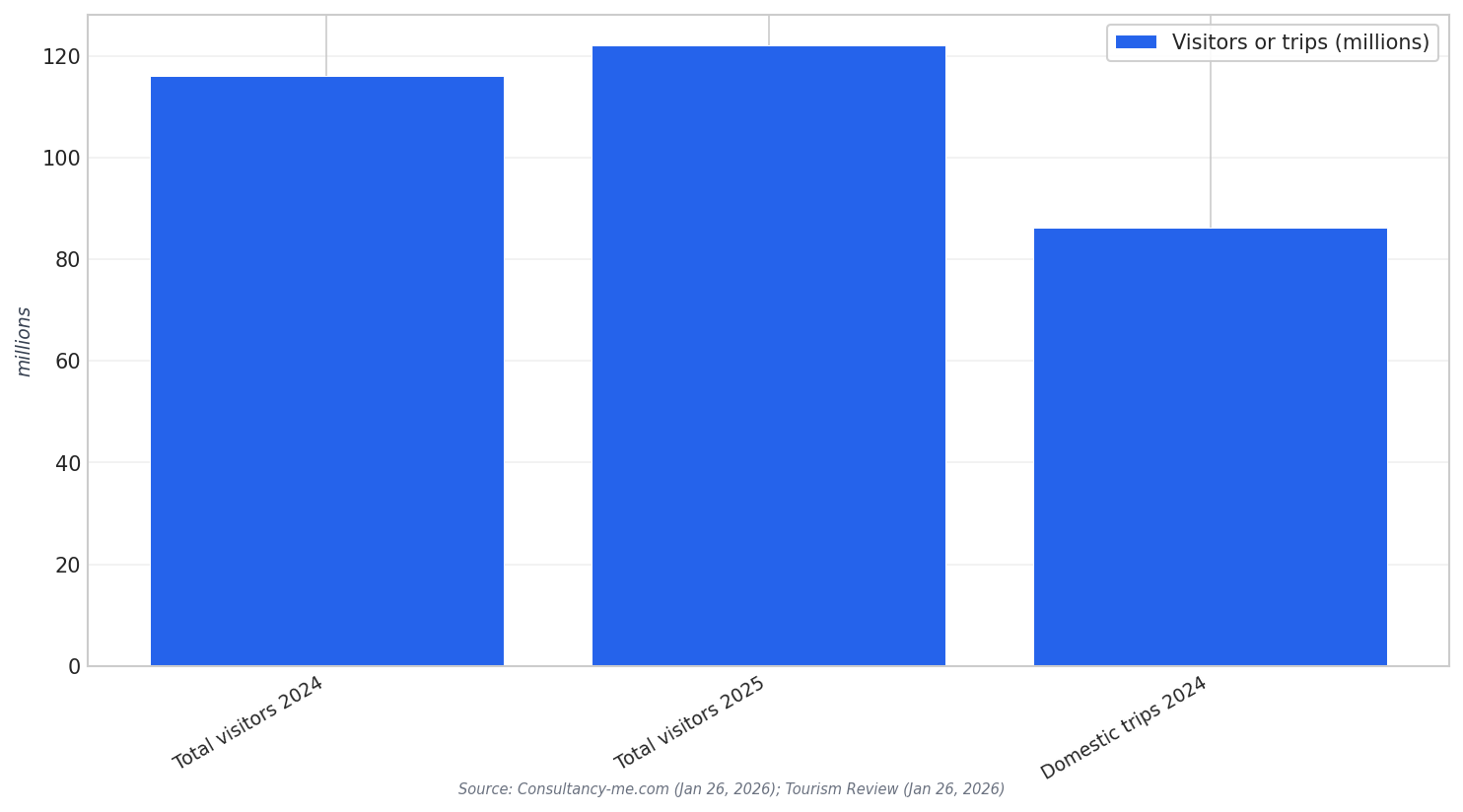
Early 2025 figures sharpen the near-term picture investors will bring into 2026 planning. The Ministry of Tourism reported about 122 million domestic and international visitors in 2025, including roughly 29.7 million inbound international tourists and 86.2 million domestic trips. International numbers rose by 8%, and domestic trips increased by 5%. Total tourism spending was about SR300 billion, which was 6% higher than the previous year. This mix matters because domestic volume supports year-round occupancy while inbound growth can lift yields.
Spending momentum is a key investor signal because it is moving faster than volume. Between 2019 and 2024, total tourism expenditure increased by 83%, outpacing the 77% growth in tourist arrivals. That divergence points to improving monetization, longer stays, higher daily spend, or a better product mix. Another headline data point is GDP linkage. One study cited tourism at 12.4% of GDP in 2024, while a separate 2025 minister statement put tourism at 5% of GDP. Either way, the 2030 target discussed across sources is to reach a 10% GDP contribution.
The 2026 Watchlist: Targets, Supply, and Rate Signals
Long-range targets shape capital flows, and investors will keep measuring progress against them through 2026. The stated goal for 2030 is to welcome 150 million visitors. One breakdown frames that as 80 million domestic and 70 million international. The sector also targets 1.6 million jobs by 2030. Religious travel remains central, with a stated ambition to host 30 million Umrah pilgrims annually by 2030, up from roughly 19 million pre-pandemic. Major events like the 2027 Asian Cup, World Expo 2030, and the 2034 FIFA World Cup add demand catalysts that investors model into underwriting.
Hotel performance and supply dynamics are another 2026 focal point because growth can pressure pricing even when demand rises. In 2025, licensed hospitality facilities increased by 34.2% year over year. Over the same period, average hotel room rates fell by 11.7% between Q4 2024 and Q4 2025. Another report cited a 12% year-on-year ADR decline in Q4 2025 and described it as a “rebalancing between supply and demand.” Forward pipeline figures reinforce why investors should track segmentation and pace: by 2030, 362,000 new hotel rooms are expected to join inventory, with roughly 23,600 rooms opening in 2025 and a similar pace through 2026 and 2027.
What do saudi tourism statistics 2026 tell investors to watch most closely?
How big is Saudi Arabia’s domestic tourism base in the latest data?
What are the key Saudi tourism targets for 2030 mentioned in the sources?
What happened to hotel room rates in Saudi Arabia as tourism grew?
Talk to us for your needs in:
-
Tourism Infrastructure Planning and Optimization
-
Destination Marketing and Brand Strategy
-
Tourism Workforce Development and Training
-
Sustainable Tourism Solutions
-
Visitor Experience Enhancement and Engagement
-
Tourism Project Feasibility and Strategic Planning
-
Saudi Tourism Benchmarking