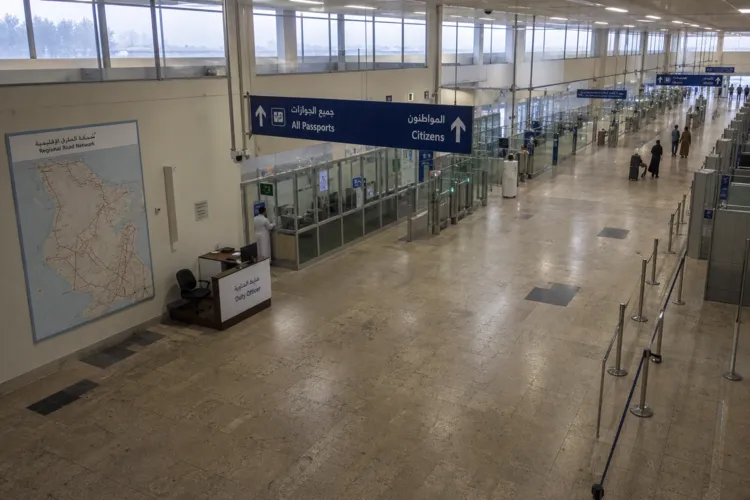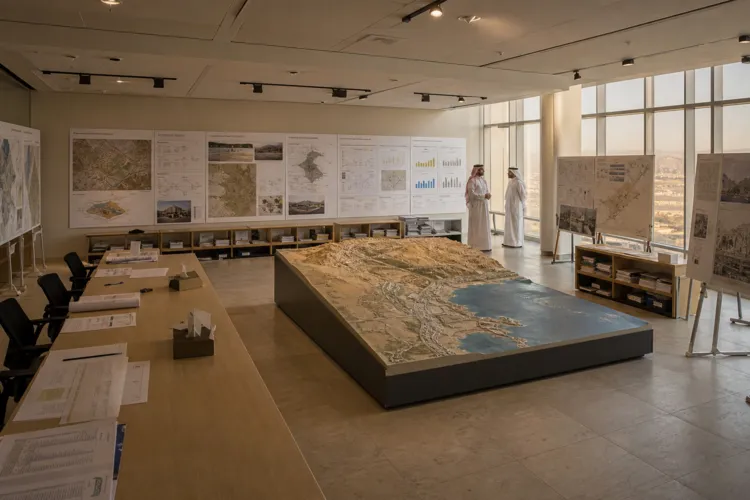
In Saudi Arabia, destination marketing is increasingly treated like investment capital rather than a one-off campaign cost. The Kingdom did not issue tourist visas until September 2019, yet it welcomed an estimated 30.8 million visitors in 2025, including religious pilgrims, leisure tourists, and business travelers. Over the same period, tourism’s contribution to GDP grew from approximately USD 30 billion in 2019 to USD 42 billion in 2025, while the sector employed over 850,000 people directly and indirectly. These headline movements matter because they link nation branding to measurable economic yield, not only to reach or impressions.
Saudi tourism strategy also has a clear “yield mix” logic. Invest Riyadh reports that the fastest-growing source markets are China (+45%), the UK (+35%), Germany (+30%), and the US (+28%). The same source notes these Western and East Asian markets are critical because they generate the highest per-visitor spending and help diversify demand beyond pilgrimage. Growth in these markets is tied to specific levers: visa liberalization, direct airline routes, and active destination marketing. Put simply, marketing is positioned as a driver of higher-value demand, shaping who arrives and why, not just how many arrive.
Nation Branding Meets Capacity: Turning Awareness Into Spend
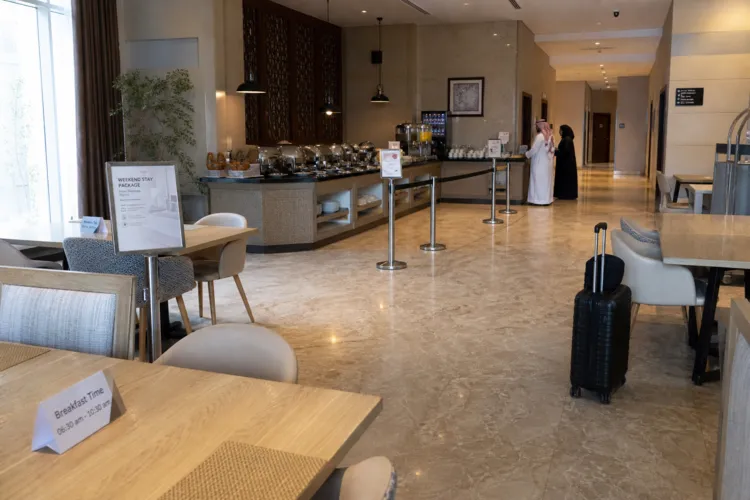
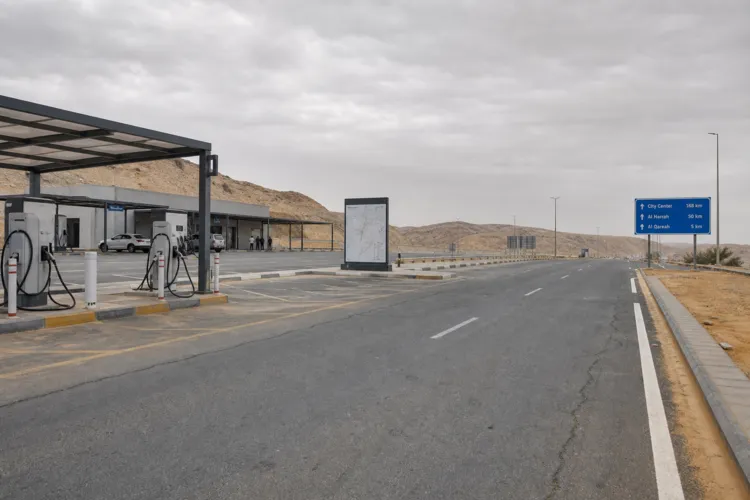
Brand building only pays off when it connects to real inventory and experiences. At the Red Sea, Red Sea Global’s first phase began receiving guests in late 2024 with the opening of the St. Regis Red Sea Resort. As of early 2026, three resort hotels are operational (St. Regis, Six Senses, and a Ritz-Carlton Reserve) with a combined capacity of approximately 750 rooms. Invest Riyadh describes the destination’s early performance as promising, while also flagging access constraints: the Red Sea International Airport is operational but serves limited routes, and many guests arrive via connecting flights through Jeddah. This is where destination marketing acts like investment protection, helping premium supply ramp despite friction.
Hospitality market expansion reinforces the same investment case. Mordor Intelligence estimates the Saudi Arabia hospitality market at USD 29.02 billion in 2026, growing at a CAGR of 6.93% to reach USD 40.58 billion by 2031. It also highlights complementary projects such as the USD 20 billion Diriyah Gate, positioned to reinforce the Kingdom beyond religious tourism through heritage-focused hospitality and premium cultural experiences. The same report states giga-projects are slated to create roughly 380,000 jobs, with some within hotel and F&B operations. For yields, it adds that phased resort introductions are expected to attract a higher proportion of affluent visitors and increase average expenditure per visitor.
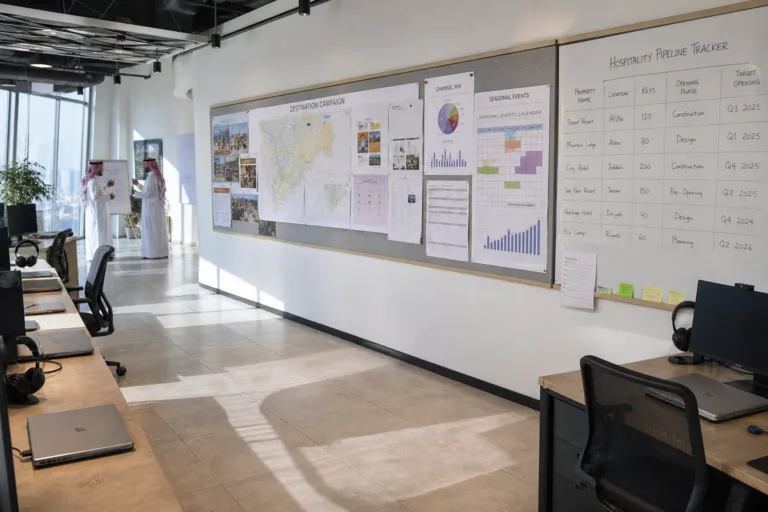
Digital and narrative-led execution is the other half of the investment thesis. Safha describes tourism marketing as essential to Vision 2030’s ambition to enhance Saudi Arabia’s standing across religious, cultural, and leisure tourism, emphasizing integrated digital strategies that drive bookings, engagement, and brand loyalty. It gives an example where a tourism board used AR and VR to showcase the Red Sea Project, boosting global awareness and brand recognition. Peak Ventures argues Saudi campaigns increasingly center cultural storytelling, aiming to build emotional connections, brand loyalty, and lasting engagement by linking history, heritage, and modernity. Academic work in Marketing and Management of Innovations adds that user-focused, content-rich, culturally resonant campaigns can help boost domestic tourism by increasing the attractiveness of local destinations and encouraging residents to explore the country.
How does destination marketing in Saudi Arabia act like an investment?
Which inbound markets are growing fastest for Saudi Arabia, and why does that matter for yields?
What concrete capacity has opened at the Red Sea destination so far?
What does current reporting say about the size and outlook of the Saudi hospitality market?
How are digital tactics being used to strengthen Saudi tourism branding?
Talk to us for your needs in:
-
Tourism Infrastructure Planning and Optimization
-
Destination Marketing and Brand Strategy
-
Tourism Workforce Development and Training
-
Sustainable Tourism Solutions
-
Visitor Experience Enhancement and Engagement
-
Tourism Project Feasibility and Strategic Planning
-
Saudi Tourism Benchmarking