The Gulf’s tourism contest is not just about arrivals. It is also about capital allocation, hotel capacity, and the ability to turn a destination brand into repeat demand. Across the GCC, tourism has been described as a primary battleground for economic diversification, with collective regional investment exceeding $200 billion in hotel development, cultural attractions, entertainment infrastructure, and destination marketing. In 2024, the GCC recorded 72.2 million international visitors, alongside more than 11,200 hotel establishments and around 711,500 rooms, with tourism revenues of $120.2 billion. These regional totals frame the competitive pressure on Saudi Arabia, the UAE, and Qatar to win the same traveler attention and investor confidence.
The UAE enters this race with a long-built machine. In 2024, the UAE attracted approximately 28.6 million international overnight visitors. Dubai alone welcomed approximately 18.7 million international visitors, supported by aviation connectivity through Emirates and flydubai with direct flights to over 260 destinations worldwide, plus a hotel inventory exceeding 150,000 rooms. The wider GCC benchmarking view also describes Dubai as the region’s mature tourism benchmark, noting an annual hotel occupancy rate of approximately 78% and positioning it as the most commercially successful ecosystem in the GCC. That combination helps explain why the UAE can keep selling an integrated experience across aviation, hospitality, retail, and a year-round events calendar.
How Saudi Arabia and Qatar Try to Shift the Balance
Saudi Arabia’s pitch is scale and rapid buildout, with performance increasingly supported by domestic demand when the regional environment is challenging. In Q1 2026, Travel And Tour World reported 28.9 million domestic trips that helped shield growth despite a decline in international tourist arrivals. In the same report, Saudi Arabia welcomed 6.1 million international visitors from January to April 2026, up 7% from 5.7 million a year earlier. The GCC sector benchmark also notes Saudi Arabia has an approximate hotel room supply of 350,000, described as the largest in the region, but with lower RevPAR and occupancy rates than the UAE. It also highlights the strategy to create premium leisure segments through destinations including the Red Sea, NEOM Sindalah, and AlUla.
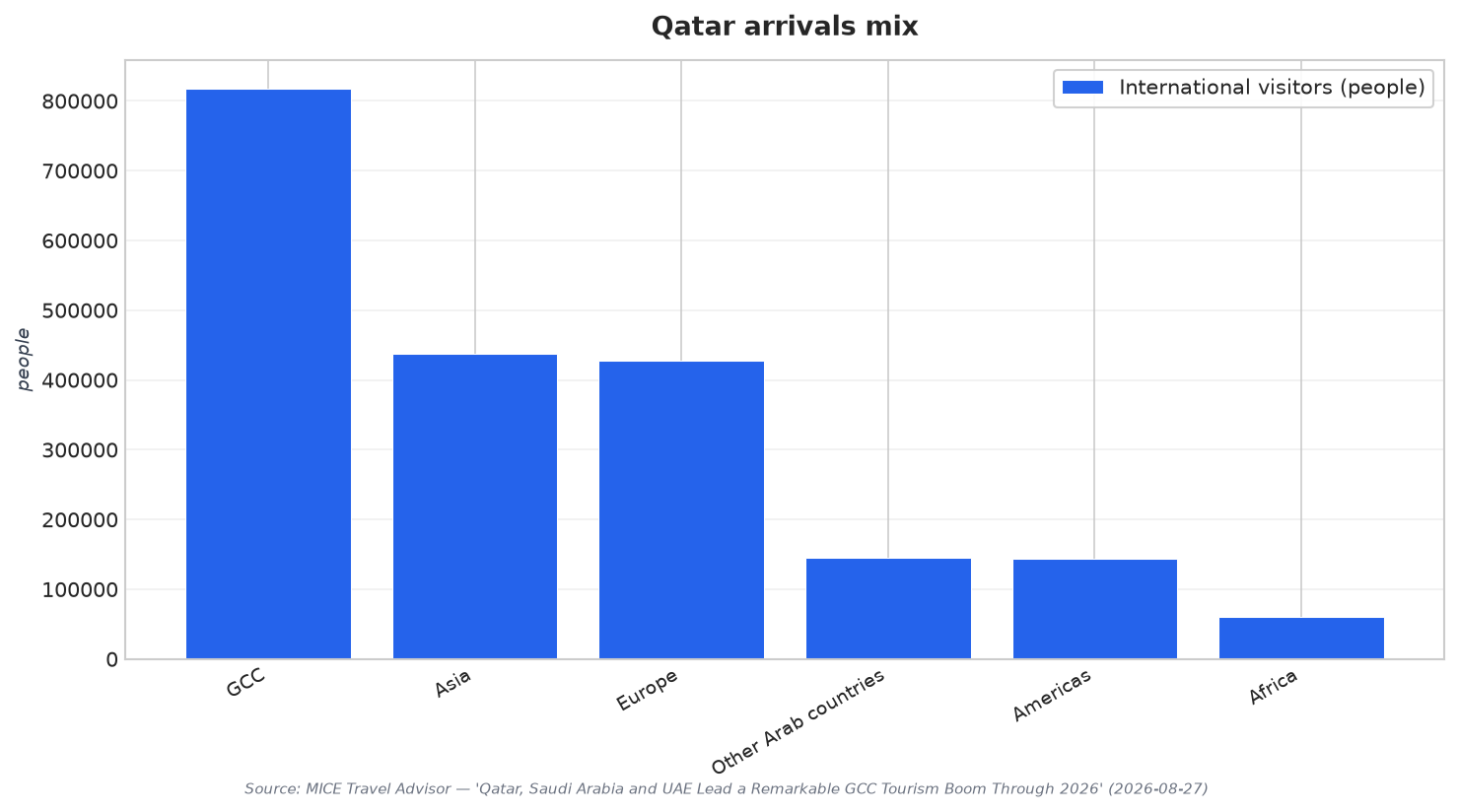
Qatar competes differently, leaning on cultural institutions, sporting events, and transit tourism linked to hub operations. By the end of July 2026, Qatar recorded approximately 2.03 million international visitors in the reported period, according to figures reported from Qatar Tourism data. GCC visitors accounted for more than 40% of international arrivals through July, totaling more than 818,000 visitors during the first seven months and representing 40.2% of total international arrivals. July 2026 also showed how access shapes demand: Qatar recorded 285,000 visitors that month, including 174,000 arrivals by air (61%) and 109,000 by land (39%). Saudi Arabia’s proximity matters in this mix, and Qatar Tourism reported that Saudi Arabia accounted for nearly 30% of September 2025 international arrivals, while GCC visitors represented 44% that month.
For investors, the story is about which model looks more bankable across cycles. A GCC-wide view for 2025 expects tourism across Saudi Arabia, the UAE, Qatar, Oman, Bahrain, and Kuwait to bring a total economic contribution of $254.7 billion, based on figures cited from the GCC Statistical Center, alongside 75.7 million visitors and approximately $131.9 billion spent. The same source says the average implementation progress toward the Gulf Tourism Strategy’s objectives through 2025 reached 73.8%. Put together, the competition around Saudi Arabia vs UAE tourism is increasingly a competition over consistency: the UAE’s refined commercialization, Saudi Arabia’s capacity-led expansion backed by domestic resilience, and Qatar’s regional connectivity strategy supported by a high share of GCC travelers.
What do the latest figures show in the Saudi Arabia vs UAE tourism comparison?
How large is Dubai’s aviation and hotel platform for tourism demand?
What is Saudi Arabia’s hotel room supply compared with the region?
How important are GCC travelers to Qatar’s visitor mix?
What do GCC-wide statistics suggest about tourism’s economic role in 2024–2025?
Talk to us for your needs in:
-
Tourism Infrastructure Planning and Optimization
-
Destination Marketing and Brand Strategy
-
Tourism Workforce Development and Training
-
Sustainable Tourism Solutions
-
Visitor Experience Enhancement and Engagement
-
Tourism Project Feasibility and Strategic Planning
-
Saudi Tourism Benchmarking