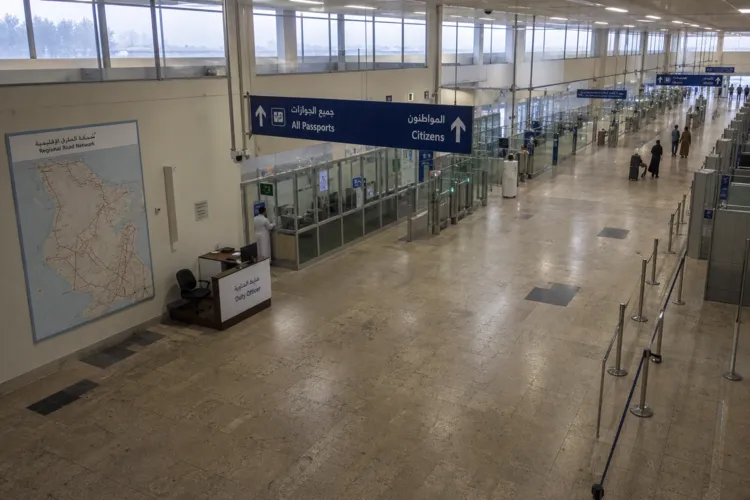
Tourism master planning in Saudi Arabia is being executed as economic infrastructure, not just placemaking. Travel, tourism, and entertainment are priority sectors under Vision 2030, and the government has stated it aims to transform the country into a major global travel destination. The original Vision 2030 target of 100 million visitors was surpassed seven years ahead of schedule, and the ambition has been raised to 150 million annual visitors by 2030. This growth frame matters for master planning because it sets the scale for airports, roads, attractions, hotels, and experiences, but also because it forces a more investable approach. In January 2025, the General Entertainment Authority (GEA) and the Ministry of Investment launched 29 investment opportunities on the “Invest Saudi” platform, signaling a shift from a state-funded model toward a facilitator role.
In practice, Saudi master plans are being built around demand generators that can sustain cash flow. In 2024, Saudi Arabia recorded 115.9 million total tourist trips (domestic and international), described as an all-time high that exceeded the initial 100 million target. That demand shows up in operating performance. National hotel occupancy over the past 12 months has been reported at around 60–62%, up from below 40% at the height of 2020, while ADR is cited at about $185–$190 (around SAR 700). For the first half of 2025, nationwide ADR reached SAR 822 (about $219) with occupancy averaging 62.3%, and RevPAR is described as roughly $115–$120. These are the types of indicators that help developers and lenders test whether a master-planned destination can convert footfall into durable room revenue.
From Showcase Projects to Commercial Discipline
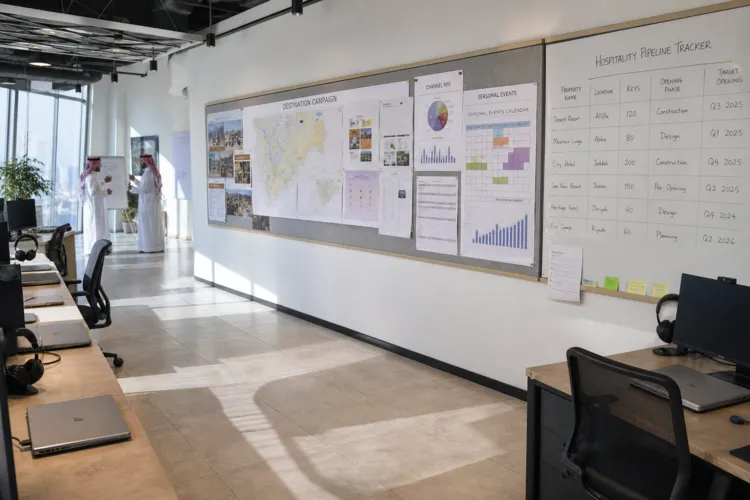
Multiple sources describe a move toward tighter capital allocation and clearer return logic. An industry report dated May 7, 2026 describes a “commercial discipline” phase, with approximately 100,000 hotel rooms in the active development pipeline across the Kingdom. It also states that PIF is increasingly focusing on projects with clear return potential and commercial sustainability, and that some developments are being phased differently to avoid market oversupply. This is where tourism master planning becomes investable: phasing, product mix, and absorption assumptions are treated as financial risk controls. The same report concentrates growth around AlUla (heritage), the Red Sea Project (luxury leisure), and Riyadh (corporate and entertainment), aligning master plans with specific demand types rather than a single, monolithic tourism identity.
Portfolio design is also a deliberate strategy. A 2026 qualitative research paper based on 45 semi-structured stakeholder interviews describes Saudi Arabia’s tourism strategy as deliberately diversified and built through multiple large master-planned destinations developed simultaneously. Respondents characterized this as a portfolio logic intended to broaden seasonality, distribute regional benefits, and reduce vulnerability to shocks affecting any one market. The same research highlights concerns about symbolism at the expense of market depth, community participation, and long-term operational sustainability, especially in capital-intensive projects where full ROI depends on future demand assumptions that remain partially untested. For investors, that tension translates into underwriting questions around operating readiness, governance, and whether luxury positioning can consistently deliver yield without congestion tradeoffs.
Entertainment is being used as a master-plan anchor because it creates repeat visitation and spend beyond traditional trip drivers. Since lifting the ban on cinemas in 2018, Saudi Arabia has targeted 300 theaters with 2,000 screens by 2030, and as of 2024 there were over 600 operational screens. In 2024, the entertainment sector recorded 76.9 million visitors to 423 entertainment destinations, and GEA issued 5,526 licenses, up from 5,337 in 2023. The 2024 Red Sea International Film Festival showcased 122 films from 85 countries. Meanwhile, tourism access has been widened through initiatives including an e-visa system for citizens of 66 countries. Together, these figures show how tourism master planning Saudi Arabia is pairing access, programming, and investable assets to support long-term returns.
How is tourism master planning in Saudi Arabia tied to investable returns?
What visitor milestones are shaping Saudi Arabia’s destination planning?
How large is the hotel development pipeline mentioned in recent reporting?
Which demand segments are being used in Saudi destination portfolio planning?
What entertainment indicators support master-planned tourism districts?
Talk to us for your needs in:
-
Tourism Infrastructure Planning and Optimization
-
Destination Marketing and Brand Strategy
-
Tourism Workforce Development and Training
-
Sustainable Tourism Solutions
-
Visitor Experience Enhancement and Engagement
-
Tourism Project Feasibility and Strategic Planning
-
Saudi Tourism Benchmarking