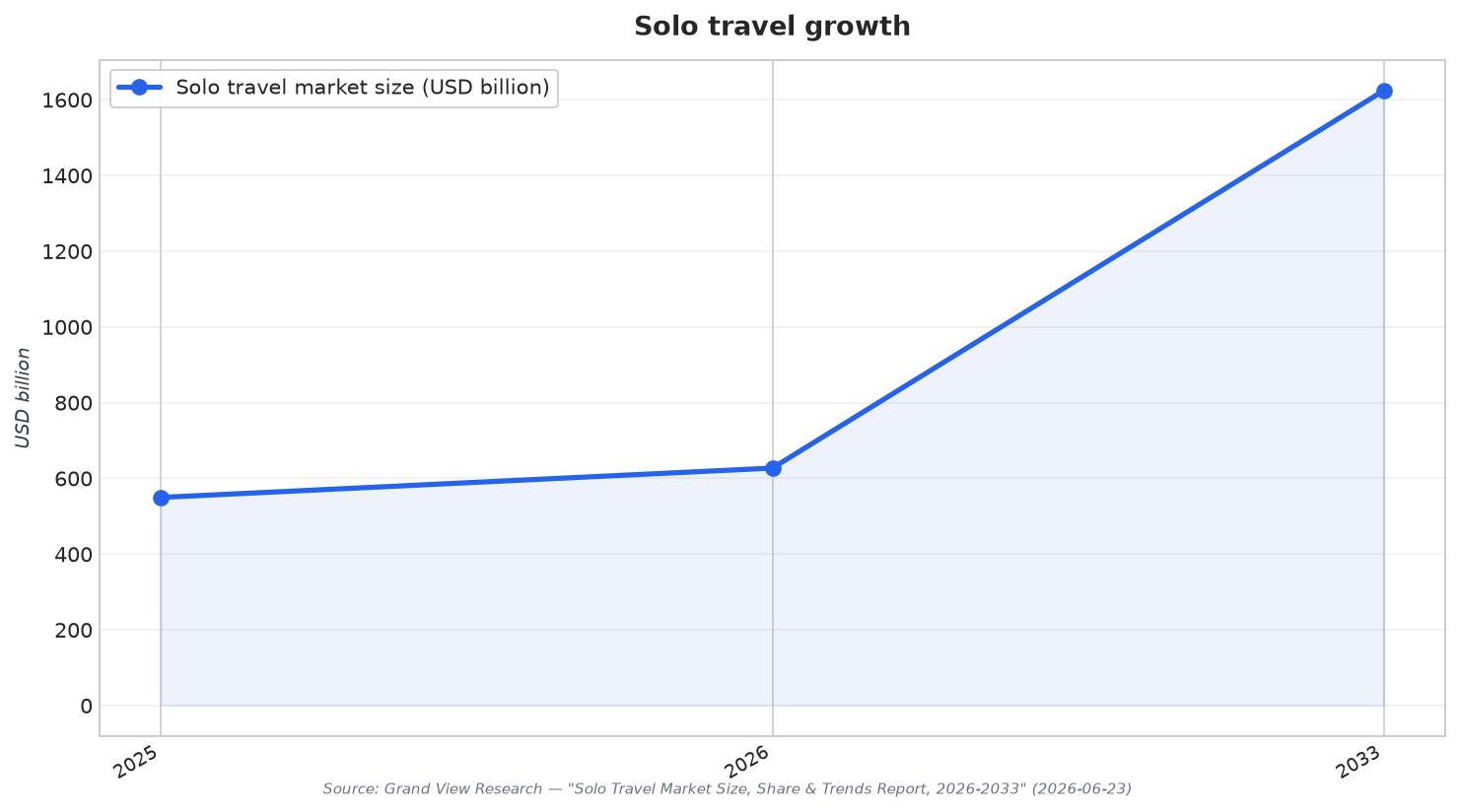
Self-drive and road-trip travel is getting new momentum from two converging shifts: travelers want flexibility, and infrastructure is being designed to support long road journeys. Globally, the driving vacation market was valued at USD 121.2 billion in 2021 and is projected to reach USD 513.3 billion by 2031, at a CAGR of 15.7% (2022–2031). In parallel, solo travel is expanding, with the solo travel market valued at USD 549.8 billion in 2025 and projected to grow from USD 627.3 billion in 2026 to USD 1,624.2 billion by 2033, at a CAGR of 14.6%. Those trend lines matter to anyone thinking about road trip tourism in Saudi Arabia because self-drive trips often start close to home and scale into longer, multi-stop itineraries when planning friction drops.
Domestic travel is also where scale often hides in plain sight. The global domestic tourism market is worth USD 2.64 trillion in 2026 and is growing at a CAGR of 6.46% to reach USD 3.61 trillion by 2031. As connectivity improves, that market is seeing more multi-city and longer-stay trips, lifting spending per traveler and increasing the relevance of air and road corridors linking secondary destinations. For self-drive tourism, those corridors are not just highways; they are predictable sequences of rest stops, attractions, and bookable stays. Digital booking platforms, mobile navigation tools, and cashless payments are also cited as friction reducers for independent travel, making it easier to turn a “maybe” weekend drive into an actual itinerary.
EV Corridors Are Changing What “Driveable” Means
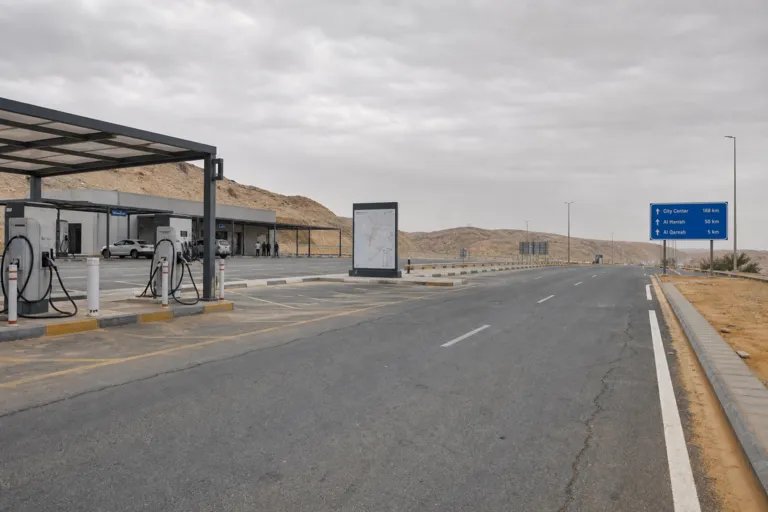
EV readiness is becoming part of the tourism product, not just an energy story. A driving vacation market outlook highlights increasing use of electric vehicles for travel, a rising focus on sustainable road tourism, the development of smart navigation and trip planning tools, and enhanced investment in roadside tourism infrastructure. In the United States, the shift is explicit: federal infrastructure programs are funding highway charging corridors across states through the National Electric Vehicle Infrastructure (NEVI) Formula Program under the U.S. Department of Transportation. U.S. tourism boards are aligning promotion strategies with EV infrastructure growth, and EV charging integration at campsites and travel parks is improving accessibility for long-haul travelers. This is U.S.-specific evidence, but it clarifies the mechanism: when charging becomes structured, road routes become easier to sell as complete experiences.
The overlooked domestic segment is often driven by behavior, not branding. The solo travel market report notes rising numbers of young professionals and students living independently in major cities, increasing demand for short, self-planned trips during weekends and public holidays. It also reports that domestic solo travelers accounted for a 64.7% revenue share of the overall solo travel industry in 2025. That figure is global industry context, not Saudi Arabia-specific, but it reinforces a practical point: domestic first is a common pattern for independent travel. Driving vacations, defined as long road journeys taken for pleasure, sightseeing, and outdoor recreation, also gain visibility as travelers share experiences on social media, inspiring others to visit the same destinations.
For Saudi Arabia, the strategic takeaway is not to copy another country’s model, but to recognize the blueprint: corridors plus planning tools plus domestic trip design. When road travel is packaged around reliable routing, clear stops, and bookable experiences, it becomes easier to move beyond single-destination stays into multi-stop itineraries. Global market signals support that direction, including the projected growth in driving vacations and the broader expansion of domestic tourism value. The most durable advantage in self-drive travel tends to be repeatability: routes that residents can take more than once, in different seasons, with different themes, and with confidence that the infrastructure supports the journey.
Why is domestic travel central to self-drive tourism strategies?
What do the sources say about growth in driving vacations worldwide?
How are EV corridors influencing road-trip tourism planning?
What does solo travel data suggest about the domestic opportunity?
How can road trip tourism in Saudi Arabia learn from global corridor trends without copying them directly?
Talk to us for your needs in:
-
Tourism Infrastructure Planning and Optimization
-
Destination Marketing and Brand Strategy
-
Tourism Workforce Development and Training
-
Sustainable Tourism Solutions
-
Visitor Experience Enhancement and Engagement
-
Tourism Project Feasibility and Strategic Planning
-
Saudi Tourism Benchmarking