Equestrian tourism is moving from a specialist interest into a structured travel product built around nature, culture, and high-spend experiences. A global market report values the equestrian tourism market at $10.8 billion in 2025 and projects $19.4 billion by 2034, a 6.7% CAGR from 2026 to 2034. It defines the category broadly, spanning guided riding excursions, multi-day trail rides, lodge stays, polo tourism, endurance riding events, and culturally immersive riding holidays. This growth is framed as demand for experiential, nature-based, and wellness travel, with operators expanding routes and partnerships while digital platforms amplify demand. Saudi Arabia is entering this conversation as it connects horse culture, events, and new destination building to tourism diversification.
Major horse events can act as “anchor” moments that pull visitors into a destination and then convert them into longer itineraries. Reporting cited by EQUERRY / CO describes the Dubai World Cup’s attendance as exceeding 60,000 spectators, with 2025 figures reported at over 65,000, and notes how such events fill hotels and restaurants. The same source states that, in Saudi Arabia, the government explicitly links equestrian development to Vision 2030 goals of diversifying the economy and boosting tourism. That linkage matters for equestrian tourism in Saudi Arabia because it frames racing and sport not as standalone entertainment, but as top-of-funnel demand for paid experiences that can extend beyond the grandstand into trails, heritage sites, and curated stays.
From Spectator Travel to Purpose-Built Riding Destinations
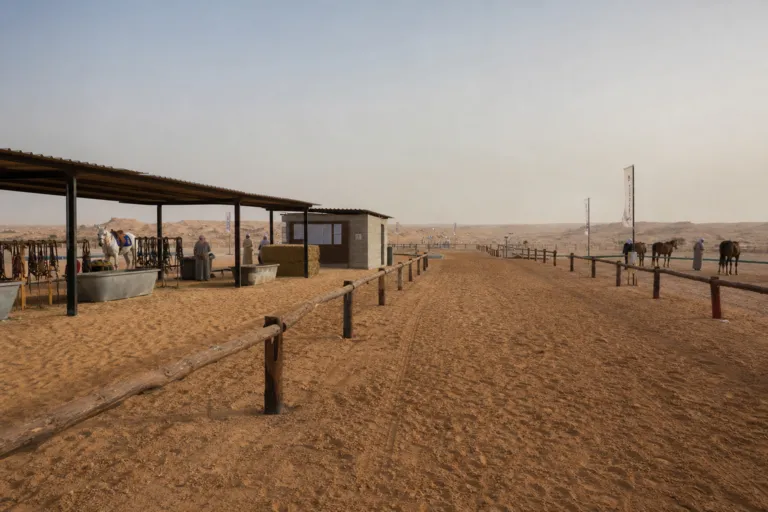
A key step in turning event-driven interest into sustained visitation is building year-round infrastructure. EQUERRY / CO reports that Saudi Arabia is developing the AlUla equestrian village, described as including racetracks, polo fields, and stables. Planning references in that source indicate a target of more than 120,000 visitors annually by 2035, linked to hosting 64 major equestrian competitions. This positioning signals a deliberate shift toward repeatable programming rather than one-off peaks. It also supports product design across multiple trip types described in the global equestrian tourism definition, from culturally immersive riding holidays to event-based travel where the competition calendar becomes the itinerary spine.
Saudi Arabia’s ability to sell premium experiences is also tied to the wider equestrian economy that supplies horses, equipment, and services. A Cognitive Market Research report on equestrian products and supplies states that Saudi Arabia is the regional powerhouse, projected to hold 1.87% of the global market in 2025, while the UAE is estimated at 0.69%. The same report highlights drivers such as strong cultural heritage and royal patronage of equestrian sports, especially endurance and racing, plus a growing tourism industry centered around horse-related activities and ranch stays. For operators, that ecosystem can translate into better availability of tack, stable services, and event-grade facilities that premium travelers expect.
For context, riding-linked travel is sometimes measured through broader “riding tourism” categories. Verified Market Reports values the global riding tourism market at USD 151.04 billion in 2025 and estimates it will reach USD 357.38 billion by 2034, a 10.04% CAGR from 2026 to 2034; it defines the scope as tourism and leisure activities centered on riding experiences, excluding purely competitive sports that do not involve travel. The implication for Saudi-focused product strategy is clear: the most resilient itineraries bundle sport moments with rideable experiences, landscape immersion, and cultural storytelling. Done well, the Saudi Cup-style spotlight can become the entry point, while destinations like AlUla aim to deliver the repeatable, bookable experiences that keep spend in-market.
What is equestrian tourism, and what experiences does it include?
How big is the global equestrian tourism market, according to the sources?
How is Saudi Arabia building equestrian tourism beyond race-day travel?
What do the sources say about event attendance as a tourism driver in the region?
What signals Saudi Arabia’s role in the regional equestrian economy that supports tourism?
Talk to us for your needs in:
-
Tourism Infrastructure Planning and Optimization
-
Destination Marketing and Brand Strategy
-
Tourism Workforce Development and Training
-
Sustainable Tourism Solutions
-
Visitor Experience Enhancement and Engagement
-
Tourism Project Feasibility and Strategic Planning
-
Saudi Tourism Benchmarking