Saudi Arabia’s tourism and entertainment push is not incremental. It is being built to scale under Vision 2030, with the government aiming to transform the country into a major global travel destination. The original Vision 2030 target of 100 million visitors was surpassed seven years ahead of schedule, and the ambition has since been raised to 150 million annual visitors by 2030. That pace changes how developers and operators think about “must-haves.” Accessibility becomes less of a branding claim and more of a delivery requirement when visitor volumes and international visibility rise together. In that context, accessible tourism in Saudi Arabia sits at the intersection of compliance, capacity, and customer experience.
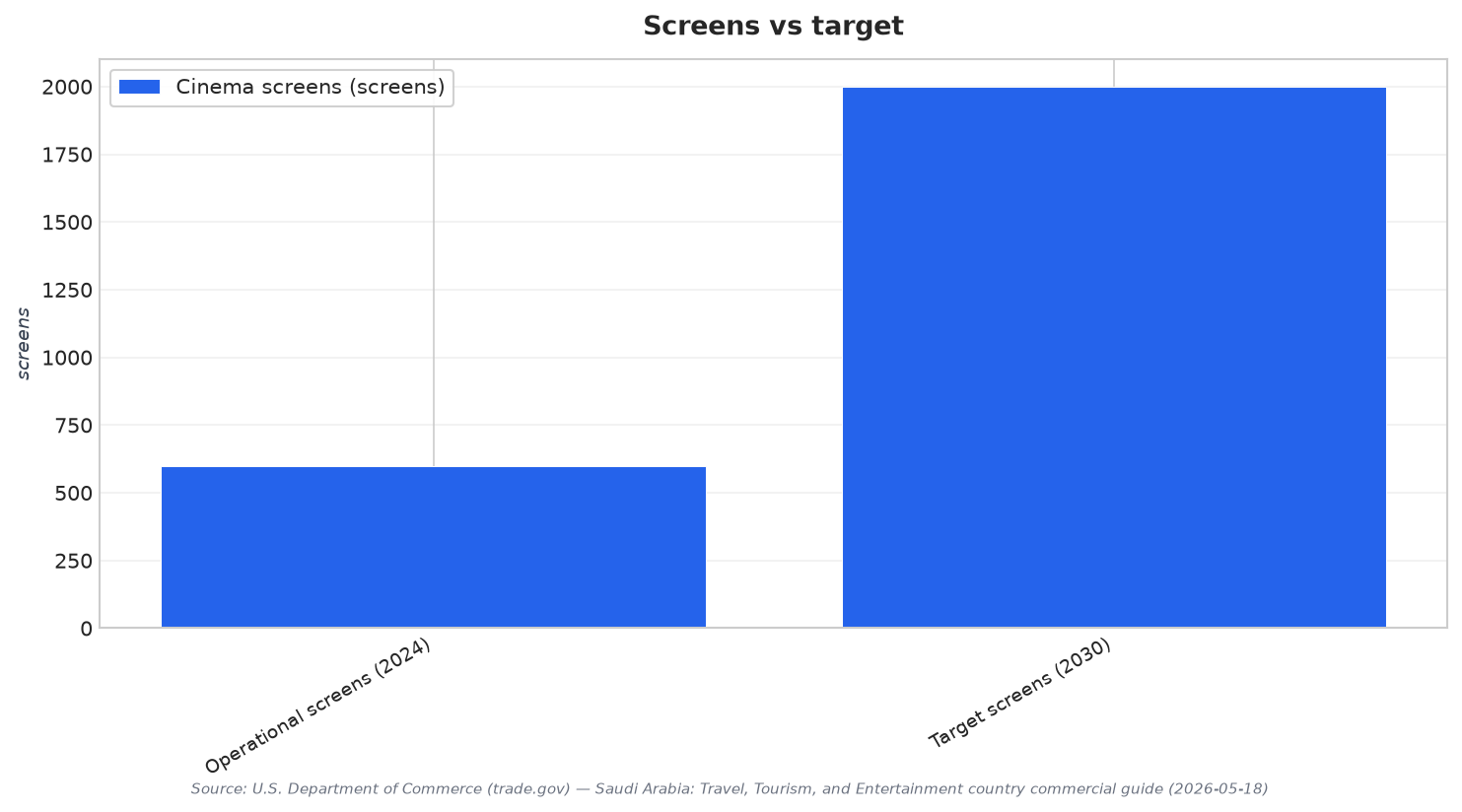
The opportunity is also tied to the types of assets being delivered. Saudi Arabia is expanding entertainment destinations and hosting global events, after lifting the ban on cinemas in 2018 and setting a target of 300 theaters with 2,000 screens by 2030; as of 2024, there were over 600 operational screens. In 2024, the General Entertainment Authority reported 76.9 million visitors to 423 entertainment destinations and issued 5,526 licenses, up from 5,337 in 2023. Saudi Arabia also won bids to host World Expo 2030 in Riyadh and the 2034 FIFA World Cup at stadiums across the country. Every new venue, queue, entry path, restroom, and wayfinding system is a practical test of inclusive design.
Why Accessibility Is Becoming a Hard-Nosed Compliance Issue
Researchers discussing Vision 2030’s tourism implementation describe development efforts focused on increasing accessibility, accommodation, and amenities for tourists, and note that it requires many contractors at various levels to develop tourism throughout the country. This contractor-heavy delivery model is where compliance risk often hides. On top of that, the luxury travel and experiential tourism market discussion flags regulatory hurdles, estimating that compliance costs related to safety and security regulations will increase by 30%, affecting operational budgets of luxury travel providers. Investors can read that as a warning, but it also signals a playbook: fund early-stage compliance planning, standardize accessible specifications, and avoid late retrofit costs that erode returns and delay openings.
Hospitality investment reinforces the same logic. One market report sizes the Saudi Arabia hospitality market at USD 29.02 billion in 2026, projecting growth at a 6.93% CAGR to USD 40.58 billion by 2031. It also points to complementary projects such as the USD 20 billion Diriyah Gate and says giga-projects are slated to create roughly 380,000 jobs, some within hotel and F&B operations. Domestic tourism is also highlighted, with domestic tourism spending rising 43% year-on-year to almost USD 40 billion in 2023. In a market expanding this quickly, accessibility is not just a moral stance; it is operational resilience across rooms, public areas, staffing, and guest flows.
Religious travel adds another high-volume use case where mobility, clarity, and service design matter. A Hajj tourism report forecasts the Saudi Arabia Hajj tourism market expanding from USD 183.8 billion in 2025 to USD 368.3 billion by 2035, at a 7.2% CAGR, with international pilgrims projected to hold a 58.9% share in 2025. The same report links growth to improved visa access and travel coordination and notes that smart mobility investments improve access between airports, hotels, and pilgrimage locations. For investors, the missed opportunity is treating accessibility as a narrow checklist rather than as a scalable product feature that supports throughput, safety, and satisfaction across mass events and peak seasons.
Why is accessible tourism becoming a compliance priority in Saudi Arabia now?
What recent figures show the scale of new entertainment demand?
How do compliance costs affect investors in luxury and experiential travel?
How big is the hospitality growth runway tied to inclusive design?
What does the accessible tourism opportunity in Saudi Arabia look like for high-volume pilgrimage travel?
Talk to us for your needs in:
-
Tourism Infrastructure Planning and Optimization
-
Destination Marketing and Brand Strategy
-
Tourism Workforce Development and Training
-
Sustainable Tourism Solutions
-
Visitor Experience Enhancement and Engagement
-
Tourism Project Feasibility and Strategic Planning
-
Saudi Tourism Benchmarking