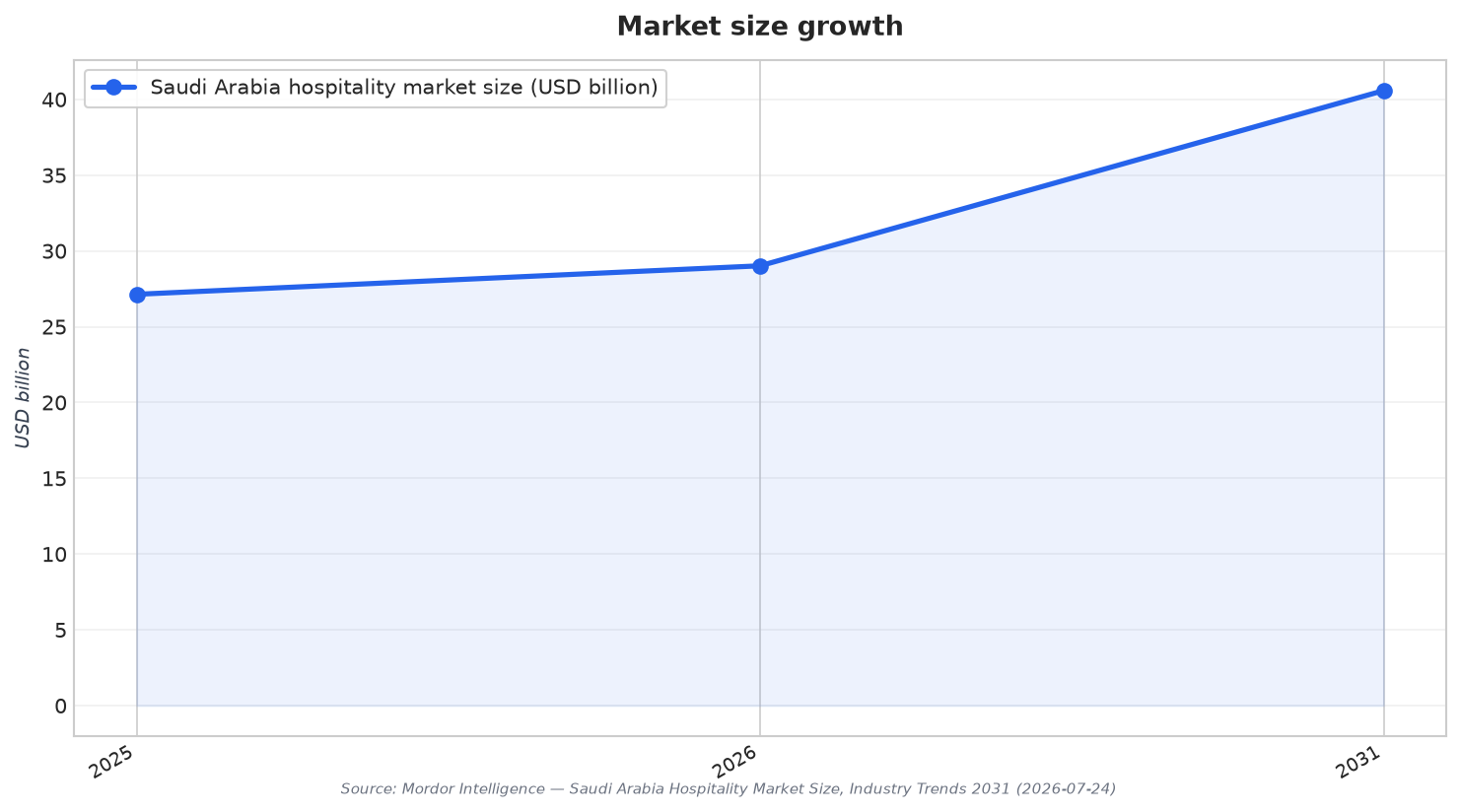
Hotel revenue management in Saudi Arabia is getting harder because demand is diversifying while new supply accelerates. Total tourist trips reached 115.9 million in 2024, and the market is expanding alongside Vision 2030 projects and new corridors beyond the traditional religious base. At the same time, underwriting pressure shows up in performance splits: national occupancy is about 61.5% with ADR of $188 and RevPAR of $116, flat year-on-year, while Riyadh RevPAR fell 5.5% and Jeddah fell 9.6%, even as Makkah rose 3.2%. With around 45,000 rooms under construction (about 26% of existing stock) and over 92,000 rooms in the total pipeline, revenue teams must build pricing that is specific to each demand base and booking window rather than relying on national averages.
In Makkah, Ramadan and Hajj are not just busy seasons; they can define the entire year’s P&L. For Haram-proximate hotels, Ramadan, the Hajj period, and the preparation weeks surrounding them generate 65% to 70% of annual revenue. During those peaks, five-star properties within one kilometre of the Grand Mosque achieve occupancy above 95% and ADR between SAR 1,200 and SAR 2,500. That creates a pricing problem that is also an operations problem, because hotels retain approximately 40% excess staff during off-seasons purely to ensure readiness for Hajj, compressing margins when revenue is lowest. Revenue strategy has to price peaks to fund readiness, while using fenced offers, controlled inventory, and length-of-stay rules to avoid selling the peak too cheaply too early.
Pricing Playbook: Pilgrimage Peaks, City Events, and Channel Mix
Pilgrimage volumes and capacity changes should drive the forecast model, not intuition. Hajj attendance reached approximately 2.1 million in 2025 and stood at 1.71 million in 2026, and Saudi Arabia is working towards accommodating 30 million Hajj and Umrah pilgrims annually by 2030. Umrah pilgrims totalled 18 million in 2025 and are expected to exceed 20 million in 2026, with average spending of USD 5,400 per pilgrim. Religious tourism generated about USD 30 billion in 2025 and is projected to reach about USD 34 billion in 2026. For revenue managers, this supports premium compression pricing in Makkah and Madinah, while also highlighting the need to protect shoulder periods when dates shift and when new rooms intensify competition.
Outside the holy cities, the key is to treat events as mini-seasons with their own booking curves. Riyadh Season alone drew 15 million visitors, and entertainment megaevents can push occupancy rates above 85% in host cities. Yet JLL reported weaker occupancy across key commercial markets during the second quarter as additional rooms combined with softer corporate demand in Riyadh and Jeddah. That combination can trigger discounting cycles, so pricing should separate “event nights” from base demand nights with clear rate fences and staged yield moves. Chain scale matters here too: chain hotels commanded 57.74% of market share in 2025 in one assessment, and another estimate put chain hotels at 52.4% share in 2025, which helps explain why loyalty, packaging, and multi-property strategies are increasingly central to defending rate.
Channel strategy is now a core lever in revenue management, not just marketing. OTAs captured 41.65% of transactions in 2025, while direct digital channels are growing at a 14.78% CAGR as hoteliers invest in proprietary platforms. AI tools are being used for dynamic pricing and demand forecasting around Hajj, Umrah, and Riyadh Season peaks, and hotels are also investing in CRM systems that track loyalty points and send personalized offers to fill last-minute inventory. For teams building a 2026 calendar, the practical goal is simple: maximize peak profitability with tight controls, then use direct demand generation and targeted offers to stabilize occupancy through off-peak months, especially as the supply wave expands across Riyadh, Jeddah, and the western corridors.
What makes revenue management in Saudi hotels uniquely seasonal?
How should hotels forecast demand around Hajj and Umrah?
Do city events meaningfully change pricing decisions in Riyadh?
What channel mix trend matters most for Saudi hotel pricing and inventory control?
What is the current state of hotel revenue management in Saudi Arabia’s major cities?
Talk to us for your needs in:
-
Tourism Infrastructure Planning and Optimization
-
Destination Marketing and Brand Strategy
-
Tourism Workforce Development and Training
-
Sustainable Tourism Solutions
-
Visitor Experience Enhancement and Engagement
-
Tourism Project Feasibility and Strategic Planning
-
Saudi Tourism Benchmarking