Saudi Arabia is building a broader tourism map than the traditional Riyadh and Jeddah story. Total tourist trips, including domestic and international travel, reached 115.9 million in 2024, exceeding the initial target of 100 million. In parallel, travel and tourism were on track to contribute over 10% of GDP by 2025, reflecting the scale of demand and policy focus. For investors, the question becomes where incremental growth will land as new destinations mature. That is where the logic of secondary markets strengthens, because airport connectivity and hotel performance can translate national momentum into more balanced visitor flows.
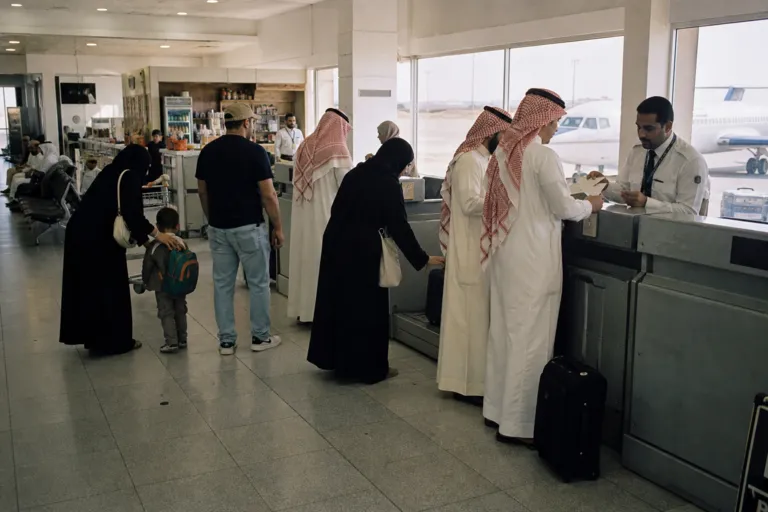
The investment narrative is increasingly linked to aviation. One peer-reviewed analysis of Vision 2030 priorities cites expected aviation-sector investments totaling USD 100 billion. It breaks this into USD 50 billion for the expansion and modernization of major airport infrastructure, USD 40 billion for aircraft acquisition, and USD 10 billion directed toward creating advanced logistics hubs at key airports in Riyadh, Jeddah, and Dammam. Even though the named logistics hubs focus on the main nodes, the scale of modernization signals a system-wide push that can support route growth and onward dispersal. That system approach is central to regional airport investment in Saudi Arabia, because better networks can make secondary cities viable for shorter stays, events, and domestic weekend demand.
Why Secondary Tourism Markets Look More Investable Now
Domestic demand is providing proof that travel is not only international and not only concentrated in the largest cities. Preliminary industry reporting put domestic tourist trips at about 28.9 million in the first quarter of 2026, roughly 16% higher year on year, with associated spending around SAR 34.7 billion. That volume matters for secondary markets because domestic travelers can fill new hotel supply, lengthen peak periods, and reduce reliance on one demand segment. Coverage also points to strong movement on core routes linking Riyadh, Jeddah, and Al Madinah, supported by expanded flight schedules and competitive fares. In other words, connectivity and pricing are already changing travel behavior.
Madinah is a concrete example of what happens when a city’s demand profile catches up with its national visibility. A report cited by Saudi Arabia’s official press agency said Madinah recorded the highest occupancy rate among Saudi cities in the first half of 2025, reaching nearly 75%. Separate 2025 industry research also identified Madinah as registering the highest average daily room rate in the Kingdom for a recent quarter. These are not abstract projections. They are operational signals that can influence underwriting assumptions for developers and lenders evaluating new rooms, mixed-use hospitality, or service-apartment formats in emerging hubs.
At the national level, hotel performance adds context for the revenue side of the equation. Occupancy has hovered around 60–62% over the past 12 months, versus below 40% at the height of 2020. In the first half of 2025, nationwide ADR reached SAR 822 (about USD 219), a 1.9% year-on-year increase, while occupancy averaged 62.3%. RevPAR was described as roughly 20% higher than the 2019 pre-pandemic average, with 2023 RevPAR growth hitting almost 25% before a slight normalization in 2024. Against this backdrop, the long-term national target of 150 million annual visitors by 2030 is explicitly linked in industry reporting to aviation expansion and hospitality investment, reinforcing why secondary markets and their airports are moving closer to the center of the investment case.
Why does airport connectivity matter for secondary tourism markets in Saudi Arabia?
What recent domestic travel numbers support the case for emerging cities?
What hospitality metrics show Madinah’s rise as a tourism hub?
How does the national hotel performance backdrop affect underwriting?
What is the investment case for regional airport investment in Saudi Arabia beyond Riyadh and Jeddah?
Talk to us for your needs in:
-
Tourism Infrastructure Planning and Optimization
-
Destination Marketing and Brand Strategy
-
Tourism Workforce Development and Training
-
Sustainable Tourism Solutions
-
Visitor Experience Enhancement and Engagement
-
Tourism Project Feasibility and Strategic Planning
-
Saudi Tourism Benchmarking