For many operators, women in tourism workforce Saudi Arabia started as a compliance conversation. It is increasingly an execution conversation. The tourism sector is expanding and professionalizing under Vision 2030. Oxford Business Group notes that the government aims to generate 1.6m tourism-related jobs by 2030, supported by enhanced training programmes, and that multiple public entities oversee the national tourism strategy. In parallel, the hospitality market itself is scaling. Mordor Intelligence estimates the Saudi Arabia hospitality market size at USD 29.02 billion in 2026, up from USD 27.14 billion in 2025, with USD 40.58 billion projected for 2031 at a 6.93% CAGR for 2026–2031. In a market moving this fast, workforce composition becomes a driver of capacity and consistency, not just a metric.
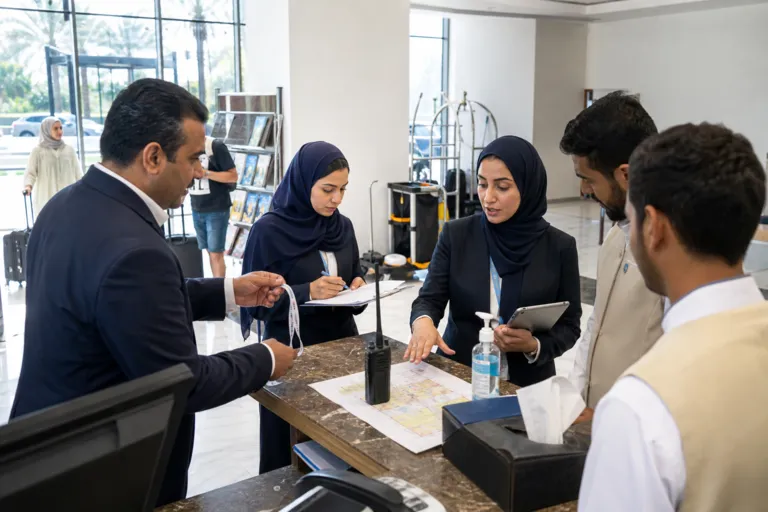
Participation figures show both momentum and mixed signals, which is why operators need to track sources and definitions closely. A ResearchGate paper on tourism diversification states that tourism development accelerated women’s workforce participation from 7% in 2018 to 12% in 2022. More recent official statements point to a much larger share. A Frontiers article cites Ministry of Tourism briefings reporting women represent nearly half of all employees in the sector following rapid increases since 2018. Zawya reports the tourism minister said women’s participation reached 46% of the total workforce, and framed it as “nearly 50%.” At the same time, Travel And Tour World reports female workers total 134,033, representing 13.3% of the workforce, alongside 875,658 male employees, and it also reports a total workforce above 1 million.
Turning Participation Into a Competitive Advantage for Operators
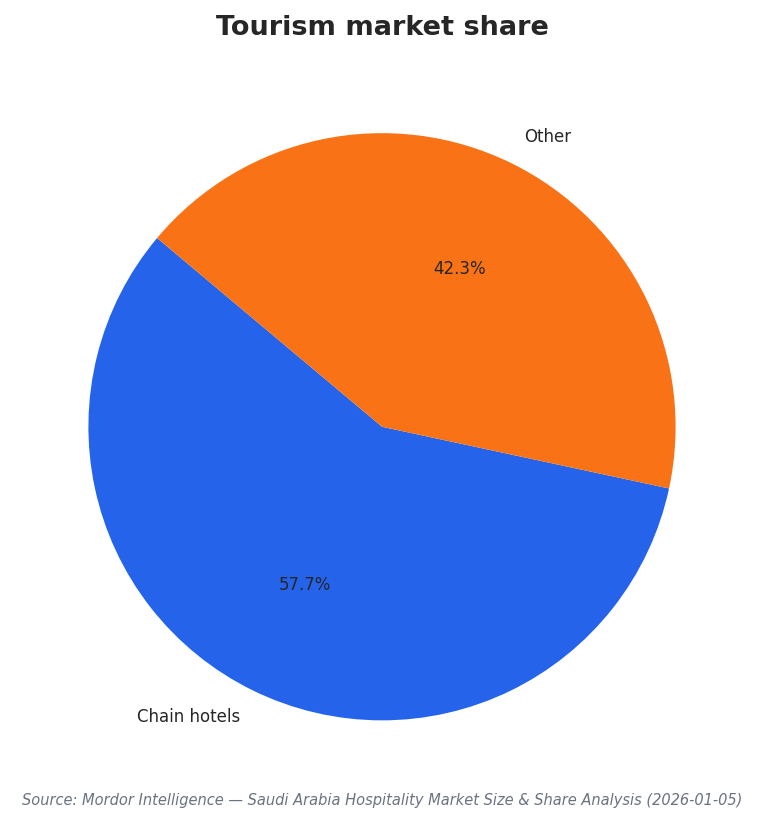
The competitive question is how operators translate participation into measurable operating strength. Training is one obvious lever. Zawya reports that since 2020 the Kingdom provided more than 946,000 training opportunities in the tourism sector for workers and those wishing to join it. That matters because scaled hiring without scaled capability creates service volatility. Operators also have to align staffing models with where the market is expanding. Mordor Intelligence reports that chain hotels held 57.74% of market share in 2025, OTAs captured 41.65% of transactions, and direct digital channels are growing at a 14.78% CAGR. These channels raise the premium on frontline service recovery, digital customer communication, and brand consistency across multiple properties, all areas where a broader and better-trained talent pipeline can reduce operational risk.
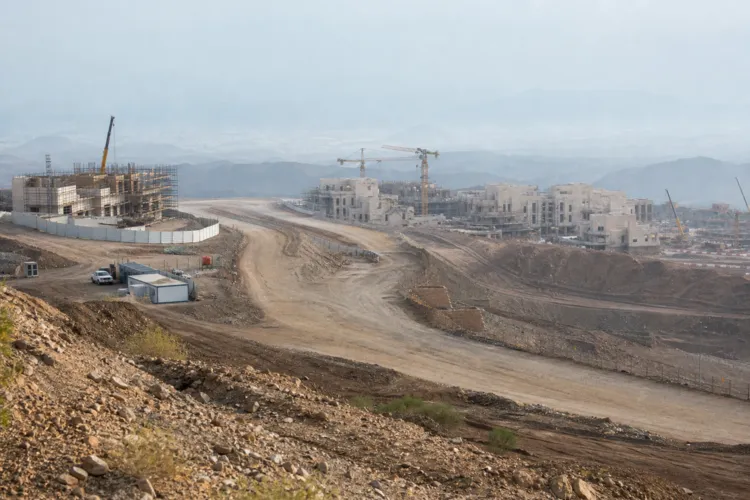
Operators can also link women’s employment to growth corridors and new demand patterns, rather than treating it as a standalone initiative. Mordor Intelligence reports the Makkah–Jeddah corridor held 26.62% of hospitality market size in 2025, while the Red Sea and wider western coast are set to expand at an 18.20% CAGR to 2031. It also highlights a mega-project pipeline: Public Investment Fund commitments total USD 500 billion to NEOM alone, and complementary projects include the USD 20 billion Diriyah Gate. Mordor Intelligence adds that giga-projects are slated to create roughly 380,000 jobs, some within hotel and F&B operations. As capacity comes online, operators who can attract and retain diverse teams are better positioned to staff openings on time, keep standards stable, and meet evolving guest expectations in luxury and lifestyle formats.
Practically, the shift from compliance to advantage comes down to governance, role design, and reporting discipline. Oxford Business Group notes the Ministry of Tourism establishes tourism regulations and legislation, provides training, and issues licenses, while other entities support promotion, investment, and connectivity. In that system, operators benefit from building internal metrics that mirror how the sector is being regulated and funded, then tying women’s participation to hard outcomes like readiness for new openings and customer experience consistency. Even when published participation figures differ across sources, the strategic direction is clear in official messaging: women’s employment is presented as part of national modernization and destination branding. For operators, the winners will be those who treat inclusion as a workforce scaling tool that protects service quality while the market grows.
What do recent sources say about women’s share in Saudi Arabia’s tourism workforce?
What does another dataset report about women working in the tourism sector?
How is training connected to workforce participation and operator performance?
How fast is Saudi Arabia’s hospitality market growing, and why does it matter for staffing?
Where are the main expansion corridors that operators should plan for?
Talk to us for your needs in:
-
Tourism Infrastructure Planning and Optimization
-
Destination Marketing and Brand Strategy
-
Tourism Workforce Development and Training
-
Sustainable Tourism Solutions
-
Visitor Experience Enhancement and Engagement
-
Tourism Project Feasibility and Strategic Planning
-
Saudi Tourism Benchmarking