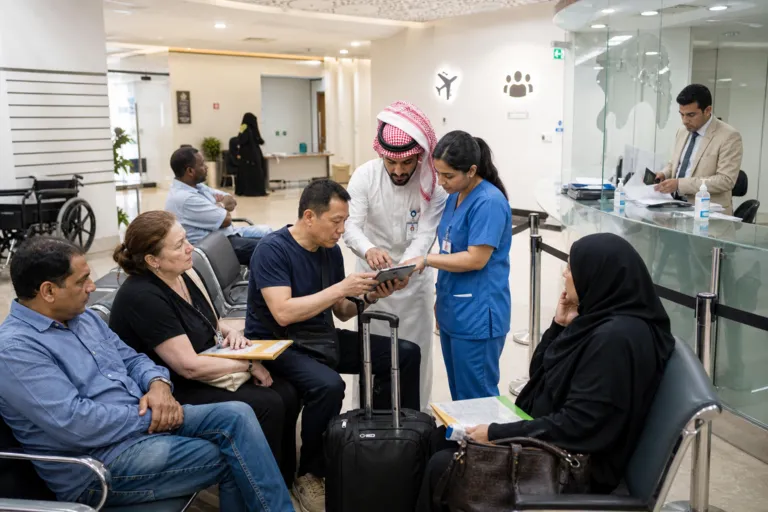
Medical tourism in Saudi Arabia is moving from an add-on to a standalone investment narrative. Ken Research values the Saudi Arabia healthcare medical tourism market at approximately USD 2.5 billion, and describes growth being driven by investments in healthcare infrastructure and an increasing number of accredited hospitals catering to international patients. IMARC Group press releases published on openPR frame a fast-growth outlook, citing a market size of USD 1,341.1 million in 2024 with a forecast of USD 7,918.6 million by 2033 at a 21.80% growth rate, and another outlook citing USD 1,633.5 million in 2025 with a forecast of USD 8,887.9 million by 2034 at 20.71% CAGR. Together, these figures position the sector as more than a tourism story.
The investment thesis is also grounded in tangible cost and capacity narratives, especially for high-ticket procedures. Ken Research data reproduced by marketresearch.com states that a heart bypass surgery costs around USD 15,000 in Saudi Arabia compared to USD 100,000 in the U.S., which it links to a “significant cost advantage” that can pull demand from high-cost markets. The same source says the Saudi government has allocated USD 2 billion for healthcare infrastructure development, focusing on expanding hospitals and clinics, and ties these initiatives to Vision 2030’s economic diversification and promotion of medical travel. This is where the keyword topic—medical tourism Saudi Arabia—intersects with real capital formation.
What Makes the Category “Investable” Beyond Leisure Tourism
The investable edge sits in service segmentation, distribution, and trust-building signals. Ken Research segments the market by service types including Surgical Procedures, Diagnostic Services, Rehabilitation Services, Wellness Programs, Cosmetic Procedures, and Fertility Treatments, among others, and also maps end users across Individual Patients, Corporate Clients, Insurance Companies, and Government Agencies. On supply, it identifies a mix of regional and international players, naming organizations such as King Faisal Specialist Hospital & Research Centre, Saudi German Hospital, Dallah Hospital, International Medical Center, Al Noor Hospital, Al Mouwasat Hospital, and Dr. Sulaiman Al Habib Medical Group. This combination supports a multi-buyer, multi-service revenue model rather than a single leisure funnel.
Digital health and accreditation are repeatedly framed as enablers for cross-border demand. One IMARC-linked openPR release says the SEHA Virtual Hospital connects over 150 facilities for remote consults and AR-guided procedures, describing app-based booking journeys suited to areas like IVF or cancer therapies. Separately, a Futurism article notes Saudi facilities are investing in international accreditation, including Joint Commission International (JCI) certification, to signal quality and build trust with foreign patients, and it also points to reforms designed to streamline medical visa processes. Yet growth is not automatic: Ken Research also flags limited international marketing efforts, citing Saudi spending of USD 10 million on international marketing campaigns versus Thailand’s USD 50 million as a competitive gap.
Finally, the category’s “beyond leisure” logic becomes clearer when compared with wellness tourism momentum that can feed clinical pathways. An IMARC openPR release on health and wellness tourism cites a market size of USD 5.46 billion in 2024 and USD 10.39 billion by 2033, with a 7.41 growth rate. It also points to major projects including AMAALA and The Red Sea Global designed to position Saudi Arabia as a global wellness destination, and reports that in May 2025 Bayn, described as the country’s first women-only beach wellness retreat, opened at AlUqair beach offering a two-day program with yoga and meditation. For investors, this suggests an ecosystem where wellness experiences can sit alongside hospital-grade treatment pathways, expanding the addressable journey.
What is the current market value of medical tourism in Saudi Arabia?
What do forecasts say about Saudi Arabia’s medical tourism market growth?
Why can Saudi Arabia be cost-competitive for certain procedures?
How is digital health being used to support inbound medical travel?
What is a key challenge holding the sector back internationally?
Talk to us for your needs in:
-
Tourism Infrastructure Planning and Optimization
-
Destination Marketing and Brand Strategy
-
Tourism Workforce Development and Training
-
Sustainable Tourism Solutions
-
Visitor Experience Enhancement and Engagement
-
Tourism Project Feasibility and Strategic Planning
-
Saudi Tourism Benchmarking