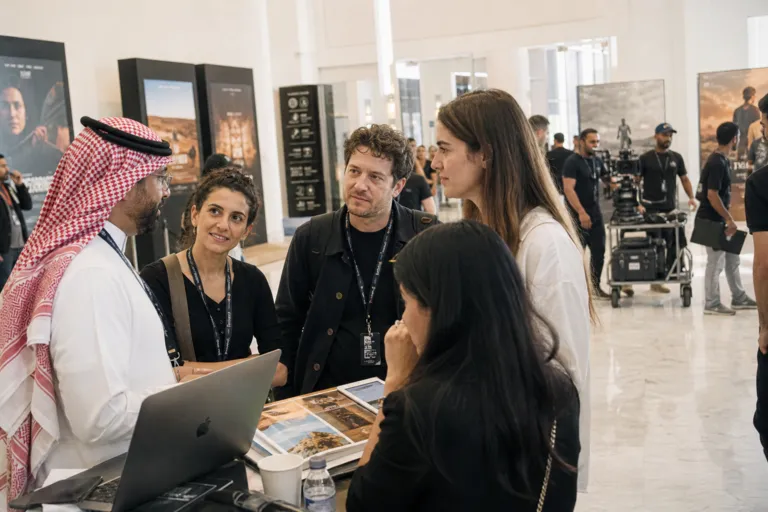
In Jeddah, the Red Sea Film Festival has become more than a red-carpet moment. It is also a deal-making and agenda-setting venue that reflects how Saudi Arabia wants its film industry to grow: through collaboration, capital, and defined institutional roles. Variety described the Cultural Development Fund’s Film Future reception, held alongside the festival, as a working forum that gathered filmmakers, producers, investors, and entrepreneurs. The point was to reinforce that film’s next stage depends on financing and infrastructure as much as on creative output. For set-jetting, that matters because film-driven travel requires a steady pipeline of productions, visible talent, and places that can host shoots and welcome audiences.
The funding mechanics cited around the festival are substantial and measurable. Since its launch in 2021 and through October 2025, the Cultural Development Fund financed more than 150 cultural businesses and projects across seven regions of Saudi Arabia, deploying upwards of $142 million through financing, incentives, and investments. Of that total, 44% of support was dedicated to the film sector. Those supported projects are expected to contribute more than $533 million to Saudi Arabia’s GDP and create an estimated 6,900 jobs. This is the economic base behind a broader narrative: that screen stories and production activity can feed hospitality, events, and travel planning over time, rather than relying on one-off festival attention.
Set-Jetting Needs Screens, Shoots, and an Industry Pipeline
Set-jetting works best when audiences can discover content in cinemas and when productions can keep filming. On the exhibition side, Vision2030.ai reports that, since cinemas reopened in 2018, Saudi Arabia’s market has grown to more than 700 screens across more than 60 multiplex locations, with annual box office revenue above SAR 1 billion. The same source notes the market is concentrated in Riyadh, Jeddah, and Dammam, with expansion into Mecca, Medina, Tabuk, and Abha. On the production side, the Saudi Film Commission runs a production incentive program offering cash rebates of up to 40% on qualifying production expenditure in Saudi Arabia, alongside location scouting services and permit facilitation. Together, these elements make it easier to produce films that can later inspire location curiosity and travel itineraries.
The Red Sea Film Festival also positions itself inside the regional business of film, not only the glamour. Variety calls Red Sea Souk the largest film market in the Arab region and describes sessions that bring together influential voices across regional and international screen industries to discuss AI, co-production, streaming, the growth of Saudi audiences, and what financiers are seeking. That industry continuity links directly to the festival’s tourism-adjacent value: repeatable cycles of production, marketing, and celebrity attention. In parallel, The Hollywood Reporter notes the festival’s red carpet is designed to rival Cannes and reports that the Jeddah event in December attracted names including Sean Baker, Ana de Armas, and Dakota Johnson, reinforcing how star presence can amplify destination awareness.
Film-driven tourism does not sit in isolation from other leisure investments. Mordor Intelligence estimates Saudi Arabia’s entertainment and amusement market at USD 2.65 billion in 2025 and USD 2.98 billion in 2026, with a projection of USD 5.36 billion by 2031 at a 12.4% CAGR over 2026–2031. The same report says government entities channeled more than SAR 50 billion (USD 13.33 billion) into leisure infrastructure between 2024 and 2025. Within that wider context, red sea film festival tourism becomes a strategic connector: a cultural flagship that helps draw global attention, while incentives, venues, and financing aim to turn that attention into repeat visits, longer stays, and ongoing production activity that keeps new locations and stories in circulation.
How does the Red Sea Film Festival support film-driven tourism in Saudi Arabia?
What financing figures were reported around Saudi cultural and film projects?
What economic impact is expected from the Cultural Development Fund-backed projects?
What incentive does Saudi Arabia offer to attract productions that could later drive set-jetting?
What signs show Saudi Arabia has built a larger cinema platform for audiences?
Talk to us for your needs in:
-
Tourism Infrastructure Planning and Optimization
-
Destination Marketing and Brand Strategy
-
Tourism Workforce Development and Training
-
Sustainable Tourism Solutions
-
Visitor Experience Enhancement and Engagement
-
Tourism Project Feasibility and Strategic Planning
-
Saudi Tourism Benchmarking