
Shopping tourism in Saudi Arabia is evolving into a strategic lever for visitor spending, brand positioning, and real-estate investment. Multiple market trackers link this momentum to Vision 2030 priorities, where tourism development and economic diversification support demand for premium goods and experiences. ResearchAndMarkets.com estimates the Saudi Arabia luxury market reached about USD 19.23 billion in 2024, while IMARC Group cites a 2025 market size of USD 11.1 billion and frames growth around upscale retail infrastructure and rising tourism activity. These figures are not interchangeable because they come from different sources and methods, but together they signal an active luxury ecosystem. For planners and investors, luxury retail districts are increasingly treated as place-makers that can turn footfall into sustained, high-margin spend.
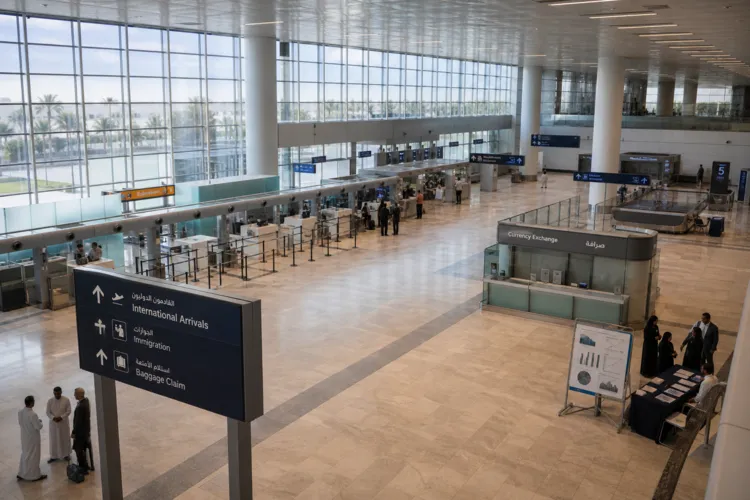
Tourism volumes matter because they create repeatable peaks in store traffic and category demand. A ResearchAndMarkets.com retail market note says that, as of 2022, Saudi Arabia welcomed approximately 18 million international tourists, and it explicitly ties rising tourism to retail demand for luxury goods, fashion, souvenirs, and electronics in major urban centers and tourist destinations. Statista’s Saudi tourism topic page also highlights inbound tourist expenditure as a tracked metric and notes Egypt as the source country with the highest number of inbound tourists in 2024, while Makkah is listed as the city with the highest inbound tourist arrivals. For luxury districts, this mix of origin patterns and city concentration can inform store location strategy, merchandising calendars, and staffing, especially when festivals and seasons intensify shopping intent.
Why Luxury Retail Districts Are Becoming an Investment Thesis
The investment logic is not only about selling more handbags or watches. It is about building destinations with predictable demand curves that support leases, flagship rollouts, and omnichannel growth. Mordor Intelligence projects the GCC luxury goods market to rise from USD 15.02 billion in 2025 to USD 16.53 billion in 2026, reaching USD 26.66 billion by 2031, and it says the United Arab Emirates supplied 48.15% of 2025 revenue. In that same GCC context, Saudi Arabia is projected to register a 10.05% CAGR to 2031, with commentary pointing to a pipeline of mixed-use malls and flagship openings. This is the frame in which Saudi luxury retail tourism becomes a visitor-spend and investment play: districts are built to capture travel-driven demand while also creating long-term retail inventory for brands and developers.
Luxury demand signals also show where districts can win. Ken Research reports consumer spending on high-end products reached $14 billion in 2023 in Saudi Arabia, and it adds that omnichannel sales accounted for approximately 14% of total retail sales in 2023. This supports a district strategy that blends flagship experiences with digital integration such as click-and-collect and online inventory visibility. Mordor Intelligence adds detail at the GCC level: clothing and apparel led with 35.28% of market share in 2025; single-brand stores held 45.12% share; and online luxury platforms are expected to grow at a 12.30% CAGR between 2026 and 2031. Districts that anchor premium apparel, then layer watch, gifting, and online-to-offline services, are aligning with how shoppers actually browse and buy.
For investors, the most durable advantage is when tourism programming, retail infrastructure, and consumer purchasing power reinforce each other. Ken Research cites Saudi Arabia’s GDP per capita reaching $23,586 in 2022 and household expenditures reaching $212 billion in 2022, alongside an urban population of over 31.6 million in 2022, about 83% of the total population. Those fundamentals support large-format retail hubs and destination districts. On the forward-looking side, IMARC Group’s press release projects the Saudi Arabia luxury market reaching USD 24.6 billion by 2034 at a CAGR of 8.94% over 2026–2034, while ResearchAndMarkets.com references a plan to build four economic cities to foster internal trade, attract FDI, and diversify into non-oil industries. Together, these inputs describe why luxury districts can be built as tourism magnets and underwritten as long-term commercial assets.
How does shopping tourism in Saudi Arabia connect to luxury retail investment?
How many international tourists did Saudi Arabia welcome in 2022, according to the sources?
What do the sources say about luxury spending and omnichannel retail in Saudi Arabia?
What is Saudi Arabia’s projected growth rate in the GCC luxury goods outlook?
Which inbound market and city are highlighted in the Saudi tourism statistics overview?
Talk to us for your needs in:
-
Tourism Infrastructure Planning and Optimization
-
Destination Marketing and Brand Strategy
-
Tourism Workforce Development and Training
-
Sustainable Tourism Solutions
-
Visitor Experience Enhancement and Engagement
-
Tourism Project Feasibility and Strategic Planning
-
Saudi Tourism Benchmarking