Saudi Arabia is moving quickly to win Chinese outbound demand, and hospitality businesses are on the front line of delivery. Dragon Trail International’s Chinese Tourism to the Middle East and North Africa 2025 White Paper positions the Kingdom as one of the region’s fastest-emerging destinations for Chinese travelers, while WTM Spotlight Riyadh research highlights momentum supported by expanded air connectivity and “China-ready” initiatives. A key enabler is Approved Destination Status (ADS), granted by the Chinese government in July 2024, which allows Saudi Arabia to officially welcome Chinese tour groups and market group travel inside China. For operators, this is not just marketing. It is an operating standard that touches guest experience, distribution, and conversion.
Demand is also being shaped by how Chinese travel is evolving. eTurboNews cites that before the pandemic, Chinese travelers made approximately 155 million international trips annually and spent around US$255 billion abroad. It also reports Chinese arrivals to Saudi Arabia reached approximately 140,000 visitors in 2024, making China the Kingdom’s second-largest tourism source market. These figures are a strong prompt for hotels to treat China-readiness as a commercial capability, not a seasonal tactic. Future Market Insights (FMI) adds context at the market level, valuing the China outbound travel market at USD 167.7 billion in 2026 and projecting growth at a 9.6% CAGR to USD 419.2 billion by 2036.
Product: Build for Independent, Experience-Led Travel
Saudi Arabia’s advantage is timing. SAFE Saudi Arabia for Elites notes the Kingdom only opened to international leisure tourism in 2019, and Dragon Trail observes it could incorporate Chinese visitor requirements from the beginning as infrastructure developed. That matters because the “Chinese visitor of 2026” is shifting away from the old group-tour stereotype. Travel And Tour World, drawing on Dragon Trail research, points to a pivot toward independent exploration, premium hospitality experiences, family-oriented itineraries, and highly digitized, friction-free journeys. Hospitality products should therefore package culture, nature, and comfort in bookable ways that work for families and independent travelers, not only for traditional tour series.
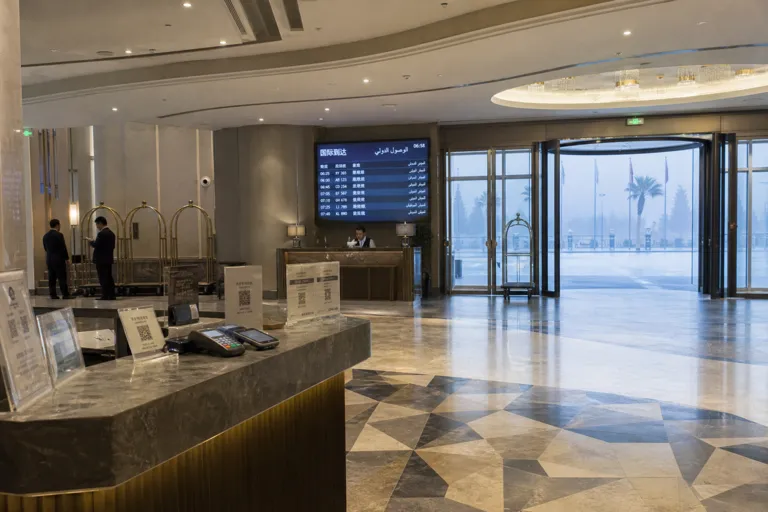
Payments are where intent becomes revenue. Travel And Tour World highlights “digital payment synergy,” including integration of widely used Chinese mobile payment systems such as WeChat Pay and Alipay across hospitality, retail, and transit. WTM’s summary of “China-ready” initiatives also references enhanced payment systems alongside Mandarin-language airport signage and tailored tourism products introduced since 2023. FMI is even more direct for operators, urging investment in WeChat/Alipay payment integration and Mandarin-language AI chatbots, because the digitally native traveler profile no longer matches a group-tour-only approach. If the guest must switch apps, currencies, or steps at checkout, the destination story can still lose to a simpler alternative.
Partnerships are the growth multiplier, but they must be layered. SAFE Saudi Arabia for Elites describes the Saudi Tourism Authority’s approach spanning Chinese-language digital marketing, travel trade engagement, influencer partnerships, celebrity endorsements, and collaboration with tour operators and online travel agencies. Examples include filming the “Silk Road Season” of Divas Hit the Road in AlUla, and Chinese music superstar Jay Chou visiting Saudi Arabia for two episodes of his travel series released in 2025. For hotels, the practical lesson is to partner up and down the funnel: with trade platforms and buyers at events like WTM Spotlight Riyadh (8–10 September 2026 at RFECC), and with content ecosystems that shape consideration. Done well, Chinese tourists in Saudi Arabia experience fewer barriers, higher confidence, and more reasons to stay longer.
Why does Approved Destination Status (ADS) matter for Saudi hospitality businesses?
What do the sources say about Chinese visitor volume to Saudi Arabia?
How should hotels adapt products for Chinese tourists visiting Saudi Arabia today?
Which payment methods should operators prioritize to reduce friction?
What partnerships help convert demand beyond traditional advertising?
Talk to us for your needs in:
-
Tourism Infrastructure Planning and Optimization
-
Destination Marketing and Brand Strategy
-
Tourism Workforce Development and Training
-
Sustainable Tourism Solutions
-
Visitor Experience Enhancement and Engagement
-
Tourism Project Feasibility and Strategic Planning
-
Saudi Tourism Benchmarking