Saudi Arabia has entered the third and final phase of Vision 2030, covering 2026 to 2030, and the sequencing signals are changing. Skift reported that on April 15 the PIF approved its 2026–2030 strategy and framed it as a formal shift from “rapid growth and acceleration” to “sustained value creation.” The same reporting said construction commitments have been cut by tens of billions, pointing to tighter capital allocation ahead of 2030. For tourism capital, that shift matters because it changes what gets funded first: projects with nearer-term throughput, clearer demand, and fewer open-ended construction commitments.
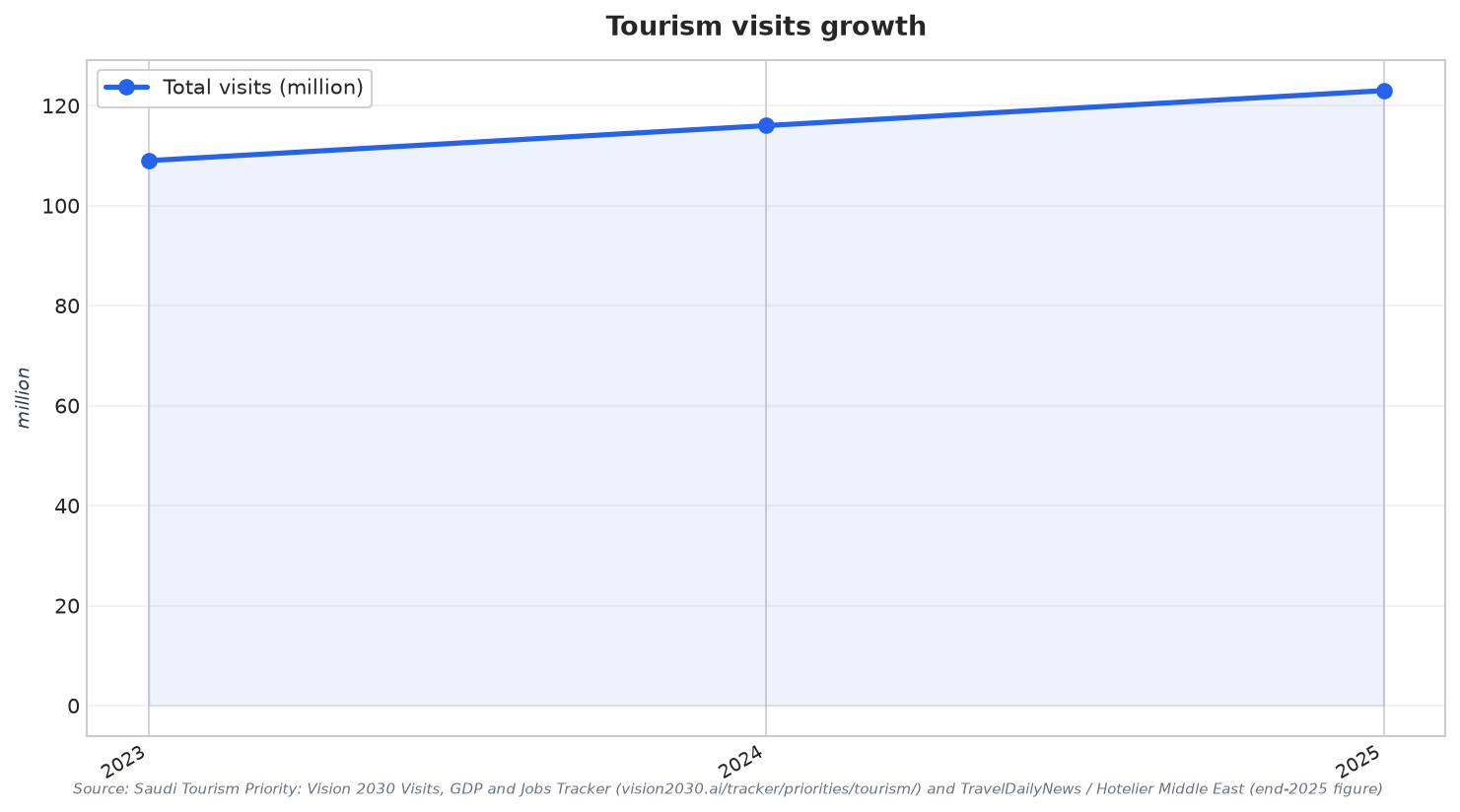
The tourism baseline is now stronger than the original plan assumed. By the end of 2025, Saudi Arabia welcomed 123 million domestic and international visitors, exceeding the original 2030 goal of 100 million arrivals, according to TravelDailyNews and Hotelier Middle East. The Vision2030.ai tourism tracker also cites 122–123 million visits in 2025 and roughly SAR 300 billion in total tourism spending, and it notes the original 100 million annual visits target was met in 2023. The target has since been revised to 150 million by 2030, split 80 million domestic and 70 million international. This is the backdrop for investors: the question shifts from “will demand show up?” to “can supply keep up?”
How Phase 3 Re-Sequences Tourism: From Mega-Projects to Proven Demand
The re-sequencing is most visible in what gets prioritised. Skift’s second-draft tourism thinking, as cited in the May 2026 agenda analysis, moves away from speculative mega-projects designed to attract Western tourists and toward advantages Saudi Arabia already has: religious pilgrimage, regional proximity, and cultural familiarity. The Vision2030.ai tracker reinforces the composition reality: roughly three-quarters of visits are domestic, religious tourism anchors much inbound flow, and leisure remains concentrated in Riyadh Season events, AlUla winter programming, and a handful of newly operational Red Sea resorts. For investors, this implies a phase-three tilt toward scalable, repeatable demand channels rather than only landmark developments.
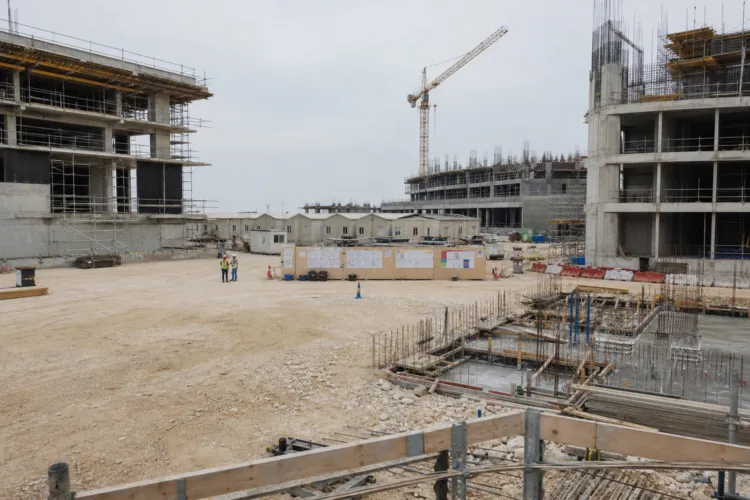
Delivery sequencing is also being clarified at the project level. Skift quoted PIF governor Yasir Al-Rumayyan on The Line: “Is it necessary for The Line to be completed by 2030? I don’t think so. It’s good to have, but it’s not a must-have,” and it noted his view that delayed NEOM projects were not on “the critical path,” while Expo 2030 and the World Cup 2034 were treated as hard-deadline priorities. The same analysis said NEOM has been separated from the tourism ecosystem. For investors, that combination points to a narrower “critical path” tourism pipeline where deadlines and operational readiness matter more than symbolic scale.
Tourism’s operating system is also more mature than in the early build-out years, which changes the investable surface area in 2026–2030. Vision2030.ai reports that the Saudi Tourism Authority runs sixteen international offices, the e-visa system serves over 60 nationalities, and an e-stopover visa enables 96-hour transit visits from 18 source markets. It also lists aviation expansion via Saudia, flynas, the new Riyadh Air carrier, and direct routes from Beijing, Shanghai, Mumbai, London, and Frankfurt. Meanwhile, TravelDailyNews reports that over 2,200 reforms and measures have been implemented since 2016 and that phase three will focus on sustaining diversification while increasing private sector participation. In practical terms, “vision 2030 phase 3 tourism” becomes less about announcing targets and more about converting throughput into durable returns—while managing bottlenecks in hotels, aviation, labour, and destination delivery.
What is changing in Saudi Arabia’s Phase 3 approach to tourism investment?
How far has Saudi Arabia progressed on visitor targets going into 2026–2030?
How is the project “critical path” being defined in Vision 2030’s final phase?
What execution risks matter most to investors in 2026–2030 tourism delivery?
What does the Vision 2030 Phase 3 tourism re-sequencing mean for investors evaluating deals now?
Talk to us for your needs in:
-
Tourism Infrastructure Planning and Optimization
-
Destination Marketing and Brand Strategy
-
Tourism Workforce Development and Training
-
Sustainable Tourism Solutions
-
Visitor Experience Enhancement and Engagement
-
Tourism Project Feasibility and Strategic Planning
-
Saudi Tourism Benchmarking